






Definition & Meaning
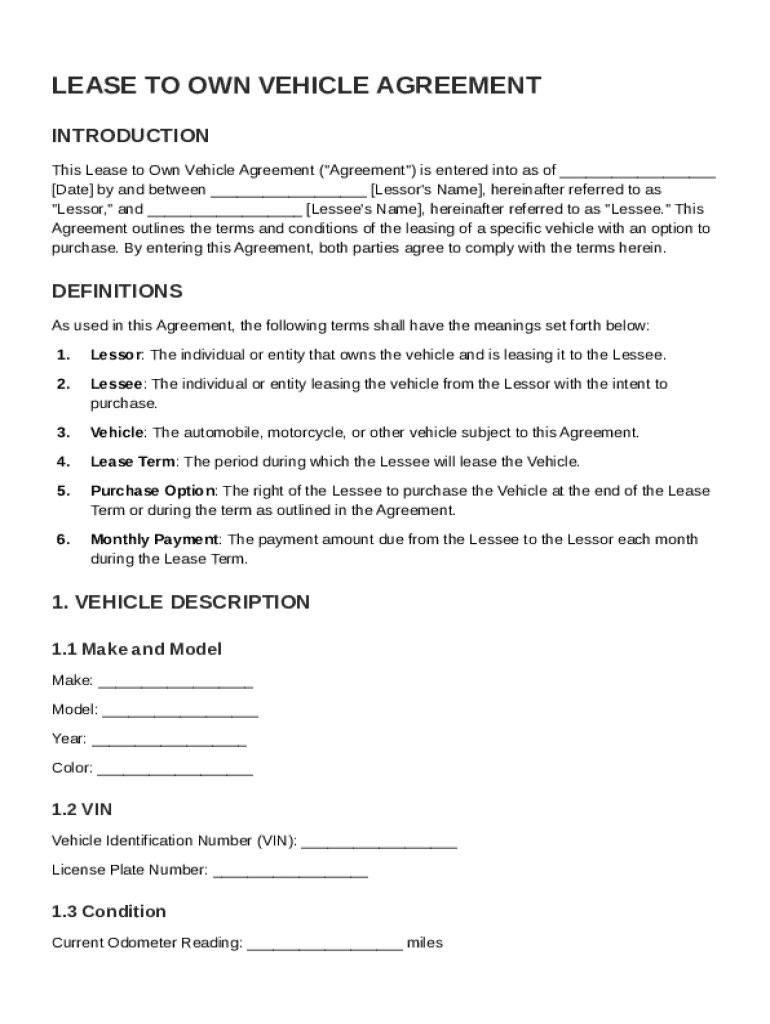
A Lease to Own Vehicle Agreement is a legal contract that outlines the arrangements for leasing a vehicle with the option to purchase at the end of the lease term. This agreement specifies the roles of the parties involved, commonly the lessor (owner or leasing company) and the lessee (individual or business leasing the vehicle), setting a clear structure for the transaction. The contract ensures both parties understand the financial obligations, operational responsibilities, and the conditions under which the vehicle can be eventually owned by the lessee. This agreement is crucial in delineating the path from leasing to ownership, safeguarding the rights and responsibilities of each party.
Key Elements of the Lease to Own Vehicle Agreement Template
Parties Involved
- Lessor: The individual or company offering the vehicle for lease.
- Lessee: The individual or business agreeing to lease the vehicle.
Each party's legal names, contact details, and their roles in the agreement are detailed here, ensuring there is no ambiguity about who is responsible for what.
Vehicle Description
The agreement includes a detailed description of the vehicle being leased, such as:
- Make, model, and year
- Vehicle Identification Number (VIN)
- Current mileage
- Condition report
These specifics help in verifying the vehicle's identity and condition, reducing potential disputes.
Lease Terms
Outlined terms might include:
- Duration of the lease
- Monthly payment schedule
- Any penalties for late payments
Such information allows both parties to understand their financial commitments over the lease term clearly.
Purchase Option
Conditions under which the lessee can purchase the vehicle are specified, including:
- Purchase price
- Timing for exercising the purchase option
This section is critical for lessees planning to eventually own the vehicle.
Steps to Complete the Lease to Own Vehicle Agreement Template
- Download the Template: The agreement template can be obtained through authorized platforms or directly from the leasing company.
- Fill in the Details: Start by inputting the personal information of both parties, followed by the vehicle specifics and financial terms.
- Review Terms: Ensure all clauses, including default conditions and termination processes, are understood and agreed upon by both parties.
- Sign the Agreement: Both lessor and lessee should sign the contract to signal agreement to the terms. Consider using electronic signature options provided by platforms like DocHub for added convenience.
Who Typically Uses the Lease to Own Vehicle Agreement Template
This template is broadly utilized by:
- Individuals seeking to own a car without immediate full payment
- Businesses requiring vehicles but wanting to maximize cash flow management
- Vehicle leasing companies that need a standard, customizable contract format
It provides a practical solution for parties interested in transitioning from leasing to eventual ownership.


Legal Use of the Lease to Own Vehicle Agreement Template
Compliance with State Law
The agreement must comply with relevant state laws, as these dictate the legality and enforceability of contractual terms. States may have varying rules regarding important elements such as interest rates on payments and the purchase option execution.
Amendments and Notices
Provisions for amendments allow parties to update agreements as needed. Notice requirements ensure that any legal communications about the contract are formally acknowledged.
Examples of Using the Lease to Own Vehicle Agreement Template
-
Case of First-Time Car Owners: John and Mary have decided to lease a vehicle with plans to own it eventually. The Lease to Own Vehicle Agreement outlines a structured payment plan, allowing them to budget effectively while securing a vehicle.
-
Business Fleet Management: A small delivery business is leasing a fleet of vans with the option to own them subsequently. This agreement template helps manage multiple leases under consistent terms.
Important Terms Related to Lease to Own Vehicle Agreement Template
- Lessee Breach: Refers to instances where the lessee fails to meet obligations (e.g., non-payment), leading to penalties.
- Residual Value: The car's estimated value at the end of the lease, crucial for determining the purchase price.
- Security Deposit: A refundable amount paid upfront by the lessee to cover potential damages or breaches.
Understanding these terms aids in fully grasping the lease's financial and operational implications.