






Definition and Meaning
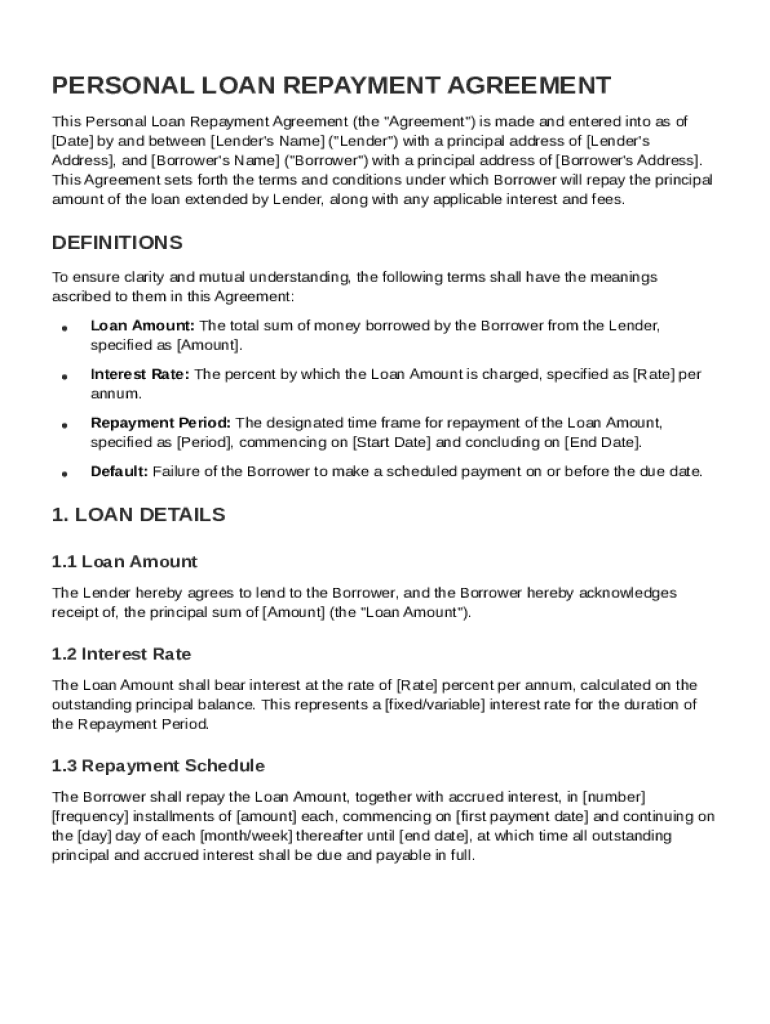
A Personal Loan Repayment Agreement Template is a structured document that outlines the terms and conditions governing the repayment of a personal loan between a lender and a borrower. This template serves as a formal record of the loan's details, such as loan amount, interest rate, repayment schedule, and consequences of default. Specifically, it clarifies the mutual obligations and rights of both parties involved in the loan agreement, reflecting the contract's legal enforceability within relevant jurisdictional frameworks.
Detailed Explanation and Examples
In practical terms, the template can include various payment structures such as fixed, variable payments, or a lump sum. For example, if a borrower takes a loan of $10,000 at an annual interest rate of 5%, the repayment agreement will specify whether the borrower will repay in monthly installments or through another plan agreed upon with the lender. The clarity offered by this document helps prevent potential disputes by ensuring both parties are on the same page regarding all financial obligations.
How to Use the Personal Loan Repayment Agreement Template
Using this template involves tailoring it to fit the specific parameters of an individual loan arrangement. This includes customizing the document to reflect precise monetary terms, timelines, and any unique provisions agreed upon by the lender and borrower.
Step-by-Step Instructions
-
Download the Template: Obtain the document from DocHub or another trusted source.
-
Modify General Information: Input the names and contact details of both the lender and borrower.
-
Specify Loan Details: Enter the principal loan amount, interest rate, and any associated fees.
-
Set Repayment Terms: Define the repayment schedule, including payment frequency and amount.
-
Include Security or Collateral Information: If applicable, specify any collateral tied to the loan.
-
Review Legal Clauses: Ensure all legal language reflects the agreed-upon terms and complies with state laws.
-
Sign and Date: Both parties must sign and date the document to finalize the agreement.
Practical Scenarios
For instance, if a family member provides a personal loan to help with a small business start-up, this agreement ensures repayment terms are transparent and mutually acceptable, maintaining the familial relationship's integrity.
Key Elements of the Personal Loan Repayment Agreement Template
The template is composed of several essential elements that together form a comprehensive loan agreement. Each section serves a distinct purpose and provides necessary information to both parties.
Main Sections Included
-
Loan Details: Includes principal amount, interest rate, and total amount to be repaid.
-
Repayment Schedule: Specifies monthly repayment amounts, due dates, and payment method options.
-
Default Consequences: Outlines penalties or legal action for missed payments or defaults.
-
Borrower and Lender Information: Identifies both parties with complete contact information.
-
Legal Provisions: Covers governing laws, amendment procedures, and dispute resolution mechanisms.
The presence of these elements ensures that the agreement is thorough and enforceable, protecting both parties' interests.
Legal Use of the Personal Loan Repayment Agreement Template
The template functions within a legal context and must comply with the laws of the applicable state. Individuals using this document should be aware of the legal requirements that influence the enforceability of loan agreements.
Compliance with State Laws
Each U.S. state may have varying laws concerning interest rates, lending practices, and borrower rights. For example, usury laws cap the maximum amount of interest that can be legally charged, which this agreement must adhere to. Understanding and applying state-specific rules ensures that the document not only serves as a binding contract but is also legally defensible.
State-Specific Rules for the Personal Loan Repayment Agreement Template
While the agreement template can be used across different states, there are specific rules that lenders and borrowers must consider, depending on the location.
Differences by State
-
Interest Rate Caps: Certain states have maximum allowable interest rates, impacting how agreements are formulated.
-
Required Disclosures: Some states mandate specific disclosures regarding fees and interest calculations.
-
Statutes of Limitations: The timeframe within which legal action can be initiated due to default varies by state.
Before using this template, it is advisable to check the applicable state regulations or consult with a legal professional to ensure full compliance.
Important Terms Related to Personal Loan Repayment Agreement Template
Understanding the terminology within the agreement is crucial for both the lender and borrower. Key terms define the agreement's specifics and implications.
Commonly Used Terms
-
Principal: The original amount of the loan before interest.
-
Amortization: The process of spreading out loan payments over time.
-
Default: Failure to make a payment when due or to meet the loan's obligations.
-
Collateral: An asset pledged as security for a loan, which can be seized in case of default.
Grasping these terms will improve parties' confidence in understanding the document's stipulations and obligations.
Who Typically Uses the Personal Loan Repayment Agreement Template
The primary users of this template include:
-
Individuals: Family members or friends formalizing personal loans.
-
Small Business Owners: Borrowers seeking capital from peers or private investors.
-
Freelancers: Independent contractors lending or borrowing short-term capital.
By utilizing such a template, borrowers and lenders can structure and document their financial transactions professionally and securely.


Steps to Complete the Personal Loan Repayment Agreement Template
Completing this template efficiently involves following structured steps to ensure all necessary details are accurately captured.
Completion Guide
-
Prepare Information: Gather all relevant details such as loan amount, terms, and parties involved.
-
Fill Out Template: Carefully enter all structured information, double-checking for accuracy.
-
Review Document: Verify all sections for completeness and potential discrepancies.
-
Consult a Legal Advisor: If needed, have a professional appraise the agreement for legal soundness.
-
Execution: Sign and exchange copies of the finalized agreement.
Completing the document with precision makes sure that the resultant agreement stands as a reliable reference for all future dealings between the involved parties.