Definition and Meaning
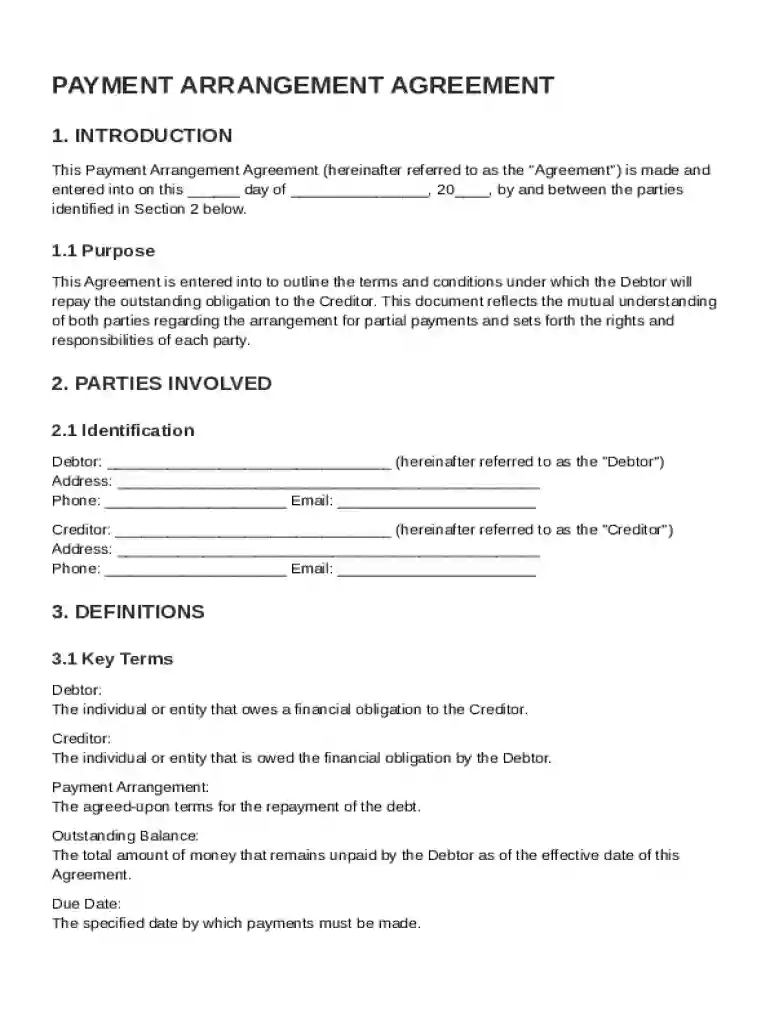
The Payment Arrangement Agreement Template is a formal document that lays out the terms and conditions under which a debtor agrees to repay an outstanding financial obligation to a creditor. This document specifies the parties involved, key definitions, payment amounts, schedules, debtor obligations, consequences in case of default, governing laws, and provisions for amendments. It serves as a legal tool to clarify and formalize mutual understanding regarding repayment terms.
How to Use the Payment Arrangement Agreement Template
To effectively utilize the Payment Arrangement Agreement Template, follow these steps:
- Identify the Parties: Clearly define the debtor and creditor, including full names and contact information.
- Detail the Financial Obligation: Specify the exact amount owed and the circumstances under which this debt was incurred.
- Outline Payment Schedule: Establish a clear repayment timetable with dates and amounts.
- Include Additional Terms: Add any additional terms regarding interest rates or penalties for late payment.
- Review for Accuracy: Ensure all information is correct and that both parties consent to the terms.
Practical Scenario
Consider a small business owner who owes a supplier $10,000. The Payment Arrangement Agreement Template can help both parties agree on a repayment plan, such as $1,000 per month over ten months, including provisions for late fees.
Steps to Complete the Payment Arrangement Agreement Template
Completing the payment arrangement agreement involves the following steps:
- Download the Template: Obtain the most current version of the template from a reliable source.
- Fill in the Details: Input all required information, ensuring completeness and accuracy.
- Verify Clauses: Review clauses related to default and enforceability under governing law.
- Execute the Agreement: Both parties should sign and date the document for it to be binding.
- Distribute Copies: Provide each party with a signed copy.
Key Elements of the Payment Arrangement Agreement Template
The Payment Arrangement Agreement Template comprises several essential elements:
- Identification of Parties: Details about the debtor and creditor.
- Debt Description: The nature and amount of the obligation.
- Payment Terms: The agreed-upon schedule, including dates and amounts.
- Obligations and Default: Responsibilities of the debtor and consequences for failure to meet obligations.
- Governing Law: Specifies applicable jurisdiction and laws.
- Amendments: Provisions for modifying the agreement.
Legal Use of the Payment Arrangement Agreement Template
The Payment Arrangement Agreement Template ensures legal enforceability by including:
- Legally Binding Terms: Clearly outlined clauses that both parties agree to.
- Signature and Dates: Signatures of both parties affirming their commitment.
- Jurisdiction Clause: Specifies the law under which the agreement is governed.
Example
If a debtor in New York defaults on payments, the agreement will specify which court will have jurisdiction over any legal proceedings.
Important Terms Related to the Payment Arrangement Agreement Template
Understanding key terms within the agreement is crucial:
- Debtor: The individual or entity that owes the money.
- Creditor: The individual or organization owed the money.
- Default: Failure to meet payment obligations.
- Installment: A scheduled repayment of a part of the total debt.
Who Typically Uses the Payment Arrangement Agreement Template
This template is valuable for:
- Individuals with Personal Debt: Those who owe money to friends, family, or colleagues.
- Businesses: Companies that need to formalize repayment plans with suppliers or clients.
- Financial Advisors: Professionals managing debt restructuring for clients.
Real-World Scenario
A retired couple on a fixed income may use this template to manage outstanding credit card debt by negotiating a lower monthly payment with the creditor.
Examples of Using the Payment Arrangement Agreement Template
Examples highlight versatility:
- Corporate Debt Settlements: A company uses the template to structure payments with multiple creditors.
- Lease Arrears: A landlord and tenant agree on a payment plan for overdue rent using the template.
- Medical Bills: Patients set up a plan to pay large health care bills over time.
In every case, a clear, formal agreement ensures all parties are aligned on expectations and reduces potential disputes.