






Definition & Meaning
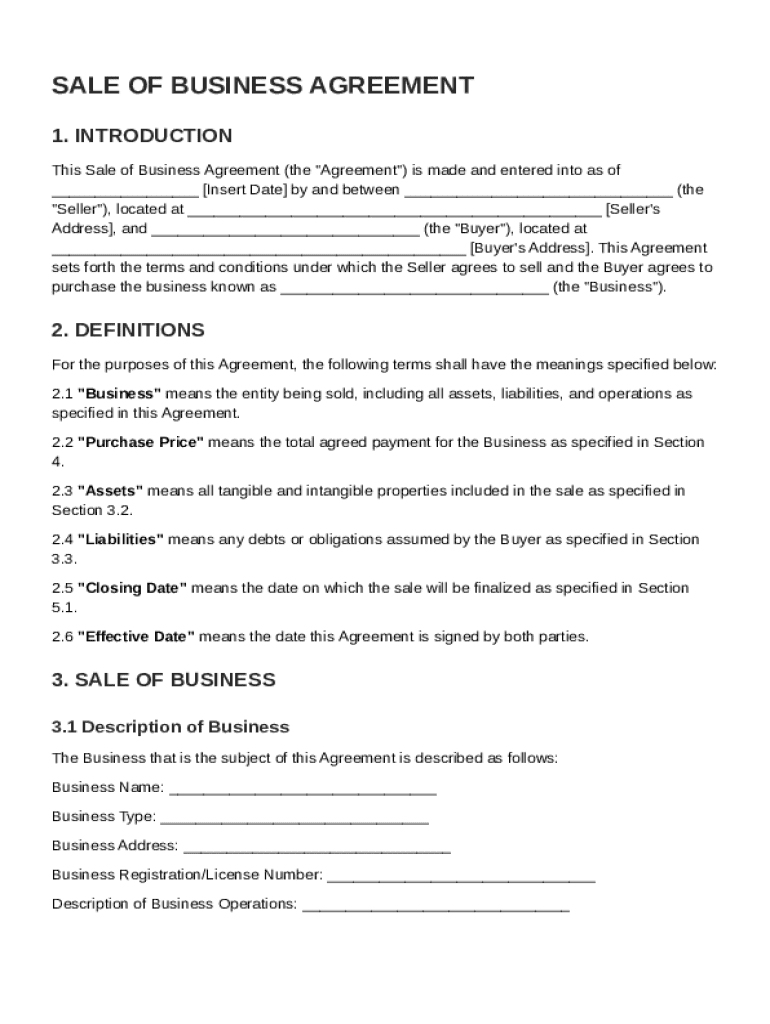
A Sale of Business Agreement Template is a legal document used to facilitate the transfer of ownership from the seller to the buyer in a business transaction. It outlines the terms and conditions under which a business is sold, including the assets, liabilities, and financial elements. This document serves as a comprehensive legal contract that governs the sale, ensuring both parties are aware of their rights and obligations. Typically, it includes definitions of key terms, delineates what is included in the sale, and sets out the payment method and timeline.
Key Terms and Clauses
- Assets and Liabilities: Specific assets and liabilities that are included or excluded in the transaction.
- Purchase Price and Payment Terms: Details concerning the total amount to be paid and the payment method.
- Representations and Warranties: Assurances made by both parties regarding the business being sold.
- Indemnification: Provisions for protection against future claims or losses.
- Governing Law: The legal jurisdiction under which the agreement will be interpreted.
How to Use the Sale of Business Agreement Template
The template provides a structured framework that simplifies the process of drafting an agreement. Users can input specific transactional details into pre-defined sections of the template to ensure all critical aspects are addressed.
- Download and Review: Obtain the template from [domain], and review it thoroughly to understand the sections.
- Fill in Details: Input specific details about the business, buyer, and seller, as well as the terms agreed upon.
- Customize Provisions: Adjust any general provisions to suit the particulars of your transaction.
- Legal Review: It is advisable to have the completed document reviewed by a legal professional to ensure compliance and adequacy.
Steps to Complete the Sale of Business Agreement Template
Completing the template involves several steps to accurately reflect the details of the transaction.
- Business Details: Start by entering the names and contact information of both parties.
- Description of Business: Provide a detailed description of the business being sold, including its location and all assets involved.
- Terms of Sale: Specify the purchase price, payment schedule, and any conditions precedent to closing.
- Acknowledgement of Assets and Liabilities: List all included assets and declare existing liabilities.
- Signatures: Include spaces for signatures from both the buyer and seller to validate the agreement.
Important Considerations
- Confidentiality: Consider adding a confidentiality clause to protect sensitive business information.
- Non-compete Clause: Prevents the seller from starting a competing business within a certain period post-sale.
- Adjustments: Be prepared to adjust sections based on the legal advice received.
Key Elements of the Sale of Business Agreement Template
The main components of the agreement ensure both parties are clear on the details and expectations.
- Parties Involved: Detailed identification of the buyer and seller.
- Sale Details: Enumerates the assets being sold, including inventory, equipment, and intellectual property.
- Payment Structure: Outlines the amount, method, and timeline for payment.
- Closing Requirements: Lists conditions that must be met for the transaction to close.
- Post-Closing Obligations: Details any actions required after the completion of the sale, such as transition support by the seller.
Who Typically Uses the Sale of Business Agreement Template
The template is commonly used by various parties involved in business transactions, including:
- Business Owners: Looking to sell their businesses.
- Potential Buyers: Individuals or companies seeking to acquire a business.
- Legal Professionals: Attorneys specializing in commercial law or who offer consultation during business transactions.
- Business Brokers: Facilitators of business deals who need a structured framework for transactions.


State-by-State Differences
Each state in the U.S. may have unique requirements and regulations affecting business sales.
- Regulatory Compliance: Certain states have specific disclosure and compliance laws that must be adhered to.
- Tax Implications: Varying state tax laws could impact the structuring of the sale.
- Business Licenses and Permits: Depending on the business type, re-licensing may be required in the new owner's name.
Examples of Using the Sale of Business Agreement Template
Practical examples of transactions that use the agreement include:
- Small Business Retail Sale: A local boutique owner selling their store to a new entrepreneur.
- Franchise Ownership Transfer: When a franchisee sells their rights to another party.
- Manufacturing Business Acquisition: An industrial company expanding by purchasing a smaller manufacturer.
Real-World Scenario
- Case Study: A family restaurant changes hands, using the template to cover asset transfers such as kitchen equipment, existing contracts, and proprietary recipes.
Legal Use of the Sale of Business Agreement Template
The template is a legally binding document, ensuring transactions are carried out within the framework of U.S. law.
- Compliance with ESIGN Act: If signed electronically, ensures e-signatures are legally valid.
- Ongoing Obligations: Legally binds both parties to adhere to the agreed obligations, reducing the risk of disputes.
- Protection Against Litigation: Offers legal protection by clearly outlining terms and expectations.
By providing a detailed and comprehensive approach, the Sale of Business Agreement Template ensures that all necessary legal considerations are addressed, facilitating a smooth transaction between parties.