
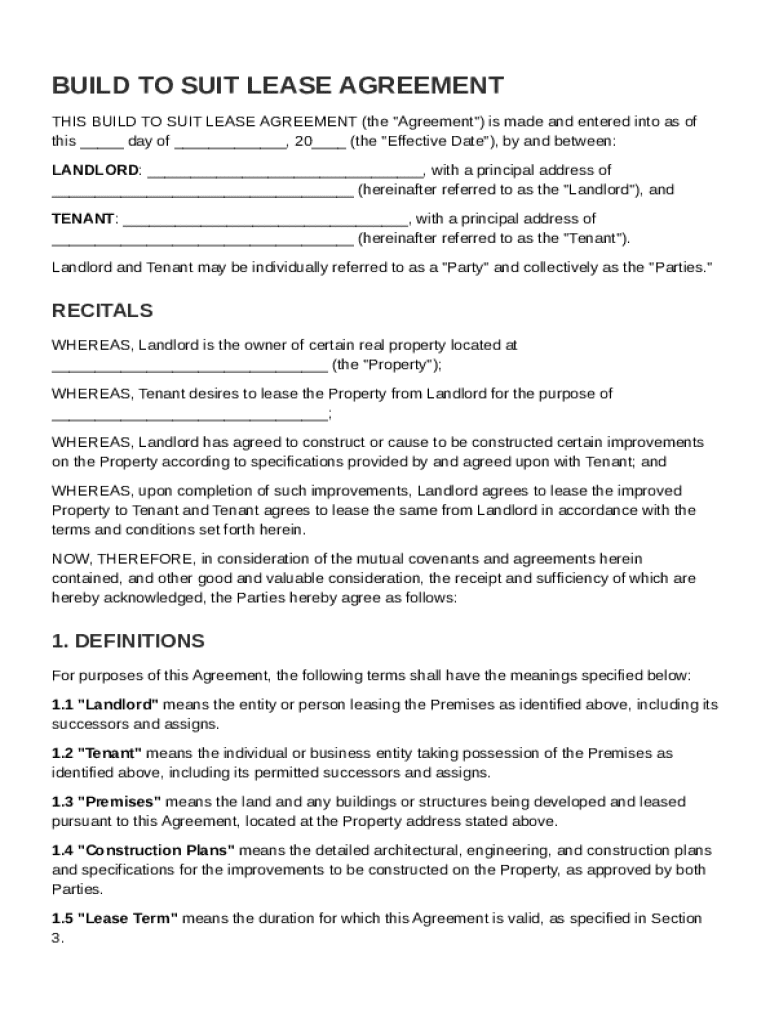







Definition & Meaning
The Build To Suit Lease Agreement Template is a legally binding document used between a landlord and a tenant. This agreement outlines the conditions under which the landlord will construct specific improvements on a property, tailored to the tenant’s requirements. It aims to clearly set out the obligations and expectations of both parties to ensure a harmonious and informed leasing arrangement once construction is complete.
Key Elements of the Build To Suit Lease Agreement Template
Several critical components are integral to the Build To Suit Lease Agreement Template:
- Construction Requirements: Details about the improvements that the landlord must implement, adhering to the tenant's specifications.
- Rent Structure: Information on how the lease payments will be structured once the improvements are completed and the tenant takes possession.
- Responsibilities: Clear delineation of duties and responsibilities of both the landlord and tenant, including maintenance and repair obligations.
- Termination Conditions: Stipulations for when and how the lease agreement can be terminated by either party.
- Rights and Remedies: Outlined solutions in case of a breach or default by either the tenant or landlord.
- Indemnification Provisions: Clauses that deal with liabilities and indemnities between the parties involved.
Steps to Complete the Build To Suit Lease Agreement Template
- Identify Parties Involved: Clearly state the names and contact information of the landlord and tenant.
- Define Property Specifications: Specify the physical parameters and location of the property in question.
- Outline Construction Details: Provide detailed descriptions of the improvements to be constructed, including timelines and quality standards.
- Set the Rental Terms: Establish the lease duration, rent amount, escalation clauses, and payment schedules.
- Include Legal Provisions: Ensure all necessary legal terms related to default, indemnification, and termination are incorporated.
- Signatures: Once all sections are completed, obtain signatures from the landlord, tenant, and any witnesses to finalize the agreement.
How to Use the Build To Suit Lease Agreement Template
This template serves as a structured framework to ensure all necessary details and legal considerations are addressed. Users should:
- Customize Fields: Modify the template to reflect specific tenant needs and property specifics.
- Consult Legal Counsel: Engage with a legal professional to ensure compliance with state-specific landlord-tenant laws.
- Negotiation Platform: Use the template during negotiations to clearly outline expectations and reach a mutually beneficial agreement.
Important Terms Related to the Build To Suit Lease Agreement Template
Understanding certain terms is essential when working with this template:
- Tenant Improvements: Refers to the construction modifications tailored to the tenant's operational needs.
- Lease Escalation Clause: A provision that predetermines future rental increases over the lease term.
- Indemnification Clause: A legal provision where one party agrees to compensate the other for any loss or damages.
- Default Remedy: Solutions available to a party when the other party fails to meet their lease obligations.
Who Typically Uses the Build To Suit Lease Agreement Template
This template is predominantly used by:
- Commercial Landlords: Property owners looking to attract stable, long-term tenants by offering customized spaces.
- Business Tenants: Companies, particularly in sectors like retail or manufacturing, that require specific facility setups for their operations.


Legal Use of the Build To Suit Lease Agreement Template
The agreement must be compliant with local building codes and lease laws. It should:
- Ensure All Permits Are Secured: Verify that the landlord has obtained any necessary local construction permits.
- Incorporate Local Landlord-Tenant Law: Align with state-specific leasing regulations to avoid any legal conflicts.
- Specify Dispute Resolution: Include how disagreements will be handled, such as through arbitration or legal mediation.
State-Specific Rules for the Build To Suit Lease Agreement Template
Lease agreements often vary according to state laws. Some considerations include:
- Local Building Codes: States may have varying requirements for construction standards and safety measures.
- Environmental Regulations: Compliance with state and federal environmental laws concerning new constructions.
- Lease Registration Requirements: Some states necessitate that leases of a certain duration be registered with a government entity to be enforceable.




