Definition and Meaning
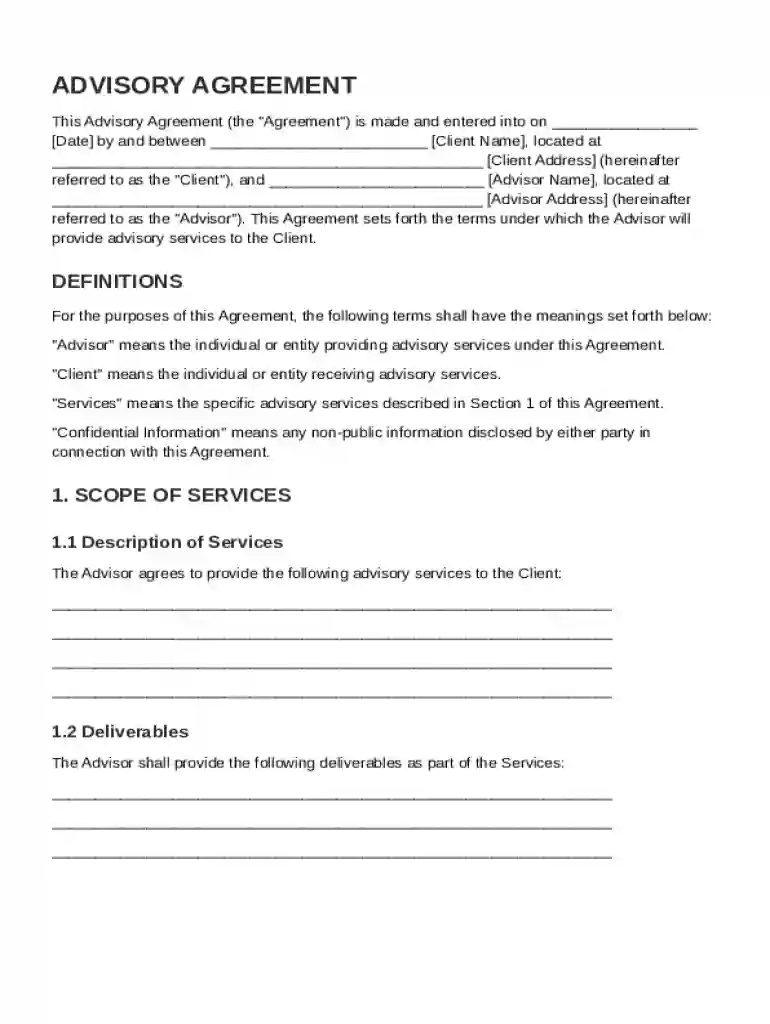
An Advisory Contract Template serves as a formal agreement detailing the terms and conditions under which an advisor provides services to a client. It outlines various components such as definitions, scope of services, compensation, and confidentiality. These agreements are instrumental in establishing the advisor as an independent contractor, ensuring both parties understand their roles and responsibilities. By clearly defining these aspects, both the advisor and client can avoid potential misunderstandings and disputes in the future.
Key Components
- Scope of Services: Outlines specific duties the advisor will perform, ensuring both parties agree on tasks and expectations.
- Compensation: Details the payment structure, including rates, payment schedules, and any additional fees or expenses.
- Duration and Termination: Defines the contract’s timeline and conditions under which either party may terminate the agreement.
- Confidentiality Obligations: Protects sensitive information shared during the advisory relationship.
How to Use the Advisory Contract Template
Utilizing an advisory contract template involves several steps, ensuring that all pertinent aspects of the advisory relationship are documented and agreed upon.
- Customize the Template: Begin by tailoring the template to include specific client and advisor information, along with any additional terms relevant to the particular advisory service.
- Review Legal Terms: Ensure all legal terms are appropriate and reflect the advisory services provided. This may involve consultation with a legal professional.
- Clarify Roles and Compensation: Clearly outline the advisor's roles and compensation terms to prevent future disputes.
- Finalize the Agreement: Once both parties have reviewed and agreed on the terms, each should sign and retain a copy for their records.
Key Elements of the Advisory Contract Template
Understanding the key elements of an advisory contract is crucial for drafting a comprehensive document that protects both parties’ interests.
- Indemnification and Liability: Specifies each party’s liabilities and conditions under which they seek indemnification from claims or damages.
- Dispute Resolution: Establishes procedures for resolving disputes, such as mediation or arbitration, before pursuing legal actions.
- Governing Law: Indicates the jurisdiction whose laws will govern the contract, which is particularly important in cases of cross-state advisory relationships.
State-Specific Rules for the Advisory Contract Template
Advisory contract regulations can vary by state, affecting certain legal provisions and language.
- Jurisdictional Variations: Different states may have specific requirements regarding contract enforceability, such as those related to non-compete clauses.
- Compliance with State Laws: Ensures that the contract adheres to the governing laws of the state indicated within the document, mitigating potential legal issues.
Legal Use of the Advisory Contract Template
Adhering to legal guidelines when drafting and using an advisory contract is essential for ensuring its enforceability.
- Compliance with the ESIGN Act: Electronic signatures used within the contract must comply with legal standards to be considered valid.
- Inclusion of Legal Disclaimers: Necessary to limit liability and outline specific responsibilities, thus protecting both parties from legal ramifications.
Examples of Using the Advisory Contract Template
Real-world applications of advisory contracts demonstrate their utility across various scenarios.
- Financial Planning Firms: Frequently use advisory contracts to define the scope of wealth management services provided to clients.
- Consultancy Agencies: Establish project-specific agreements detailing deliverables and payment structures customized per client.
- Corporate Advisors: Engage with businesses to offer strategic consultancy, necessitating clear contractual agreements to establish the service scope and confidentiality terms.
Versions or Alternatives to the Advisory Contract Template
Understanding different versions or alternatives to advisory contracts provides flexibility in service agreements.
- Custom Contracts: Tailor-made agreements designed to suit highly specialized or unique advisory services.
- Standardized Templates: Pre-formulated contracts that offer a quick solution for common advisory relationships, adjustable for individual needs.
- Digital Contract Tools: Platforms that facilitate creating, editing, and signing advisory contracts, enhancing ease of use and accessibility.
These blocks provide comprehensive insights and detailed instructions on how to utilize the Advisory Contract Template effectively, ensuring that the form serves its intended purpose while adhering to legal considerations and real-world applications.