






Key Elements of the Limited Liability Company Operating Agreement Template
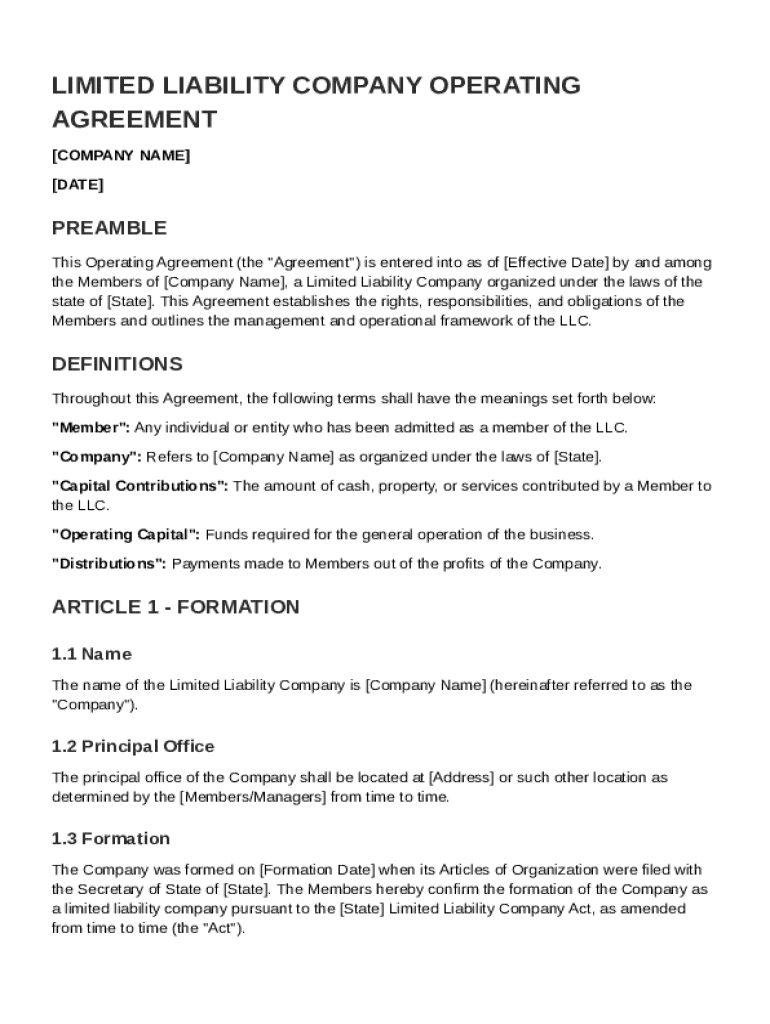
The Limited Liability Company Operating Agreement Template is designed to outline the essential components necessary for structuring the internal operations of an LLC. It provides a comprehensive framework to detail aspects like membership, management, and financial arrangements. Key elements include:
-
Formation and Purpose: Describes the LLC's creation and the primary objectives it seeks to achieve.
-
Membership Structure: Defines the roles, rights, and responsibilities of each member.
-
Capital Contributions: Details the initial and subsequent contributions by members, including monetary investments and property contributions.
-
Profit Distributions: Outlines how profits and losses will be allocated among members, based on agreed percentages or other criteria.
-
Management Structure: Specifies whether the LLC will be managed by its members or appointed managers, including decision-making protocols.
-
Record-Keeping Requirements: Lists the documentation necessary for legal compliance and internal transparency.
Understanding these components ensures that the agreement is tailored to support both legal compliance and business objectives.
Steps to Complete the Limited Liability Company Operating Agreement Template
Completing a Limited Liability Company Operating Agreement Template involves several methodical steps to ensure all essential details are correctly incorporated. Follow these guidelines to complete the template:
-
Gather Member Information: Compile personal and contact information for all LLC members.
-
Determine Management Structure: Decide whether the LLC will be managed by its members or designated managers.
-
Outline Financial Arrangements: Specify the initial capital contributions and the scheme for profit and loss distribution.
-
Record Procedures for Amendments: Document the process for future amendments to the agreement.
-
Include Indemnification Provisions: Define the protection provided to members and managers against liability arising from company operations.
-
Designate Governing Law: Select the state laws that will govern the LLC’s operations.
Once completed, review the document for completeness and legal compliance. Consider consulting with legal counsel to ensure it meets regulatory requirements.
State-by-State Differences in Operating Agreement Requirements
LLC Operating Agreements must adhere to varying state regulations. Understanding these differences is crucial to ensuring the document's validity:
-
California: Requires specific language regarding fiduciary duties and disclosure practices.
-
Delaware: Offers flexibility in defining member rights and fiduciary responsibilities.
-
New York: Mandates that the Operating Agreement be filed within 90 days after forming the LLC.
-
Texas: Has distinct provisions for specifying management duties and member authority.
Each state may have unique legal standards and statutory requirements, impacting how Operating Agreements must be constructed and filed.
Why Use a Limited Liability Company Operating Agreement Template
The utilization of an Operating Agreement Template provides several benefits that enhance an LLC’s operation:
-
Clarity in Operations: Outlines roles and responsibilities, reducing disputes and ensuring operational consistency.
-
Legal Protection: Establishes personal liability protections under applicable state laws for each member.
-
Dispute Resolution: Offers pre-defined mechanisms for addressing conflicts amongst members.
-
Banking and Finance: Facilitates opening business accounts and securing financing by proving organizational legitimacy.
The template serves as an indispensable tool for structuring a legally sound and operationally effective LLC.
Important Terms Related to the Limited Liability Company Operating Agreement Template
Understanding key terms within the Operating Agreement is essential for effectively utilizing the template:
-
Members: Individuals or entities with ownership interest in the LLC.
-
Managers: Appointed individuals responsible for LLC management, if not managed by members.
-
Capital Account: A ledger that tracks contributions and distributions for each member.
-
Indemnification: Protection provisions against losses or claims arising from company activities.
-
Dissolution: The process and conditions under which the LLC may be legally dissolved.
These terms are critical for clear comprehension and effective participation in the LLC's governance and operations.
Legal Use of the Limited Liability Company Operating Agreement Template
Legal considerations are paramount when drafting an LLC Operating Agreement, as they govern the enforceability and protection it offers:
-
Adherence to State Law: Each agreement should comply with state-specific requirements to ensure legal standing.
-
Binding Nature: Once executed, the agreement becomes a binding contract between all members, enforceable in legal proceedings.
-
Privacy Protections: Establish confidentiality clauses to protect sensitive business information from disclosure.
Legally compliant Operating Agreements not only protect the business but also engender trust among members and external parties.
Examples of Using the Limited Liability Company Operating Agreement Template
Examining practical scenarios can illuminate the versatile applications of an LLC Operating Agreement Template:
-
Family-Owned Businesses: Utilizing the template to define roles clearly among family members and prevent internal disputes.
-
Venture Capital Firms: Protecting investment interests and defining exit strategies for investors with customized agreement terms.
-
Multi-Location Retail Chains: Streamlining management practices across state lines through uniform governing frameworks.
These examples demonstrate the template's adaptability across varied business models to suit specific corporate needs.
Differences Between Digital and Paper Versions
A digital LLC Operating Agreement offers several technical advantages over traditional paper versions:
-
Ease of Access: Digital files can be accessed from any location, allowing for real-time updates and sharing among members.
-
Security Features: Digital formats can incorporate password protection and encryption to safeguard sensitive information.
-
Automated Reminders: Digital systems can send notifications for necessary amendments and filing deadlines, maintaining compliance.
Conversely, paper versions may be preferred for archival or traditional purposes where digital access is limited. Understanding these differences helps businesses select the format that best suits their operational requirements.