






Definition & Meaning
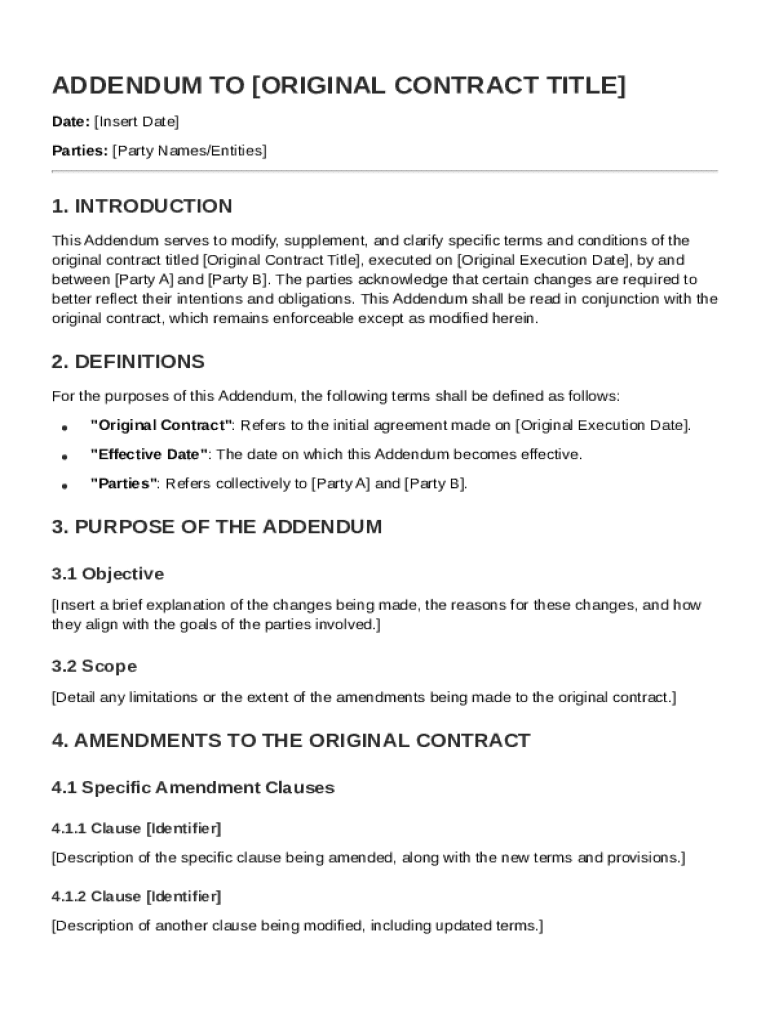
The Addendum Contract Template serves as a supplementary document to an existing contract, designed specifically to modify, clarify, or add specific terms within the original agreement. It is typically used when both parties involved find the need to make changes without rewriting the whole contract. This template ensures that only the necessary sections are updated, while the rest of the original contract remains unchanged. A well-structured addendum clearly outlines the revised terms and establishes the intention behind the modifications.
Key Components
- Purpose of Addendum: Describes why the additional document is necessary and what aspects of the original contract it addresses.
- Original Contract Reference: Specifies the original contract's date and parties involved to ensure clarity and reference accuracy.
- Specific Modifications: Details the exact terms or clauses that are altered, added, or removed.
- Effective Date: States when the changes will officially take effect.
How to Use the Addendum Contract Template
The Addendum Contract Template can be an effective tool for updating contracts by following a structured approach:
- Review the Original Contract: Understand the sections that need modification. Identify terms that might be outdated or clauses that require clarification.
- Draft the Addendum: Use the template to draft the necessary changes. Avoid altering the contract's primary structure.
- Consult Legal Counsel: Engage with a legal expert to ensure all modifications comply with relevant legal standards.
- Mutual Agreement: Both parties should acknowledge and agree to the changes for the addendum to be enforceable.
- Signatures: Ensure both parties sign the addendum to denote their consent to the new terms.
Practical Examples
- Lease Agreements: Adjusting rental terms, such as extending the lease duration or altering payment structures.
- Service Contracts: Introducing changes to service delivery timelines or scope of work.
Steps to Complete the Addendum Contract Template
Completing an addendum involves multiple steps to ensure all changes are legally binding and clearly understood by all parties involved:
- Identify Necessary Changes: Determine which sections of the original contract require revision.
- Use the Template: Fill out the template with identified changes, ensuring clarity in language and intent.
- Include Relevant Details:
- Reference the original contract appropriately.
- Clearly articulate the new terms.
- Review and Edit: Check for errors in legal terms or typographical mistakes.
- Agreement by Parties: Both parties must review and agree to the changes.
- Formalize with Signatures: Obtain signatures from all parties, with dates, to ensure validity.
Key Elements of the Addendum Contract Template
An effective addendum includes several critical components that ensure clarity and enforceability:
- Title: Clearly states that the document is an addendum to the original contract.
- Preamble: Introduces the parties involved and references the original contract.
- Specific Changes: Lists each amendment in a structured format for ease of understanding.
- Governing Law: Indicates the legal jurisdiction under which the addendum will be enforced.
- Conflict Resolution Clause: Provides a mechanism for resolving disputes that arise from amendments.
Examples
- Business Contracts: Specifying new payment methods or altering product delivery schedules.
- Employment Agreements: Modifying job descriptions or compensation packages.
Legal Use of the Addendum Contract Template
The legal robustness of an addendum is crucial to prevent future disputes and to ensure all parties understand their obligations:
- Compliance: Ensure the addendum adheres to applicable local and federal laws.
- Documentation: Properly document all changes for legal clarity and future reference.
- Binding Nature: Once signed, the addendum holds the same legal power as the original contract.
Who Typically Uses the Addendum Contract Template
The Addendum Contract Template is versatile and can be used by a variety of individuals and entities:
- Business Owners: For updating terms of service agreements or vendor contracts.
- Landlords and Tenants: To modify lease agreements efficiently.
- Contractors: To revise scopes of work or deliverable timelines with clients.


Case Studies
- Real Estate Agencies: Frequently use addenda to modify sales agreements due to changing market conditions.
- Corporate Entities: Utilize addenda to update partnership arrangements as business strategies evolve.
State-Specific Rules for the Addendum Contract Template
While the addendum can be used universally, several state-specific legal requirements may affect its application:
- State Law Compliance: Each state may have different mandates regarding the enforceability of contract modifications.
- Notarization Requirements: Some states may require notarization of signatures for legal validity.
- Public Recording: For certain contracts, public filing might be necessary to ensure the addendum is recognized legally.
Considerations for Multistate Contracts
- Interstate Business Transactions: Address multiple jurisdictional concerns, adapting the addendum to each state’s requirements.
Examples of Using the Addendum Contract Template
Real-world scenarios help clarify the practical utility of the Addendum Contract Template:
- Project Timelines: A construction company uses an addendum to extend project deadlines without changing other contractual obligations.
- Product Terms: A retailer uses an addendum to adjust delivery schedules with a supplier due to logistical changes.
- Service Levels: An IT service provider amends an SLA to incorporate new service packages without drafting a new contract.
Important Terms Related to Addendum Contract Template
Understanding specific terminology helps in effectively drafting and interpreting an addendum:
- Amendment vs. Addendum: An amendment involves changing existing terms, while an addendum adds new information.
- Severability Clause: Ensures that unenforceable sections do not affect the remainder of a contract.
- Waiver: A party's voluntary relinquishment of a known right, which should be documented if it impacts contract terms.
Variations and Exceptions
- Supplemental Contracts: Different from addenda, these involve entirely new agreements to address additional terms.