






Definition and Meaning of Non-Executive Director Agreement
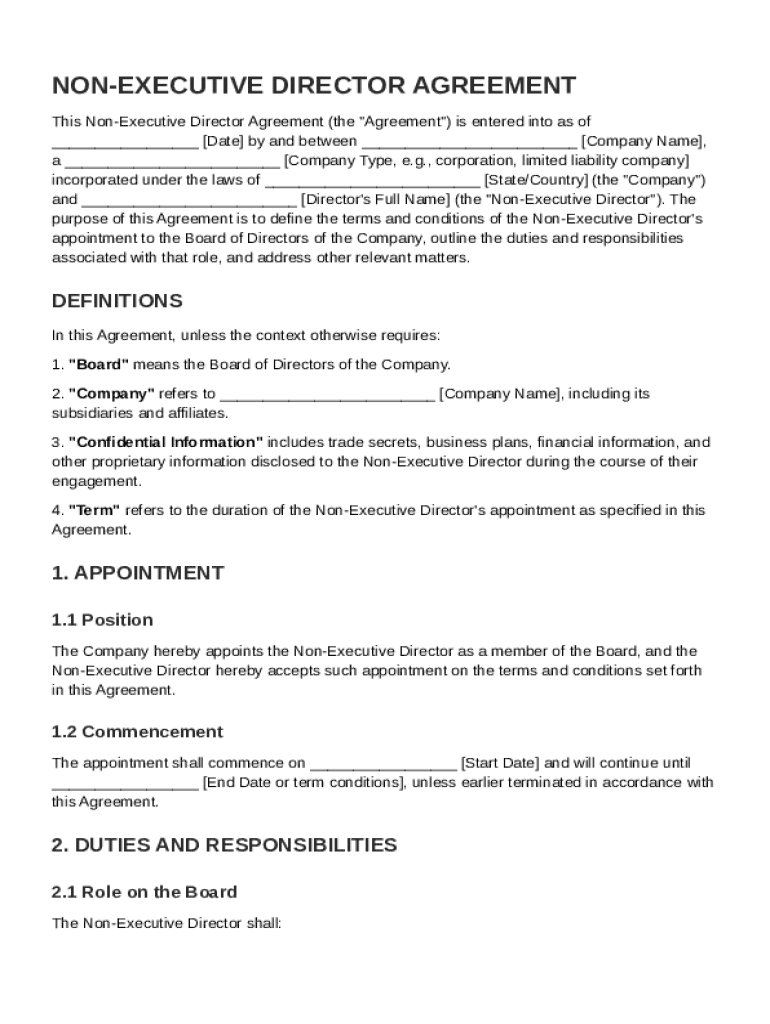
A Non-Executive Director Agreement is a formal contract that outlines the terms and conditions of a non-executive director's appointment to a company's board of directors. This document is crucial in setting clear expectations and establishing the legal framework for the director's relationship with the company. It commonly includes details on the director’s responsibilities, remuneration, confidentiality duties, and conflict of interest obligations. This agreement also serves as a protective measure for both the company and the director, detailing termination conditions and indemnity provisions.
Key Elements of a Non-Executive Director Agreement
The agreement defines several critical elements that both parties must understand and comply with. These include:
-
Duties and Responsibilities: This section outlines the specific roles and activities expected from the director. It ensures that the director contributes effectively to the board's duties and aligns with corporate governance standards.
-
Remuneration Details: Different compensation elements, such as fees, allowances, and bonuses, are detailed here. The agreement ensures that the director is fairly compensated for their contributions and time commitment.
-
Confidentiality Obligations: Directors have access to sensitive company information. This section requires them to maintain confidentiality, safeguarding the company's interests against leakage of proprietary information.
-
Conflict of Interest Disclosures: Directors must disclose any personal or financial interest that may interfere with their ability to perform their duties impartially. This helps prevent potential legal issues and maintains trust within the board.
-
Termination Conditions: Here, the reasons for ending the director's role and the procedures to be followed are specified. It protects both parties from sudden and potentially damaging disruptions.
-
Indemnity Provisions: Indemnity clauses protect the director from liabilities arising from decisions made in good faith while performing their duties. This section assures directors that they won't be left financially liable for genuine mistakes.
How to Use the Non-Executive Director Agreement Template
Using the Non-Executive Director Agreement Template involves a systematic approach to ensure it aligns with both company policies and legal standards. Below is the step-by-step process:
-
Review the Template: Begin by examining each section of the template to understand its implications and requirements. This review sets the foundation for personalized customizations.
-
Customize the Agreement: Tailor the template to reflect the company's specific policies and the director's expected contributions. Pay special attention to sections such as remuneration and specific duties, which may vary based on the role.
-
Include Company Policy and Legal Compliance: Ensure the template incorporates any company-specific rules and adheres to applicable legal standards. Consult with legal counsel if necessary to ensure full compliance.
-
Agreement by Both Parties: After customization, both the company and the director should review the final document. Any concerns or additional stipulations can be negotiated at this stage.
-
Finalize and Sign: Once both parties agree on the document, proceed to signatures. Store a signed copy within both the company's and the director's official records for future reference.
Steps to Complete the Non-Executive Director Agreement Template
Completing the template requires careful attention to detail to establish a legally sound agreement. Follow these steps to ensure a comprehensive and effective document:
-
Insert Personal and Company Details: Begin by filling in the names, addresses, and roles of both parties. This identification is crucial for the legality of the document.
-
Define Duties and Responsibilities: Clearly outline the director's duties within the company. This definition sets the expectation for their role and contribution to the board.
-
Structure Compensation and Benefits: Draft the remuneration section, specifying all forms of compensation, including base fees and any performance-related bonuses.
-
Highlight Confidentiality Obligations: Detail the confidentiality agreements required, emphasizing the importance of protecting company-sensitive information.
-
Outline Termination Clauses: Specify termination conditions, procedures, and notice periods to protect both the company and the director from abrupt separations.
-
Final Review and Sign-off: After completing the form, conduct a final review with legal advisors if necessary. Ensure all sections are clear and mutually agreed upon before signing.
Who Typically Uses the Non-Executive Director Agreement Template
This template is utilized by various entities seeking the expertise of a non-executive director, often for governance and strategic oversight roles. Common users include:
-
Public Corporations: Large companies seeking guidance and independent oversight to manage corporate risks and strategy.
-
Private Companies: Smaller businesses often require outside influence to provide unbiased advice and expertise for organizational growth.
-
Non-Profit Organizations: Boards within charities and non-profits need directors to ensure accountability, strategic planning, and integrity.
-
State-Owned Enterprises: Directors help in maintaining transparency and public interest in these companies while driving strategic growth.


Legal Use and Compliance in the United States
In the U.S., the legal use of a Non-Executive Director Agreement demands adherence to both federal and state laws governing corporate governance and director responsibilities. The document serves as a legal safeguard and helps in compliance with:
-
Corporate Governance Codes: The template should reflect good governance practices, aligning with standards set by bodies like the SEC.
-
Employment and Labor Laws: While directors are typically not employees, certain benefits and responsibilities may require adherence to employment laws.
-
Liability and Indemnification Laws: Understanding state laws concerning director liability and indemnity is crucial for crafting these sections accurately.
-
Conflict of Interest Laws: The agreement should have robust conditions to address conflict of interest to comply with legal and ethical guidelines.
Important Terms in Non-Executive Director Agreement
Understanding the key terms within the agreement ensures clarity and prevents misunderstandings:
-
Fiduciary Duty: This term refers to the legal obligation of a director to act in the best interest of the company, prioritizing its benefits over personal gains.
-
Board of Directors: The collective body responsible for governance and decision-making within the company, of which the non-executive director is a part.
-
Indemnity: Protection provided to the director against legal liabilities arising from actions taken in the course of performing their duties.
-
Remuneration Package: The total compensation for the director, including any monetary payment, allowances, and additional benefits.