






Definition & Meaning
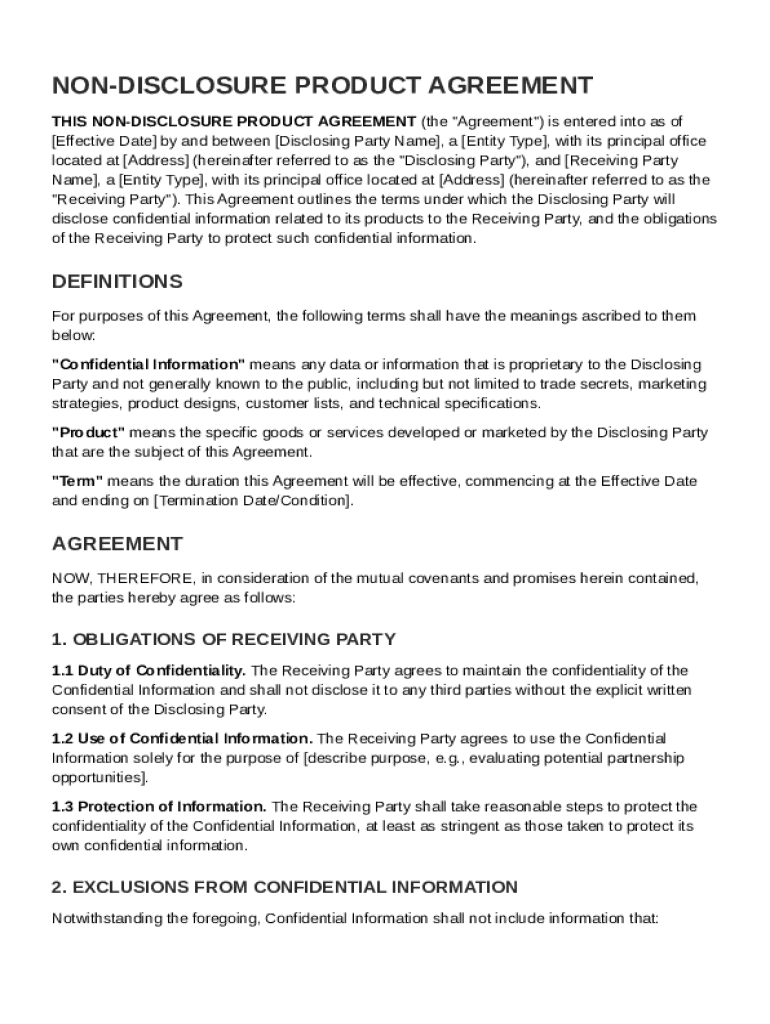
A Non-Disclosure Product Agreement Template is a formal legal document used in business settings to protect confidential information related to products. This agreement specifies the terms under which sensitive information is shared between the disclosing party and the receiving party. Typically, the disclosing party seeks assurance that the receiving party will not disclose the information to unauthorized entities and will use the information solely for pre-approved purposes. This template provides a structured way to formalize such a commitment, thereby safeguarding proprietary product details.
Key Elements of the Non-Disclosure Product Agreement Template
A comprehensive Non-Disclosure Product Agreement typically includes several critical elements to ensure thorough protection:
-
Parties Involved: Identifies the disclosing and receiving parties, detailing their roles and responsibilities.
-
Confidential Information: Clearly defines what constitutes confidential information, which could include product designs, specifications, or technical drawings.
-
Obligations of the Receiving Party: Outlines the steps the receiving party must take to maintain confidentiality and the permissible uses of the information.
-
Exclusions from Confidentiality: Lists information that is not considered confidential, such as publicly available data or information that becomes known to the receiving party independently.
-
Term of the Agreement: Specifies the duration of the confidentiality obligation, including any post-termination periods.
-
Governing Law and Dispute Resolution: States which jurisdiction's laws govern the agreement and outlines the dispute resolution process, including arbitration or mediation options.
How to Use the Non-Disclosure Product Agreement Template
Utilizing a Non-Disclosure Product Agreement Template effectively involves several steps:
-
Customization: Tailor the template to reflect the specific details of your engagement, including the parties involved and the type of information to be protected.
-
Review: Have the drafted document reviewed by legal counsel to ensure it aligns with current laws and adequately protects your interests.
-
Signing: Ensure both parties sign the document, which can be done electronically using DocHub’s signature feature for a legally binding agreement.
-
Distribution: Provide a copy to all parties involved and store an official copy within a secure document management system for future reference.
Steps to Complete the Non-Disclosure Product Agreement Template
Completing a Non-Disclosure Product Agreement Template involves the following steps:
-
Input Party Information: Enter the names and contact information of both the disclosing party and the receiving party.
-
Detail Confidential Information: Clearly define what constitutes the confidential information, ensuring no room for interpretation.
-
Set Confidentiality Terms: Specify the obligations of the receiving party, including limitations on information use and required measures for data protection.
-
Duration of Obligation: Indicate the time frame for which the confidentiality obligations will remain in effect.
-
Add Exclusions: Clearly set out any exclusions from confidentiality, covering information already in the public domain or independently developed by the receiving party.
-
Signatures and Date: Finalize by collecting signatures from all parties, which can be facilitated through DocHub’s electronic signature options.
Legal Use of the Non-Disclosure Product Agreement Template
Non-Disclosure Product Agreements, when properly executed, provide legal protection to sensitive information. These agreements are enforceable under U.S. law, specifically adhering to contract laws provided they meet key criteria for enforceability:
-
Mutual Agreement: Both parties must agree to all terms of the agreement voluntarily.
-
Consideration: There must be an exchange of value, which could include the sharing of confidential information for a business purpose.
-
Legality: The agreement terms must not violate any existing laws or public policies.
Situations may arise where the courts analyze such agreements closely, so it’s important for them to be clearly worded and unambiguous.
Important Terms Related to the Non-Disclosure Product Agreement Template
Understanding certain key terms is critical for effectively utilizing a Non-Disclosure Product Agreement:
-
Non-compete: Sometimes included to further protect business interests by restricting the receiving party from using the information to gain a competitive advantage.
-
Trade Secrets: A subset of confidential information that derives independent economic value from being secret and is subject to reasonable measures of protection.
-
Breach: Failure to adhere to the terms set out in the agreement, leading to potential legal consequences.
Clarifying these terms within the document ensures that all parties have a clear and mutual understanding of their responsibilities and the scope of the agreement.
State-Specific Rules for the Non-Disclosure Product Agreement Template
While Non-Disclosure Product Agreements are generally enforceable across the United States, state-specific differences can affect their applications:
-
California: Has stricter laws regarding non-compete clauses, making them largely unenforceable except in limited circumstances.
-
New York: Recognizes broader applications of NDAs but closely examines their scope and duration to ensure fairness.
-
Texas: Requires NDAs to be part of an enforceable contract for related services or employment to be valid.
It’s crucial to customize the template by aligning it with the legal requirements of the specific state in which it will be executed.
Examples of Using the Non-Disclosure Product Agreement Template
Several business scenarios may require the use of a Non-Disclosure Product Agreement:
-
Vendor Collaboration: Protecting proprietary product designs shared with manufacturing partners.
-
Research and Development: Safeguarding new product ideas during collaboration with research institutions or development teams.
-
Potential Investors: Securing sensitive business data shared during funding negotiations to prevent unauthorized leaks.
In each case, these agreements help protect business interests by legally binding the recipients to keep the information confidential.