






Definition and Purpose of a Fee Sharing Agreement
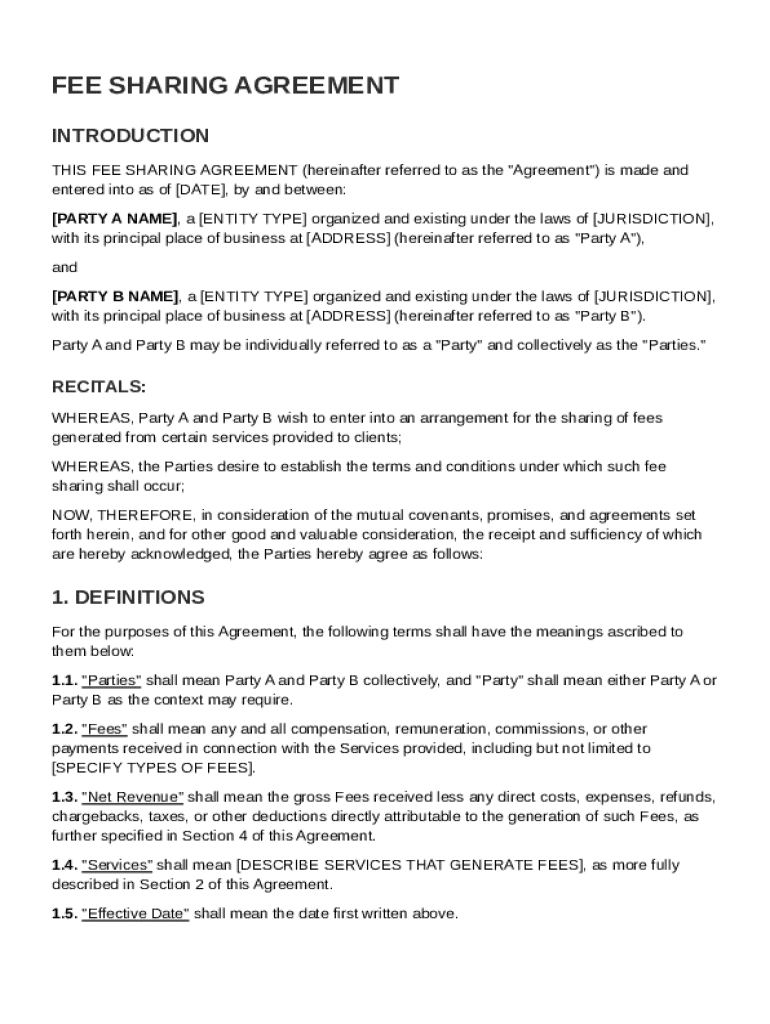
A Fee Sharing Agreement is a formal contract between two or more parties that sets forth how fees generated from specific services or transactions will be divided. Typically used by professionals such as attorneys, financial advisors, or consultants who collaborate on client projects, the agreement defines each party's responsibilities, the scope of services, and the formula for calculating the distribution of fees. This type of agreement helps to ensure transparency, reduce conflicts among parties, and provide a clear framework for cooperation.
Key Components
- Fee Structure: Outlines whether fees are shared equally, by percentage, or another method.
- Scope of Services: Details the services being offered and how they relate to the generated fees.
- Party Responsibilities: Sets forth what each party is expected to contribute to the project.
- Timeline: May include project deadlines or payment schedules.
How to Use the Fee Sharing Agreement Template
The Fee Sharing Agreement Template provides a structured approach to drafting an agreement. Begin by customizing sections to reflect the specific arrangement between the parties involved. This includes modifying clauses related to compensation and roles based on the partnership's needs. Using DocHub's intuitive document editing tools, you can add text, logos, or annotate as needed directly within the template.
Steps for Customization
- Identify the Parties: Clearly name and define the roles of all parties involved.
- Specify Compensation Details: Use the template to outline how fees will be calculated and distributed.
- Define Services: Clearly list the services each party will provide.
- Set Conditions and Limitations: Include clauses on dispute resolution and confidentiality.
Steps to Complete the Fee Sharing Agreement Template
Filling out the template requires careful attention to detail to ensure all aspects of the agreement are adequately covered. Follow these step-by-step instructions:
- Open the Template: Start by opening the template in DocHub to begin editing.
- Enter Party Information: Fill in the names, contact information, and roles of each party.
- Outline Fees: Specify the fee-sharing ratios and any relevant payment terms.
- Define Services Offered: Describe the exact nature of the services that will generate fees.
- Add Confidentiality Clause: Ensure there's a section dedicated to maintaining the confidentiality of shared information.
Legal Use of the Fee Sharing Agreement Template
The use of a Fee Sharing Agreement needs to comply with applicable laws and regulations. It's crucial to understand how these agreements can meet local legal requirements and incorporate clauses that address these considerations.
Legal Considerations
- Compliance with State Laws: Laws vary by state, impacting how agreements should be crafted.
- Professional Regulations: Certain professions may have specific rules about fee splitting.
- Dispute Resolution: Include arbitration or mediation clauses to handle disagreements.
Important Terms Related to the Fee Sharing Agreement
Understanding the terminology used in a Fee Sharing Agreement is essential for clarity and effectiveness. The template contains terms like "gross revenue," "net proceeds," and "retainer," which all have specific implications.
Essential Terms
- Gross Revenue: The total revenue generated before expenses.
- Net Proceeds: Revenue remaining after expenses are deducted.
- Retainer: An upfront payment to secure services, often credited against future fees.
Examples of Using the Fee Sharing Agreement Template
Fee sharing isn't limited to just one industry. It is employed across various fields whenever cooperative service provision happens.
Real-World Examples
- Law Firms: Share legal fees between multiple firms working collaboratively on a case.
- Financial Advisory: Dividing commissions from shared client investment portfolios.
- Consulting Partnerships: Partners distribute fees based on individual contributions to a client project.
Key Elements of the Fee Sharing Agreement Template
The successful drafting of a Fee Sharing Agreement necessitates inclusion of several critical elements.
Essential Elements
- Identification of Parties: Name and define every party involved in the agreement.
- Calculation and Distribution of Fees: Clearly state how fees will be calculated and distributed.
- Scope of Services: Provide comprehensive descriptions of what services are included.
- Amendment Clause: Allows for modifications of the agreement with consent from all parties.
Who Typically Uses the Fee Sharing Agreement Template
Various professionals and businesses that engage in collaborative projects and joint service offerings frequently use Fee Sharing Agreements.


Common Users
- Attorneys: Involved in collaborative or multi-jurisdictional cases.
- Real Estate Agents: Sharing commissions when co-listing properties.
- Marketing Agencies: When multiple entities work together on a shared client’s campaign.

Who Issues the Form
Typically, a Fee Sharing Agreement does not require issuance by external organizations but is created and agreed upon by the involving parties.
Creation and Issuance
- Internal Drafting: Often created by legal departments or contract managers.
- Mutual Agreement: Parties involved negotiate terms before finalizing the agreement.
- Legal Review: It is advisable that a lawyer review the agreement to ensure legal compliance.