






Definition and Meaning
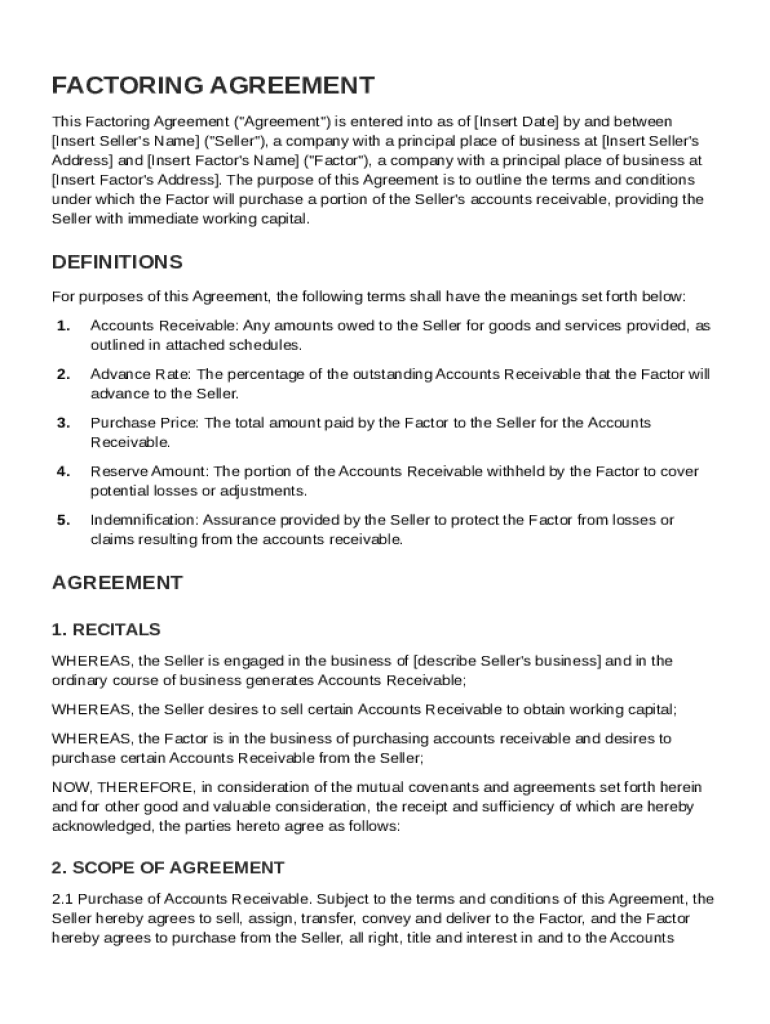
A Factoring Agreement Template is a standardized document that outlines the terms and conditions under which a Seller sells a portion of its accounts receivable to a Factor. This template serves as the foundational legal instrument that facilitates the sale of receivables, providing the Seller with immediate working capital. The document defines critical terms such as accounts receivable, advance rate, purchase price, and reserve amount. It helps in setting clear expectations and responsibilities for both the Seller and the Factor, ensuring a legally binding transaction.
Key Elements of the Factoring Agreement Template
The Factoring Agreement Template includes several essential components:
- Accounts Receivable: Details regarding the specific receivables involved in the transaction.
- Advance Rate: The percentage of the receivables’ value that the Factor advances to the Seller.
- Purchase Price: The agreed price at which the receivables are sold.
- Reserve Amount: The portion withheld by the Factor to cover potential losses.
- Obligations and Warranties: Positions held by both the Factor and Seller about the validity and quality of receivables.
- Collection Rights: Specifies the Factor’s rights and processes to collect payments from debtors.
How to Use the Factoring Agreement Template
Using this template requires a structured approach:
- Identify and List Receivables: Ensure all receivables to be factored are accurately documented.
- Determine Financial Terms: Decide on the advance rate, purchase price, and any reserve amounts.
- Review Obligations: Both parties should thoroughly read and understand their obligations and representations.
- Include Signatures: Both the Seller and Factor must sign the document to make it legally binding.
- Store Securely: Maintain a secure record of the agreement for future reference and compliance.
Who Typically Uses the Factoring Agreement Template
This template is primarily used by:
- Small to Medium Businesses (SMBs): Businesses seeking to accelerate their cash flow by factoring receivables.
- Accounts Receivable Departments: In organizations that manage and sell receivables as part of their financial strategy.
- Legal and Financial Advisers: Consultants who assist companies in structuring receivable sales agreements.


Legal Use of the Factoring Agreement Template
The template ensures the transaction complies with legal and financial standards, including:
- Governing Law: Specifies the jurisdiction whose laws govern the agreement.
- Termination Clauses: Conditions under which the agreement can be terminated by either party.
- Confidentiality Provisions: Ensures all transaction details remain confidential between the parties.
Steps to Complete the Factoring Agreement Template
Completing the template involves the following steps:
- Fill Out Detailed Information: Both parties must complete sections regarding their identities and contact information.
- Negotiate Financial Terms: Agree on terms related to advance rates and fees.
- Review and Agree on Representations and Warranties: Both parties should ensure all statements regarding the receivables are accurate and verifiable.
- Sign the Agreement: Obtain authorized signatures from all parties involved.
- Compile Supporting Documents: Attach any required documentation that supports the transaction, such as accounts receivable reports.
Important Terms Related to the Factoring Agreement Template
These key terms play a vital role:
- Factoring Fee: A fee charged by the Factor for providing the service.
- Debtor: The entity responsible for paying the receivable.
- Recourse: Determines whether the Seller must buy back unpaid receivables from the Factor.
Examples of Using the Factoring Agreement Template
Practical scenarios include:
- Startup Cash Flow Management: A startup selling receivables to maintain cash flow.
- Seasonal Business Operations: Companies that experience seasonal cash flows using factoring to stabilize finances throughout the year.
- Debt Management: Businesses with overdue receivables possibly having difficulty collecting payments leveraging a Factor's expertise.
Software Compatibility for Managing Factoring Agreements
To enhance utility, digital tools may be used:
- QuickBooks: For tracking accounts receivable balances.
- DocHub: Utilized for managing and finalizing the document online.
- Google Workspace: For collaborative input during the negotiation phase.
Penalties for Non-Compliance
Failure to adhere to terms can result in:
- Financial Penalties: For any breach of contract terms.
- Legal Action: Initiated by the Factor or Seller due to non-fulfillment of agreed obligations.
- Reputational Impact: Negative effects on credit ratings and business relationships.
State-Specific Rules for the Factoring Agreement Template
Differences can exist per state, such as:
- Usury Laws: May limit the interest rates that can be charged as part of factoring fees.
- Legal Compliance: Varies regarding the registration and enforceability of such agreements under state laws.
Business Types That Benefit Most from Factoring Agreement Templates
Beneficial for industries such as:
- Manufacturing: Where the production cycle often results in delayed receivables.
- Transportation and Logistics: Companies dealing with large invoice volumes.
- Healthcare: Providers awaiting insurance payments might leverage factoring to improve liquidity.