






Definition and Purpose of JV-229
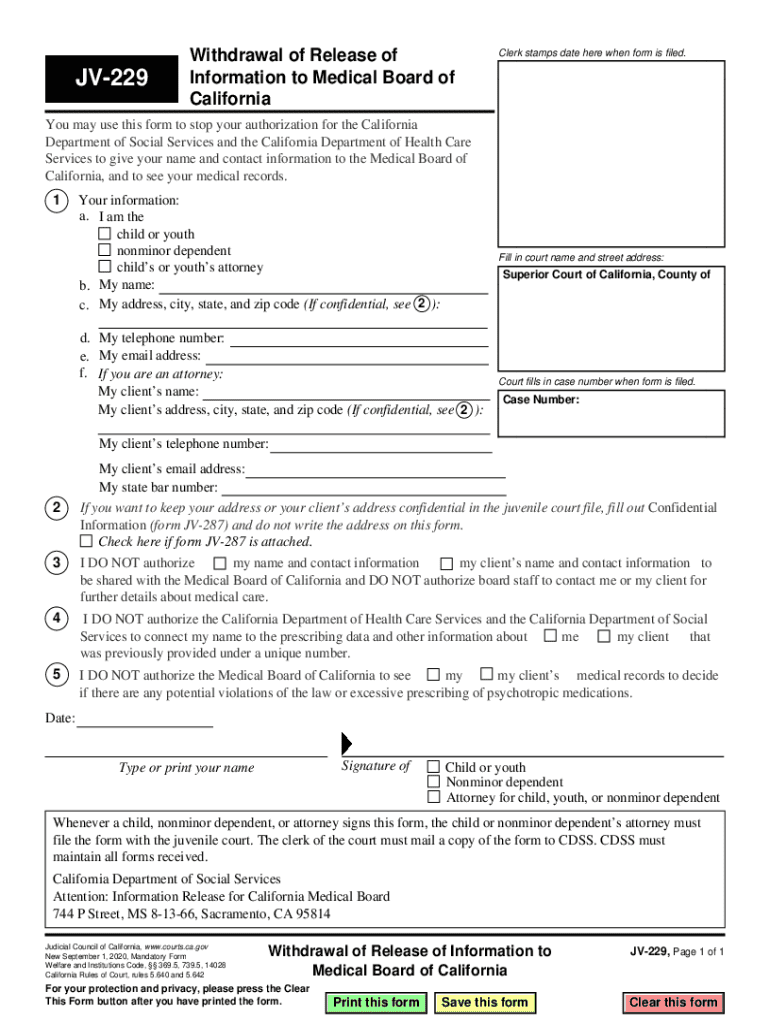
The JV-229 form is an essential judicial document used in California to withdraw previously granted authorization allowing the Department of Social Services and Department of Health Care Services to release personal information to the Medical Board of California. This form plays a critical role in managing privacy, as it empowers individuals, including attorneys for children or nonminor dependents, to keep their names and medical records confidential. The form's utility is particularly significant in scenarios where personal information is not required for medical care or investigation of potential legal violations.
Key Sections of the JV-229 Form
- Personal Information: The form requires details such as the name and contact information of the individual or representative filing the form.
- Authorization Details: A section outlining the previously granted authorizations that are now being revoked.
- Reason for Withdrawal: Explanation for the withdrawal, which can include privacy concerns or changes in the legal standing of the individual's case.
- Signatures: Signatures of the individual or legal representative to confirm the request.
Steps to Complete JV-229
Completing the JV-229 form involves several critical steps, each necessary to ensure the withdrawal is legally recognized.
- Gather Required Information: Ensure you have all personal details and the original authorization agreement.
- Fill Out Personal Details: Enter the individual's name, address, and contact information accurately in the designated sections.
- Detail Authorization Withdrawal: Carefully specify the information release that you are withdrawing, ensuring clarity to avoid partial revocation.
- Provide Reasoning: Write a concise reason for withdrawal, ensuring it aligns with valid privacy or legal concerns.
- Signature: Have the document signed by the individual or their authorized representative.
- Submit the Form: Determine the appropriate submission method based on legal or procedural requirements.
Important Considerations
- Double-check all information for accuracy to avoid rejections.
- Ensure all fields are completed to prevent processing delays.
- Verify submission guidelines with the local judicial body to ensure compliance with any changes to submission protocol.
Eligibility and Typical Users
Primarily, the JV-229 is utilized by individuals or their legal representatives who previously agreed to release personal information but now seek to maintain their privacy. Typical users include:
- Attorneys: Representing minors or nonminor dependents in various legal situations.
- Individuals Seeking Privacy: Those who no longer wish their medical information to be accessed by the Medical Board.
- Legal Guardians: Acting on behalf of dependents to secure their personal data.
Legal Implications and Use
The use of JV-229 can significantly affect one's legal rights concerning privacy. Once the form is submitted, it changes the legal basis for sharing personal information. It is crucial that this action aligns with legal advice or the current standing of a case. Misuse or improper withdrawal might lead to unintended legal consequences or challenges in accessing healthcare services if relevant exemptions are not communicated effectively to healthcare providers.
Notable Scenarios
- Court Orders: If a court has ordered information sharing, this form might not override such orders without legal amendments.
- Medical Emergencies: Ensure mechanisms are in place for care availability in case of medical emergencies, as this form can limit data sharing required for treatment.
State-Specific Rules
In California, specific provisions govern the application and effectiveness of the JV-229 form. Understanding state nuances is crucial, such as:
- California Judicial Council Guidelines: Adhering to state-specific procedural requirements for form validity.
- Timeframes: Awareness of deadlines for submission and any statutory limits on processing this withdrawal request.
California vs. Other States
While some forms similar to JV-229 may exist in other jurisdictions, their applicability, and legal implication often differ. In California, the focus is on maintaining privacy while allowing for necessary exceptions, consistent with state-specific healthcare regulations.
Submission Methods and Required Documents
Submitting a JV-229 form can be done through various channels depending on user preference and necessity, covering:
- Online Submissions: Some judicial bodies may accept online submissions through secure portals.
- Mail or In-Person: Traditional submission methods remain valid for this form, especially in jurisdictions or scenarios requiring physical confirmation.
- Required Accompanying Documents: May include proof of identity and earlier agreements authorizing information release.
Procedural Variations
- Local Court Regulations: Processes might vary based on locality; it’s advisable to consult local judicial sources for precise instructions.
- Method Selection: Selecting the most reliable and legally recognized method for your specific situation is crucial for timely processing.
Examples and Non-Compliance Penalties
Using the JV-229 demonstrates prudence in legal privacy settings but necessitates precision to avoid penalties for non-compliance.
- Common Examples: Include withdrawing authorization after a case is closed or if privacy concerns become paramount.
- Non-Compliance Risks: Failure to properly submit or inaccuracies in the form may result in continued unauthorized data sharing or legal questioning of the withdrawal's legitimacy.
Understanding the various facets of the JV-229 form and how it interacts with California's judicial and health systems is vital for those seeking to control the dissemination of personal information while adhering to state laws and regulations.