






Definition & Purpose of Employee Bond Agreement
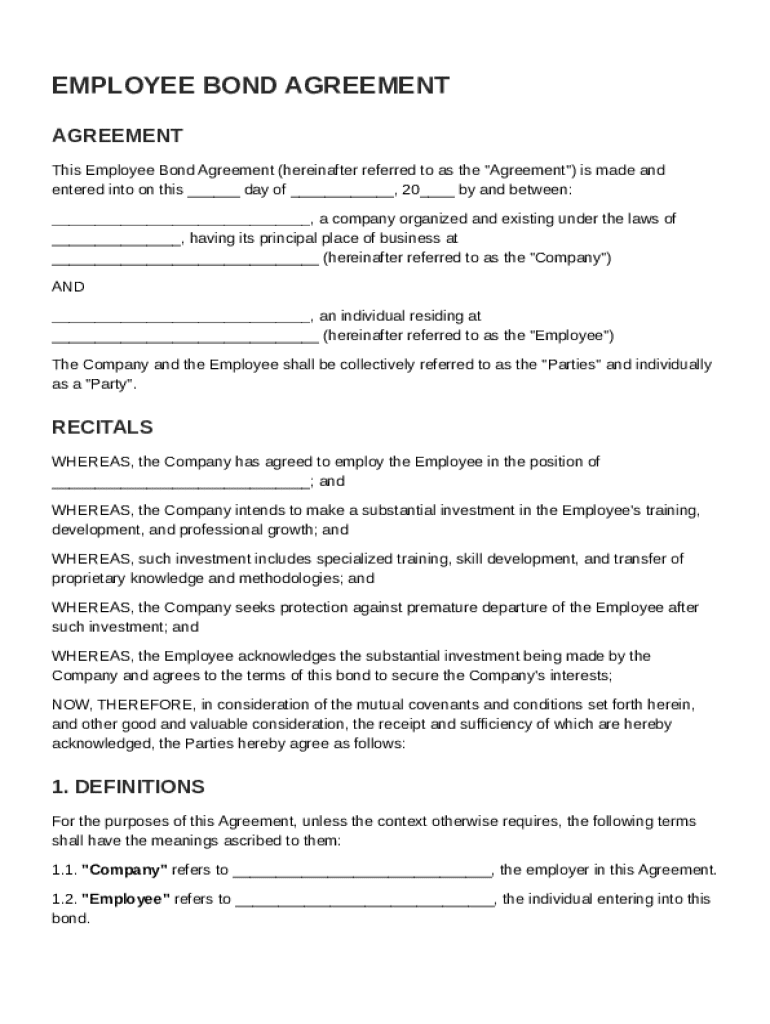
An Employee Bond Agreement is a legal document used by companies to specify the terms under which an employee commits to remain with the organization for a stipulated period. Typically, this agreement is part of an investment in the employee's professional development, such as training or skill enhancement courses. By signing this agreement, the employee agrees to the financial terms and conditions, which may include the repayment of expenses should they terminate their employment early.
Common Components
- Training Reimbursement: Details on whether the employee must repay training costs if leaving the job early.
- Confidentiality Clauses: Provisions to protect company trade secrets during and after employment.
- Non-compete Clauses: Restrictions on working with competitors for a specific duration after leaving the company.
- Legal Recourse: Information about the legal remedies available if the agreement is breached.
How to Use the Employee Bond Agreement Template
Utilizing the Employee Bond Agreement Template ensures comprehensive coverage of all necessary terms. It simplifies structuring and helps in outlining the responsibilities and rights of both parties clearly.
Template Usage Steps
- Download the Template: Start by obtaining the template from a trusted source such as DocHub.
- Customize Fields: Enter company-specific details such as names, roles, and training specifics.
- State the Binding Period: Clearly mention the duration the employee is expected to stay post-training.
- Include Legal Clauses: Add confidentiality and non-compete obligations.
- Review & Sign: Conduct a thorough review before both parties sign, making it legally binding.
Key Elements of the Employee Bond Agreement Template
Central to this template are several crucial areas that detail the responsibilities and repercussions for both the employer and employee.
Critical Sections
- Employment Duration: Specifies the time period the employee commits post-training.
- Financial Implications: Define any penalties or reimbursements required for early termination.
- Training Details: Outline the specific training provided and associated costs.
- Legal Clauses: Provide detailed confidentiality, non-disclosure, and non-compete agreements.
Steps to Complete the Employee Bond Agreement Template
Completing this form involves both preparation and precision. Below are detailed instructions to ensure accuracy:
- Collect Information: Gather necessary details about the employee and the training provided.
- Customize the Template: Fill in the template with specific terms applicable to the employment and training.
- Incorporate Clauses: Ensure all legal clauses are clearly spelled out to avoid future disputes.
- Employee Agreement: Ensure the employee understands and agrees to all terms before signing.
- Finalize and Store: Once signed, store the agreement securely, noting any future flag dates.
Important Terms Related to Employee Bond Agreement Template
Understanding the terminology within these agreements is crucial for both parties involved.
Noteworthy Terms
- Breach of Contract: A violation of any terms in the agreement resulting in penalties.
- Repayment Clause: Obligation of the employee to pay back training costs under certain conditions.
- Binding Period: Specific timeframe an employee must fulfill as part of agreement terms.
- Confidential Information: Trade secrets or proprietary company information protected under the agreement.
Legal Use of the Employee Bond Agreement Template
Ensuring your employee bond agreements are enforceable requires adhering to legal standards.
Legal Compliance
- State Laws: Be aware of specific state laws that might influence the enforceability of non-compete clauses.
- Employee Rights: Ensure the agreement respects employee rights and does not overreach in terms of confidentiality.
- Review by Legal Counsel: Have the agreement reviewed by a legal expert to ensure it's comprehensive and enforceable.
Who Typically Uses the Employee Bond Agreement Template
This template is useful for various types of organizations that invest in employee training.


Common Users
- Corporations: Often used by large corporations offering extensive training programs.
- Start-ups: Beneficial for start-ups investing in key personnel.
- Educational Institutions: Schools or training centers offering professional development courses for future commitments.
- Professional Firms: Legal, financial, or consulting firms providing role-specific training.

State-Specific Rules for the Employee Bond Agreement Template
Variations in state laws can influence how such agreements are structured and enforced. Understanding these is critical for compliance.
Factors to Consider
- Non-compete Enforcement: Regulations around non-compete clauses vary significantly from state to state.
- Repayment Clauses Legality: Some states place restrictions on training cost recovery.
- Minimum Required Terms: Explicit state-required terms that must be included for enforceability.
Understanding these nuances aids in creating a valid and enforceable agreement specific to the region's legal framework.