
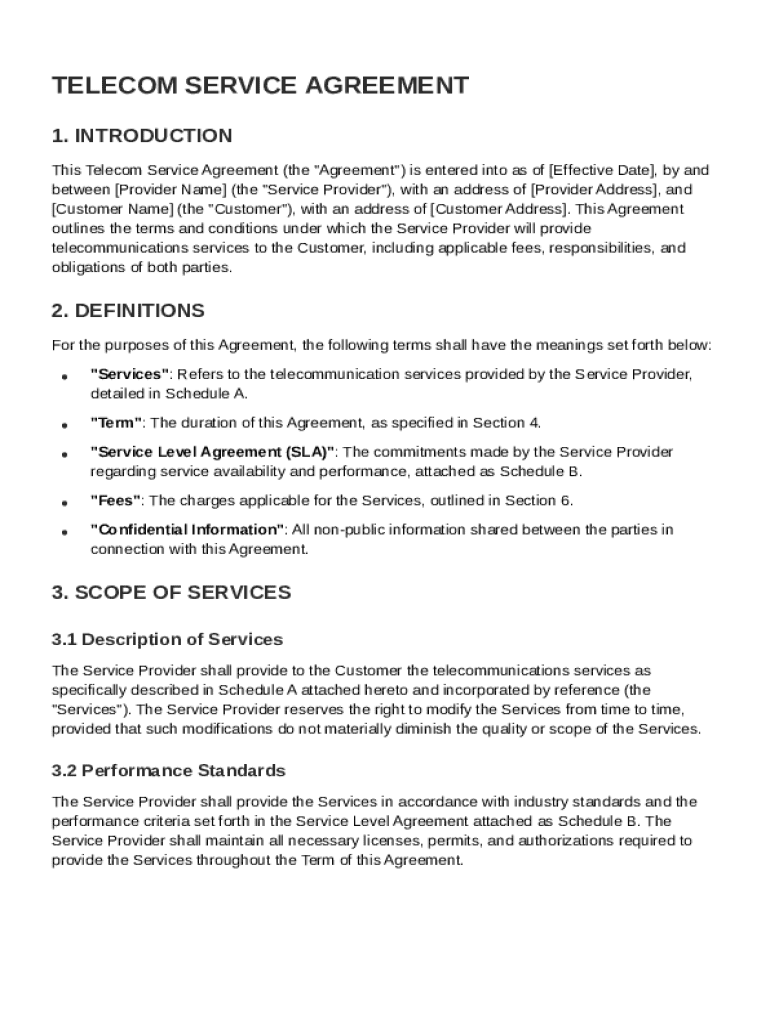







Definition and Meaning of the Telecom Service Agreement Template
The Telecom Service Agreement Template serves as a detailed framework outlining the terms and conditions governing telecommunications services provided by a service provider to a customer. This template is essential for clearly defining the relationship between both parties and ensuring mutual understanding. It usually covers aspects such as service definitions, scope, responsibilities, fees and payment terms, and confidentiality clauses. Furthermore, it encompasses service level agreements, dispute resolution processes, and indemnification clauses. This template standardizes expectations for both parties, setting a legal foundation for service delivery and performance standards.
Important Terms Related to the Telecom Service Agreement Template
Key terminology associated with the Telecom Service Agreement Template is crucial for understanding the provisions within the document. A few essential terms include:
- Service Provider: The party offering telecommunication services.
- Customer: The party receiving telecommunication services.
- Service Level Agreement (SLA): A component that defines the level of service expected, often including uptime and performance metrics.
- Indemnification: A provision typically protecting both parties against loss or damage claims arising from the agreement.
- Confidentiality: Terms that protect sensitive information shared between the parties from disclosure to third parties.
Understanding these terms is vital for parties entering into a telecom service agreement as it helps in navigating the template's clauses effectively.
Key Elements of the Telecom Service Agreement Template
Several critical elements form the backbone of a Telecom Service Agreement Template. These elements ensure that both parties are aligned with the operational and legal expectations:
- Scope of Services: Specifically outlines what services are covered under the agreement.
- Fees and Payment Terms: Details the cost of the services provided and the payment schedule.
- Responsibilities of Both Parties: Clearly defines the duties and obligations of both the service provider and the customer to prevent disputes.
- Dispute Resolution: Provides mechanisms for resolving any conflicts that arise from the agreement.
- Miscellaneous Provisions: May include clauses on amendment procedures, termination, and assignment rights.
These elements must be tailored in the template to suit the specific needs and infrastructure of the involved parties.
Steps to Complete the Telecom Service Agreement Template
Filling out the Telecom Service Agreement Template involves a structured approach to ensure all necessary information is accurately captured:
- Collect Basic Information: Start by gathering the names, contact information, and roles of both parties involved.
- Define Services: Clearly define the telecommunications services being provided, including any limitations and exclusions.
- Outline Payment Terms: Specify the fees, payment schedule, and method of payment acceptable to both parties.
- Detail Responsibilities: Articulate the responsibilities of the service provider and customer, including maintenance and support obligations.
- Include Legal Clauses: Integrate necessary legal provisions such as confidentiality, indemnification, and dispute resolution.
- Review and Sign: Thoroughly review the completed template with legal counsel before both parties sign it to ensure legality and completeness.
Following these steps ensures the agreement is comprehensive and legally binding.
Legal Use of the Telecom Service Agreement Template
The Telecom Service Agreement Template has specific legal applications and limitations. It must comply with relevant U.S. federal and state laws, which often include regulations regarding privacy, data protection, and consumer rights. The legal enforceability of agreements using this template can be strengthened by:
- Legal Counsel Review: Having the document reviewed by legal professionals.
- State and Federal Compliance: Ensuring that all clauses align with U.S. regulations, such as the Communications Act and FTC rules.
- E-Signature Legality: Using platforms like DocHub for legally binding electronic signatures, adhering to the ESIGN Act.
Understanding the legal implications and ensuring regulatory compliance prior to execution is crucial for both parties.
Who Typically Uses the Telecom Service Agreement Template
Telecom Service Agreement Templates are typically utilized by a variety of business entities and individuals in the telecommunications field. Common users include:
- Telecommunications Companies: To formalize service arrangements with clients.
- Corporate Clients: Businesses purchasing telecom services for operations.
- IT Departments: For internal infrastructure agreements.
- Legal Teams: As part of standard contract procedures in technology transactions.
These users rely on the template to ensure clarity and legal protection in their service agreements.


State-Specific Rules for the Telecom Service Agreement Template
Telecom Service Agreements may be subject to state-specific rules in addition to federal regulations. These can include:
- State Public Utility Regulations: Varying rules concerning telecom service delivery, pricing, and service quality.
- Consumer Protection Laws: State laws that might impose additional requirements on service contracts.
- Taxation Rules: Different states may have their own set of tax obligations related to telecom services.
It's important for parties to familiarize themselves with the state-specific legal landscape to ensure the agreement is compliant.
Business Types That Benefit Most from Telecom Service Agreement Template
Certain business types stand to gain substantial benefits from utilizing a Telecom Service Agreement Template:
- Internet Service Providers (ISPs): To maintain clear agreements with customers and partners.
- Mobile Network Operators: For managing service levels and customer obligations.
- Corporate Enterprises: Large companies securing telecom services for extensive operations.
- Cloud Service Providers: Aligning service delivery and terms with telecom providers.
These businesses leverage the template to ensure a structured approach to service agreements, reaffirming trust and efficiency.




