






Definition and Meaning
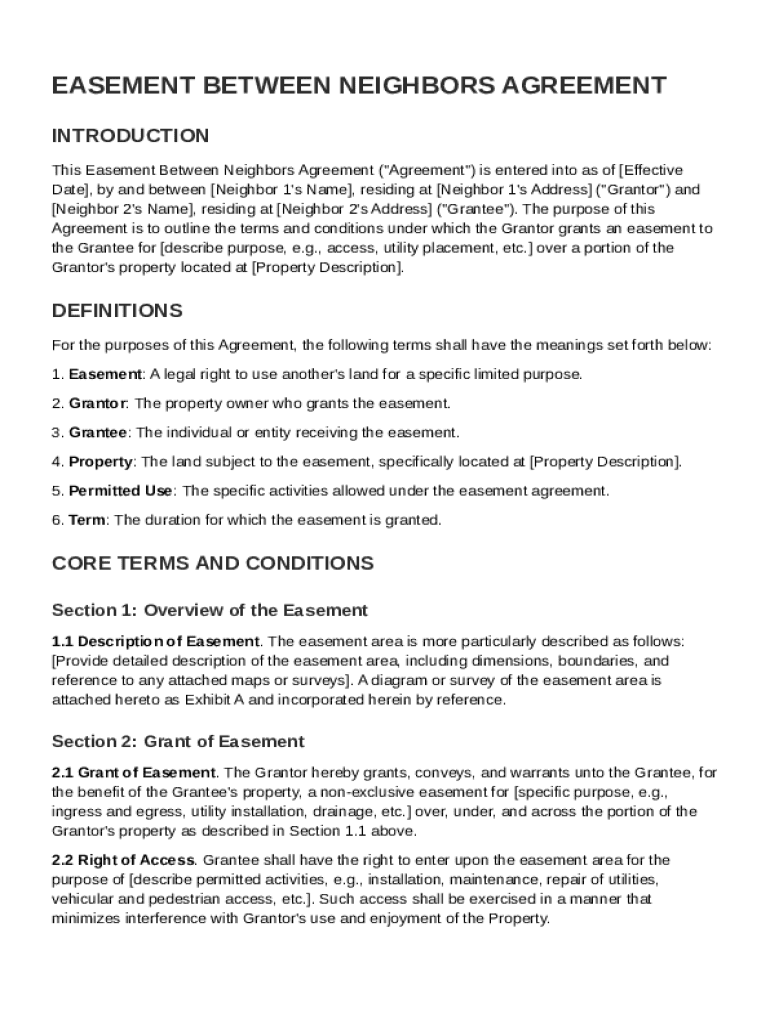
The Easement Between Neighbors Agreement Template provides a structured means for neighboring property owners to formalize a legal agreement concerning the shared use of land. Typically, this involves one neighbor (the Grantor) allowing another neighbor (the Grantee) specific rights to use a portion of their property. This might pertain to purposes such as access, utility maintenance, or other specified uses. The template delineates the roles, responsibilities, and terms under which this easement operates, ensuring both legal clarity and peaceable neighborly relations.
Key Elements of the Agreement
An Easement Agreement between neighbors should encapsulate several critical components to be effective:
- Grantor and Grantee Details: The legal names, addresses, and contact information for both involved parties.
- Description of the Easement: Precisely define the location and boundaries of the land allocated for the easement.
- Purpose of the Easement: Clearly state the intended use, such as driveway access or drainage maintenance.
- Duration and Termination: Specify the timeline for which the easement is valid and conditions under which it can be terminated.
- Rights and Responsibilities: Detail what each party is entitled to and responsible for, including any maintenance or liability duties.
- Governing Laws and Dispute Resolution: Assert which state laws apply and how disputes will be handled.
How to Use the Easement Between Neighbors Agreement Template
Utilizing the Easement Between Neighbors Agreement Template involves understanding its structure, customizing its contents to suit specific circumstances, and formally executing it with all involved parties. Typically, this process follows these steps:
- Review the Template: Start by thoroughly reading through the template to understand all sections and required information.
- Customize the Agreement: Fill in details such as the identities of the Grantor and Grantee, description of the easement land, and specific terms of use.
- Consult a Legal Expert: It’s often wise to have a lawyer review the agreement to ensure that it adheres to local laws and comprehensively covers necessary points.
- Formalize the Agreement: Arrange for both parties to sign the document in the presence of a notary public or other legal witness.
- Record the Easement: In many cases, recording the easement agreement with the local county registry is recommended to provide public notice and ensure enforceability.
Who Typically Uses This Template
The Easement Between Neighbors Agreement Template is primarily utilized by residential property owners who need to arrange for shared usage rights. It's especially common among homeowners who share driveways, require specific access to public utilities crossing through neighboring properties, or need to clarify boundaries to avoid disputes. Land developers and real estate agents also frequently engage with this document during the planning stages of development projects.
Important Terms Related to Easement Agreements
Several technical terms and legal definitions are integral to understanding and executing an Easement Between Neighbors Agreement:
- Servient and Dominant Estate: The servient estate is the land subject to the easement; the dominant estate benefits from the easement.
- Appurtenant Easement: This is tied to the land, meaning it transfers with property ownership.
- In Gross Easement: Personal to the holder, doesn't transfer with property.
- Ingress and Egress: Rights to enter and exit over another's property.
- Maintenance Clause: Outlines which party is responsible for upkeep and to what standard.
Legal Use of the Easement Agreement
Under U.S. law, easements are non-possessory interests in a piece of property that grant specific usage rights to another party. These agreements are enforceable if clearly written, beneficial to the public or private interests, and appropriately executed according to state statutes. They should be recorded to provide notice to subsequent property purchasers and ensure full enforceability against future owners.
State-Specific Rules for Easement Agreements
Different states in the U.S. may have unique regulations affecting easement agreements. It is crucial to consider the specific requirements in your state when using an Easement Between Neighbors Agreement Template. For instance:
- Recording Requirements: States like California and New York require that easement agreements be recorded with the county recorder's office for enforceability against third parties.
- Statute of Limitations: The ability to litigate on easements might have varied timelines based on local statutes.
- Environmental Considerations: Some states may impose additional considerations for easements affecting environmentally sensitive land zones.
Examples of Easement Agreements
In real-world scenarios, easement agreements simplify complex neighborhood arrangements:
- Shared Driveways: Two neighbors living along a narrow road may use an easement agreement to formalize shared driveway usage, covering maintenance responsibilities and liability issues.
- Utility Access: A residence might grant an easement to a utility company permitting installation and maintenance of power lines across private property.
- Boundary Adjustments: In cases where property lines prevent access to public roads, an easement can allow landlocked properties lawful entry and exit routes over adjacent parcels.
Steps to Complete the Easement Between Neighbors Agreement Template
Completing the Easement Between Neighbors Agreement Template effectively involves careful consideration and rigorous attention to detail:
- Gather Required Information: Collect legal descriptions of the involved properties, contact information, and objectives of the easement.
- Complete Initial Draft: Fill out basic sections with specific details relevant to the agreement.
- Review with Stakeholders: Allow both involved parties to review and suggest amendments.
- Seek Legal Review: An attorney should review the document for legal accuracy and comprehensiveness.
- Final Revisions: Implement any needed changes based on reviews.
- Sign and Notarize: Conclude with signatures from both parties, witnessed by a notary.
- Record the Agreement: If required, record the agreement officially to solidify its enforceability.
Following these steps ensures that the Easement Agreement is legally sound and fulfills its intended purpose without overlooking any critical details.