






Definition & Meaning
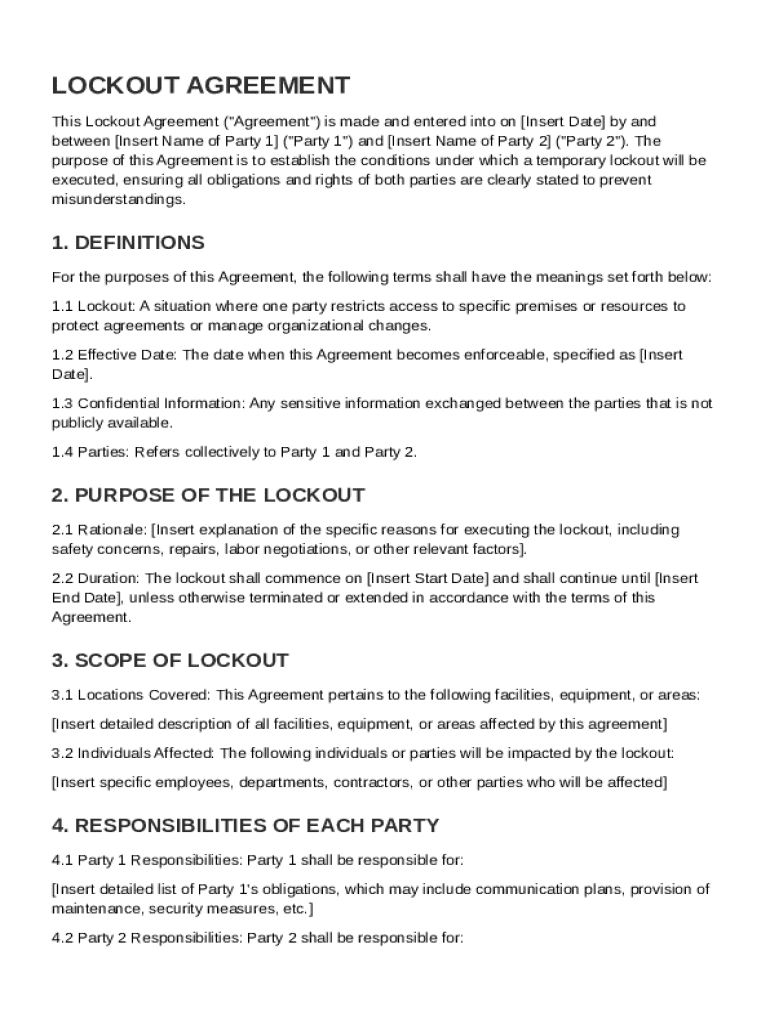
A Lockout Agreement Template is a structured document that outlines the terms and conditions applicable during a temporary lockout between two parties, often used in business negotiations or real estate transactions. The agreement sets the baseline for how both parties will engage during the lockout period, specifying their rights and obligations. It typically includes key definitions, the purpose of the lockout, and the scope of the agreement to avoid any misunderstandings. Furthermore, it provides a framework to define the responsibilities of each party, thus ensuring that both parties have a clear understanding of their roles during the lockout. An effective Lockout Agreement Template serves as a preliminary safeguard, outlining vital communication protocols, confidentiality obligations, liability terms, methods for dispute resolution, and general provisions to manage the temporary lockout phase efficiently.
Key Elements of the Lockout Agreement Template
When drafting a Lockout Agreement Template, particular elements are essential to its function and enforceability. These include:
- Definitions: Clarifying key terms used throughout the agreement helps prevent differing interpretations.
- Purpose and Scope: Describing why the lockout is necessary and what it aims to achieve guides both parties on expectations.
- Responsibilities: Outlining the duties and limits of each party during the lockout ensures that everyone knows their specific roles.
- Communication Protocols: Establishing ways and frequencies of communication during the lockout period helps maintain transparency.
- Confidentiality Clause: Securing sensitive information exchanged during the lockout protects proprietary or critical data.
- Liability and Indemnification: Defining who is liable for specific actions or breaches safeguards against unforeseen liabilities.
- Dispute Resolution: Knowing how to handle disagreements without escalating them into more significant disputes is critical.
- General Provisions: These include governing law, amendment procedures, and other administrative elements necessary for the agreement's completeness.
Steps to Complete the Lockout Agreement Template
Completing a Lockout Agreement Template involves a step-by-step process that ensures clarity and mutual understanding:
- Begin with Accurate Details: Input the full legal names and contact information of the involved parties.
- Define the Duration: Clearly state the start and end dates for the lockout period.
- Set Out Terms and Conditions: Indicate the intended use of the lockout, expectations, and obligations of each party.
- Structure Responsibility Clauses: Specify the activities each party can and cannot engage in during the lockout.
- Establish Communication Frameworks: Define the methods and intervals of communication required during the period.
- Include Confidentiality Provisions: Enumerate the information that needs protection and parties’ responsibility towards it.
- Determine Dispute Resolution Procedures: Opt for mediation, arbitration, or court, clearly stating procedures and timelines.
- Verification and Signatures: Ensure all parties sign the agreement to validate its enforceability.
Why Should You Use a Lockout Agreement Template?
A Lockout Agreement Template plays a crucial role in safeguarding interests in negotiations and transactions without binding either party legally to a final deal. It keeps parties focused on the tasks at hand, minimizes risk exposure, and prevents either party from negotiating with others about the same transaction during the lockout period. This ensures that both parties can exclusively focus on formulating a final agreement that meets their needs. Moreover, having a standardized template saves time in drafting, ensures nothing critical is overlooked, and leaves room for customization according to specific circumstances.
Who Typically Uses the Lockout Agreement Template?
Lockout Agreement Templates are predominantly used by:
- Business Negotiators: Engaged in mergers, acquisitions, or joint ventures, ensuring that discussions remain exclusive.
- Real Estate Developers: Looking to secure exclusive rights to negotiate the acquisition of land or property.
- Legal Consultants: Advising clients in drafting agreements to secure strategic positions during preliminary phases of negotiations.
- Corporate Firms: Engaging in high-value transactions that require confidentiality and focused attention.


Important Terms Related to Lockout Agreement Template
Understanding the terminology related to Lockout Agreement Templates enhances comprehension of the document:
- Exclusivity: Restriction preventing parties from discussing a potential deal with third parties during the lockout period.
- Breach of Agreement: Actions by either party that violate the terms outlined in the agreement, possible leading to penalties.
- Amendment Clause: The process by which the agreement can be adjusted, usually requiring mutual consent.
- Term Sheet: A non-binding document outlining the basic terms and conditions that parties have agreed upon during negotiations.
Access to this nomenclature is crucial for parties to grasp their rights and responsibilities fully.
Legal Use of the Lockout Agreement Template
In the United States, Lockout Agreements must comply with applicable state and federal laws to be legally binding. While the document itself is not considered a legally binding contract, it carries weight in demonstrating the parties’ intention to negotiate in good faith exclusively. Users must ensure that the agreement aligns with the Statute of Frauds if it involves real estate or any transaction that falls within specific legal thresholds. It is advisable to have legal counsel review the draft to adjust any potentially non-compliant clauses and ensure enforceability, particularly in cross-state negotiations where jurisdictional differences might apply.
State-Specific Rules for the Lockout Agreement Template
State-specific rules may impact the drafting, execution, and enforcement of a Lockout Agreement Template. For instance:
- California: Emphasizes good faith and fair dealing, suggesting that any party backing out from exclusive negotiations might face legal repercussions.
- New York: Provides latitude in defining terms but encourages comprehensive definitions to prevent enforceability issues.
- Texas: Stresses on clear dispute resolution mechanisms to prevent dragging disputes into lengthy litigations.
It’s essential for entities to review local statutes or consult legal experts familiar with regional law to ensure compliance. This attention to state-specific rules reduces the risk of unenforceability and enhances the valid grounds upon which the agreement is placed.