






Definition and Meaning of Distributor Agreement
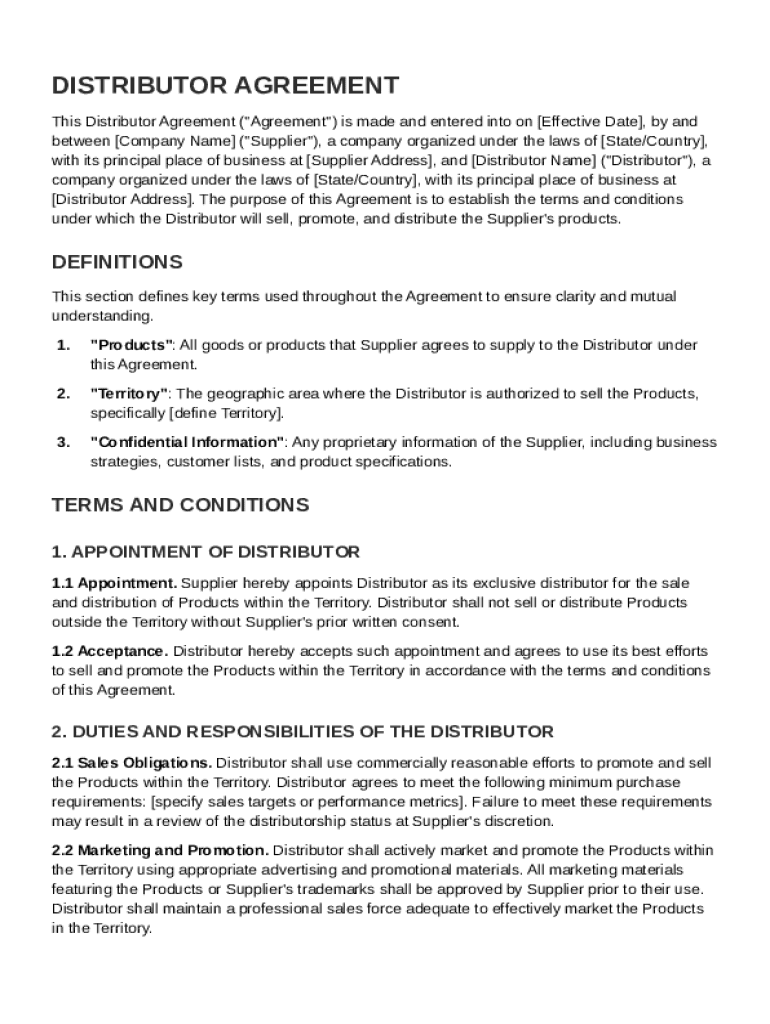
A Distributor Agreement is a legally binding contract that delineates the relationship between a Supplier and a Distributor. This document is essential for setting the terms under which the Distributor will market, sell, and distribute the Supplier's products within a certain geographical area or market segment. Key components of the agreement include definitions of crucial terms, obligations and rights of both parties, terms of payment, confidentiality clauses, and procedures for resolving disputes. It establishes a clear operational framework to ensure both parties are aligned on expectations and deliverables.
Key Elements of the Distributor Agreement
Understanding the main components of a Distributor Agreement is pivotal in ensuring a productive business relationship. Some of the primary elements include:
- Territory and Exclusivity: Defines the geographic area within which the Distributor operates, and whether they have exclusive rights to distribute in this area.
- Terms of Sale: Establishes the pricing structure, payment terms, and any discounts or incentives.
- Duration and Termination: Specifies the length of the agreement and conditions under which either party can terminate the contract.
- Responsibilities: Outlines sales goals, marketing responsibilities, and inventory management expectations.
- Confidentiality and Non-Compete Clauses: Protects proprietary information and restricts the Distributor from engaging with competitors during and after the contract term.
How to Use the Distributor Agreement Template
Leveraging the Distributor Agreement Template from DocHub simplifies creating a tailored agreement that meets your specific needs. Here’s how you can do it:
- Customize Template Fields: Input your company's information and specifics about your arrangement with the Distributor. Adjust terms like pricing, payment schedules, and territories.
- Add or Modify Clauses: Tailor the template by adding specific clauses relevant to your industry, such as exclusivity clauses or specific legal requirements.
- Review with Legal Counsel: Before finalizing, have a legal professional review the document for compliance with applicable laws and ensure there are no unfavorable terms.
- Electronic Signing: Utilize DocHub’s electronic signature feature to easily and securely sign the agreement and distribute it to the necessary parties.
Steps to Complete the Distributor Agreement Template
Completing the Distributor Agreement Template involves a structured process to ensure accuracy and compliance:
- Fill Out General Information: Include both Supplier and Distributor details, such as names and contact information.
- Define Terms and Conditions: Clearly articulate the terms surrounding sales, territory rights, and payment, ensuring both parties' understanding and agreement.
- Insert Legal Obligations: Add standard clauses that cover intellectual property rights, confidentiality obligations, and dispute resolution mechanisms.
- Collaborate with Stakeholders: Engage with relevant parties to review the agreement and confirm that all necessary adjustments are incorporated.
- Finalize and Sign: After thorough review and consensus, use DocHub’s electronic signature feature to sign and send the agreement.
Legal Use of the Distributor Agreement Template
The Distributor Agreement Template provided by DocHub is designed to conform with U.S. legal standards, catering to varied business scenarios. Each agreement must align with:
- Federal and State Laws: Ensure compliance with applicable laws governing distributor and supplier transactions.
- Contractual Obligations: Address all legal requirements for forming a valid contract, including offer, acceptance, consideration, and legality.
- Regulatory Compliance: Include any industry-specific regulatory requirements, such as those related to trade compliance or product certifications.
Important Terms Related to Distributor Agreements
Understanding and accurately defining terms within a Distributor Agreement is critical. Some terms to pay close attention to include:
- Intellectual Property: Clarifies the protection and usage rights of the Supplier's intellectual assets, such as trademarks and patents.
- Force Majeure: Addresses unforeseen events that may impede the ability of either party to fulfill their contractual obligations.
- Assignment: Governs the rights of either party to transfer their obligations under the agreement to another entity.
Examples of Using the Distributor Agreement Template
Distributor Agreements are utilized in various sectors to formalize distribution relationships. Practical examples include:
- Consumer Electronics: A tech company collaborates with a regional distributor to expand its market presence in the southeastern United States.
- Food and Beverage: A gourmet food supplier establishes terms with a distributor to get products onto supermarket shelves in major metropolitan areas.
- Automotive Parts: An auto parts manufacturer uses the template to set up a distribution network within designated states, including detailed delivery and payment schedules.
State-Specific Rules for Distributor Agreements
While a Distributor Agreement generally follows standard business contract principles, state-specific laws can impact the terms and execution:
- California: Known for stricter business and employment regulations, affecting terms related to termination and duty of care.
- New York: Requires clear articulation of terms to manage legal disputes, enforcing statutes that protect business transactions and relationships.
- Texas: Emphasizes ‘good faith and fair dealing’ in commercial contracts, influencing how distribution agreements are written and enforced.
By comprehensively exploring these aspects, you create a robust Distributor Agreement that aligns with legal norms and business objectives, facilitating smoother partnerships and operations.