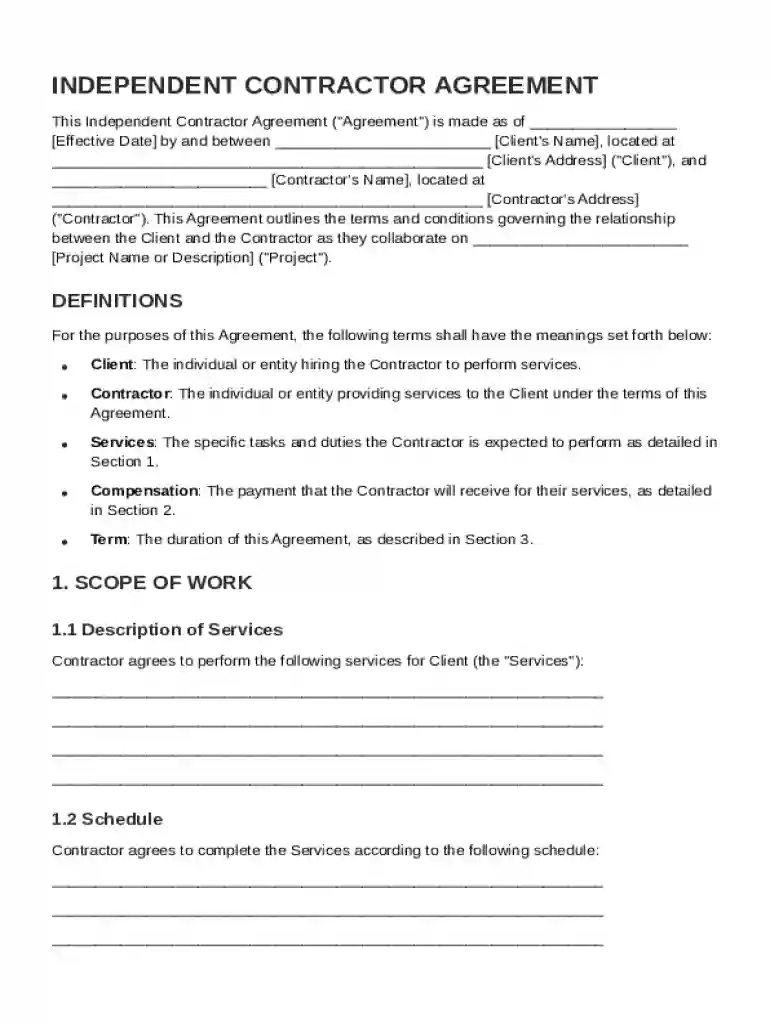
Independent Contractor Contract Template 2026

Get Form
Independent Contractor Contract Template Preview on Page 1

Here's how it works

01. Edit your form online
Type text, add images, blackout confidential details, add comments, highlights and more.

02. Sign it in a few clicks
Draw your signature, type it, upload its image, or use your mobile device as a signature pad.

03. Share your form with others
Send it via email, link, or fax. You can also download it, export it or print it out.

Definition & Purpose of the Independent Contractor Contract Template

The Independent Contractor Contract Template is a formal legal document that outlines the working relationship between a client and an independent contractor. This contract defines the scope of work, terms and conditions, compensation, intellectual property rights, confidentiality obligations, and more. The primary purpose of this agreement is to establish clear expectations and responsibilities, ensuring both parties understand their roles and obligations. This contract delineates the contractor's status as an independent entity, distinguishing them from employees, which is vital for legal and tax purposes.

How to Use the Independent Contractor Contract Template

The contract template provides a structured format that helps streamline the process of defining work partnerships between a contractor and a client. To utilize the template effectively, start by identifying the specific project details such as scope, duration, deliverables, and deadlines:

  1. Scope of Work: Clearly outline the tasks, milestones, and objectives involved in the project.
  2. Compensation Details: Specify payment terms, including rates, payment schedule, and method of payment.
  3. Terms and Termination: Define the start and end dates, including conditions under which the contract may be terminated early by either party.

By completing these sections accurately, you ensure that both parties have a common understanding, reducing the risk of disputes.

Steps to Complete the Independent Contractor Contract Template

Filling out the Independent Contractor Contract Template involves several steps. Each step should be approached meticulously to ensure all pertinent information is correctly captured:

  1. Fill in Party Information: Input the full names and addresses of the client and contractor.
  2. Detail Project Scope: Describe the specific duties the contractor is expected to perform.
  3. Establish Payment Terms: Set clear compensation guidelines, including any upfront fees or deposits.
  4. Define Confidentiality and IP Rights: Specify ownership of any intellectual property created during the project.
  5. Include Signatures: Have both parties sign and date the document to finalize the agreement.

Ensuring that every section of the template is filled out accurately is key to establishing a legally binding contract.

Who Typically Uses the Independent Contractor Contract Template

The template is commonly used by businesses and individuals who require the services of freelancers or contractors. Key users include:

  • Small Businesses and Startups: Often hire contractors for web development, graphic design, and marketing projects.
  • Consultants: Specialists who provide expert advice in fields like finance, IT, or management.
  • Creative Professionals: Writers, photographers, and designers who take on project-based work for clients.

This diverse user base relies on the template to formalize working relationships, ensuring clarity and protection for both client and contractor.


decoration image ratings of Dochub

Key Elements of the Independent Contractor Contract Template

Critical components of the contract template include:

  • Scope of Work: Details tasks, milestones, and responsibilities.
  • Compensation: Outlines payment methods, schedules, and amounts.
  • Confidentiality Agreement: Protects trade secrets and sensitive information.
  • Indemnification and Liability: Establishes accountability for legal liabilities.
  • Termination Clause: Specifies conditions allowing either party to end the agreement.

Each element serves to delineate the terms clearly, helping to prevent misunderstandings and conflicts.

Legal Use of the Independent Contractor Contract Template

The Independent Contractor Contract Template is used to establish a legal framework for the contractor-client relationship. It defines:

  • Contractor Status: Reinforces the non-employee relationship, which affects tax filings and insurance obligations.
  • Compliance with Laws: Ensures the agreement adheres to laws applicable within the U.S., such as labor laws and the IRS guidelines.

By clearly establishing these legal aspects, the contract helps safeguard both parties against potential legal challenges.

State-Specific Rules for the Independent Contractor Contract Template

While the general structure of the contract remains consistent, there are variations based on state-specific laws, such as:

  • California (AB-5): Imposes strict criteria for classifying workers as independent contractors.
  • New York: Requires detailed wage rate and frequency disclosures.

It is important that users adapt the template according to state regulations to ensure compliance and legal validity.

Examples of Using the Independent Contractor Contract Template

A variety of scenarios illustrate the utility of this template, including:

  • Tech Startup Hiring a Developer: A company seeking a tech solution contracts a developer to build a custom application, clearly outlining deliverables and deadlines.
  • Marketing Agency Partnering with a Freelancer: An agency outsourcing content creation, defining expectations and payment terms clearly in the agreement.

These examples underscore the template's flexibility across different sectors and project types.

IRS Guidelines Concerning Independent Contractors

The IRS emphasizes that independent contractors are separate entities from employees, which impacts withholding taxes and reporting. Contractors must:

  • File a 1099 Form: To report income received from a specific client if it exceeds $600 in a financial year.
  • Maintain Records: Keep detailed logs of all agreements, expenses, and payments for accurate tax filings.

Awareness of these guidelines helps both contractors and clients manage their tax responsibilities appropriately.

be ready to get more

Complete this form in 5 minutes or less

Get form

Security and compliance

At DocHub, your data security is our priority. We follow HIPAA, SOC2, GDPR, and other standards, so you can work on your documents with confidence.

Learn more
ccpa2
pci-dss
gdpr-compliance
hipaa
soc-compliance
be ready to get more

Complete this form in 5 minutes or less

Get form