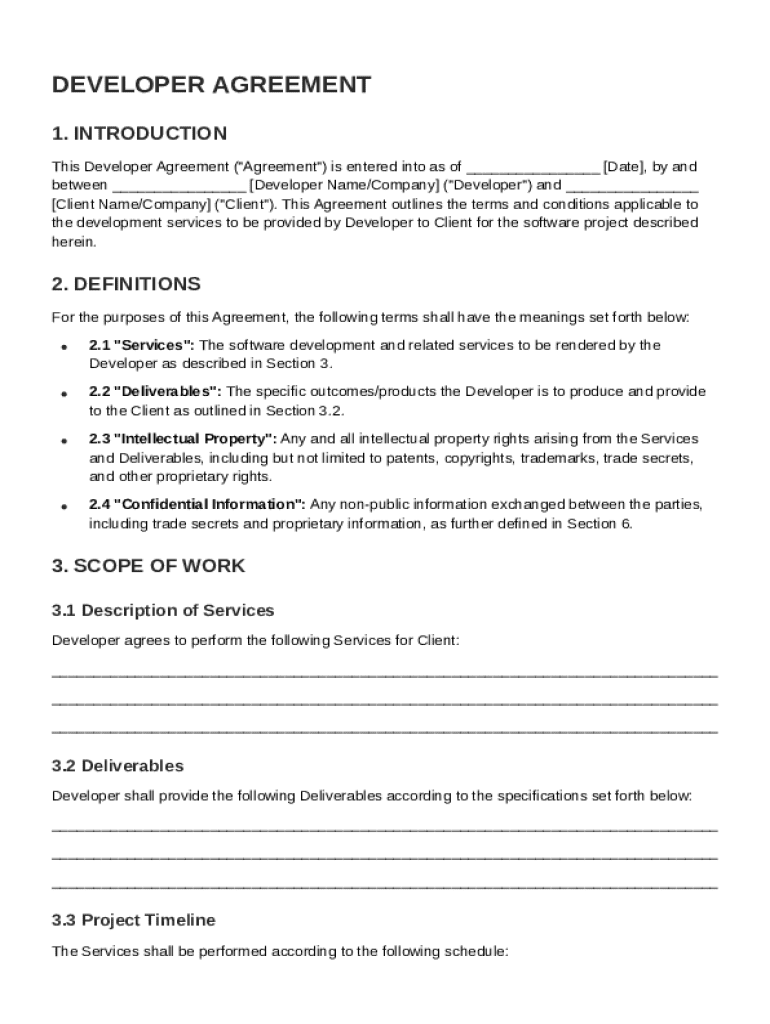







Definition and Purpose of a Developer Agreement Template
A Developer Agreement Template serves as a standardized contract between a Developer and a Client for software development services. It outlines the terms and conditions to ensure clarity and mutual understanding. Essential components typically included are definitions of key terms, the scope of work, compensation structure, intellectual property ownership, confidentiality obligations, warranties, termination conditions, governing law, and miscellaneous provisions. By using this template, both parties can establish clear expectations and responsibilities, reducing the likelihood of disputes.
Examples of Key Terminologies
- Scope of Work: Describes what the Developer will deliver, including specifics like timelines, milestones, and deliverables.
- Compensation: Details the payment terms, frequency, and method of payment for the services rendered.
- Intellectual Property: Clarifies who holds the rights to the software and any associated materials developed during the project.
- Confidentiality: Obligates the parties to keep sensitive information private, outlining what is considered confidential and any exceptions.
How to Use the Developer Agreement Template
To effectively use the Developer Agreement Template, follow these steps:
- Review and Understand: Begin by reading the entire template to familiarize yourself with its components and language.
- Customize the Template: Tailor the sections to reflect the specific details of your project, including descriptions, deadlines, and payment amounts.
- Consult with Legal Counsel: Ideally, both parties should have the document reviewed by legal professionals to ensure compliance with applicable laws and regulations.
- Negotiation and Agreement: Discuss any changes or additional clauses that may be necessary to address specific circumstances.
- Execution of the Agreement: Once both parties are satisfied, finalize and sign the document, keeping copies for record-keeping.
Key Elements of the Developer Agreement Template
The template includes several vital sections that act as the foundation of a Developer Agreement:
- Definitions: This section clarifies the meaning of terms to ensure that all parties have a shared understanding.
- Project Deliverables: Specifies what the Developer is expected to deliver and by when, ensuring accountability.
- Payment Terms: Includes detailed information on how and when the Developer will be compensated for their work.
- Intellectual Property Rights: Outlines the ownership and usage rights of the developed software, whether it remains with the Developer or transfers to the Client.
Critical Clauses to Consider
- Termination Clause: Conditions under which the contract can be terminated by either party.
- Liability and Indemnification: Limits the liability of both parties and lays out indemnification terms.
- Dispute Resolution: Provides mechanisms for resolving any disputes, such as mediation or arbitration.
Legal Use Considerations
Developing a legally sound agreement requires compliance with applicable laws. In the U.S., several factors must be taken into consideration:
- State-Specific Laws: Understand that some states may have unique requirements for contract validity and enforceability.
- Federal Regulations: Comply with applicable federal acts like the ESIGN Act for electronic signatures if using digital execution.
- Warranty Disclaimers: Include disclaimers where applicable to limit potential liabilities.
Practical Scenarios for Using the Template
The Developer Agreement Template can be employed in various real-world scenarios, such as:
- Custom Software Development Projects: Where a company hires an external developer to create tailored solutions.
- Freelance and Contract Work: Independent developers and small firms use the template when providing services to larger corporations.
- Technical Consultation Services: Agreements focusing on advisory roles rather than full-scale development.
Collaborative Projects
- Team Development Environments: When multiple developers are involved, the template helps delineate individual responsibilities and deliverable ownership.
- Agile Development Sprints: Useful for projects that employ iterative delivery methodologies, like Agile or Scrum, by providing for phased payments and deliverables.
Steps to Complete a Developer Agreement Template
Completing the Developer Agreement Template is a systematic process:
- Gather Project Information: Include all necessary project details, such as scope, timelines, and deliverables.
- Define Payment and Compensation Details: Enter agreed rates, payment schedules, and any milestones triggering payments.
- Outline Intellectual Property Clauses: Determine how intellectual property rights should be assigned.
- Include Confidentiality and Non-Disclosure Agreements: Specify what information is to be kept confidential, alongside potential penalties for breaches.
- Agree on Termination Conditions: Outline scenarios under which the agreement can be prematurely ended.
State-Specific Rules and Differences
Contract law varies across states, impacting the implementation of a Developer Agreement Template:
- Governing Law Clause: Appointing a jurisdiction can prevent legal ambiguity and is a best practice for multi-state relations.
- Contract Execution Requirements: Some states necessitate additional formalities, like notarization or witness signatures, for enforceability.
Regional Variations
- California: Obligations under consumer protection laws could introduce unique requirements for software contracts.
- New York: Consideration of more robust privacy and data protection policies due to local and state regulations.
Who Typically Uses the Developer Agreement Template
The Developer Agreement Template is a versatile tool often utilized by:
- Freelance Developers: Ensure protection and clarity when engaging with various clients.
- Software Development Firms: Formalize relationships with new clients in a consistent manner.
- Startups and SMEs: Especially useful for startups that do not have in-house legal teams, providing a standardized starting point for negotiations.

Business Entity Types
- LLCs and Corporations: Engage in custom software projects necessitating well-defined contracts.
- Non-Profit Organizations: Might use such agreements when seeking to develop technical platforms or outreach tools.
Adhering to a comprehensive Developer Agreement Template not only streamlines the contract process but also safeguards the interests of all parties involved. Each of these sections contributes to creating a robust, well-rounded document that meets the distinct needs of each engagement.