






Definition and Meaning
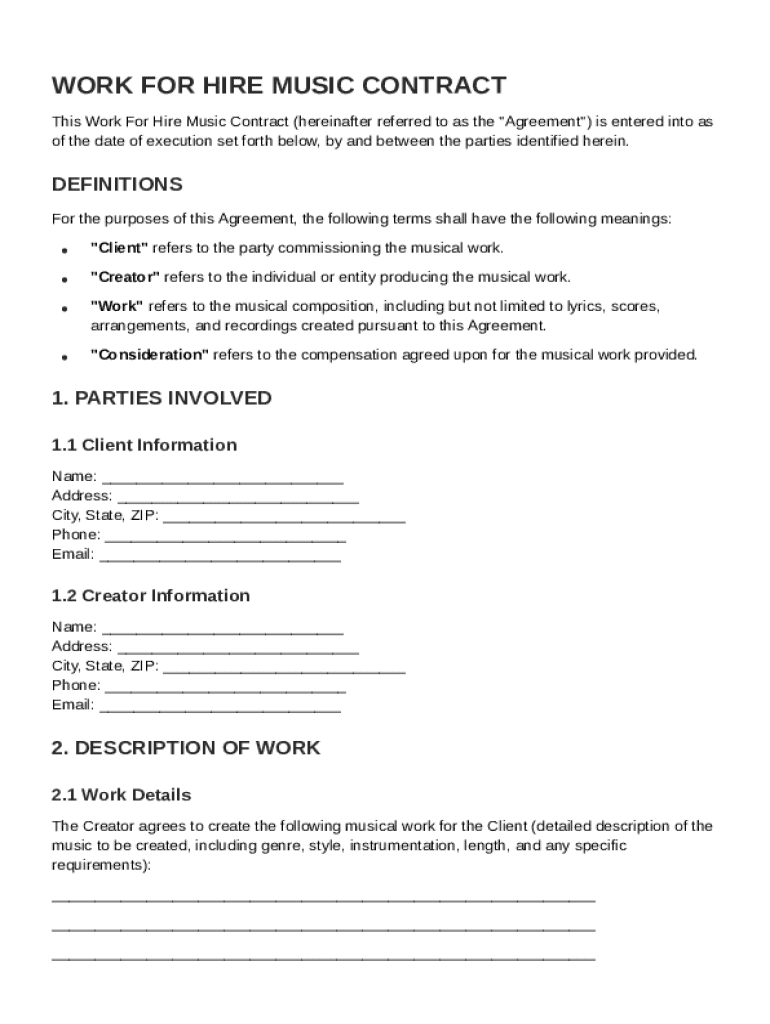
A Work For Hire Music Contract is a legal document outlining the terms between a client, often a company or individual commissioning musical work, and a creator, usually a composer or songwriter. This contract specifies that the creator is producing music for the client's use and transfers all rights to the client upon completion and payment. Under the U.S. Copyright Law, this type of contract ensures the client has full ownership of the music, including reproduction, distribution, and public performance rights.
Examples of Use
- A filmmaker commissioning background scores for a movie series.
- An advertising agency hiring a musician to create jingles for a commercial campaign.
- A game development company requiring original music for a game launch.
Proper use of this contract minimizes disputes over ownership and usage rights, making it essential for those needing exclusive control over music content.
Key Elements of the Work For Hire Music Contract Template
Understanding the fundamental components of the contract is crucial for both client and creator. Key elements typically include:
- Description of Work: Detailed specifics on the musical composition, sound design, and any other requirements.
- Compensation Structure: Payment details, including amount, schedule, and form of payment (e.g., lump sum or installments).
- Ownership Rights: Explicit declaration that all rights transfer to the client upon payment.
- Warranties and Representations: The creator guarantees originality and the absence of third-party infringements.
- Termination Conditions: Terms under which either party can terminate the agreement, often involving failure to deliver or pay.
- Governing Law: Which state's laws will govern contract disputes.
Variations
- Exclusive Rights: Full rights are transferred to the client, no residual rights to the creator.
- Non-Exclusive Contracts: Allow the creator to retain some rights, though not common in work-for-hire scenarios.
How to Use the Work For Hire Music Contract Template
The DocHub platform facilitates the creation and management of music contracts efficiently through editable templates. Steps to use the template include:
- Import Template: Upload from your device, Google Drive, or start with a blank template.
- Edit Fields: Utilize the editor to fill in project details, including parties involved and specific terms.
- Define Rights and Warranties: Clearly outline the ownership rights, compensation details, and warranties within the clause sections.
- Invite Collaborators: Use collaboration tools for multi-party reviews and additions.
- Finalize and Sign: Apply legally binding e-signatures using DocHub's signature functionalities.
Practical Example
A startup video company uses the template to draft agreements with various freelancers for introductory music scores, ensuring they hold full rights upon delivery, reducing future conflicts over content usage.
Legal Use of the Work For Hire Music Contract Template
For U.S.-based cases, adhering to the provisions of the ESIGN Act ensures electronic contracts are binding. Music contracts under this designation must be clear about the terms of work-for-hire and should include:
- Legal Jurisdiction: Acknowledge which state law governs it, usually where the hiring entity resides.
- Comprehensive Rights Assignment: Avoids ambiguities by detailing all aspects of ownership rights.
- Execution Protocol: Signatures must be collected in a way that complies with electronic transaction rules.
Considerations
- Contracts often differ slightly between states due to varying copyright interpretations.
- Legal counsel may be advisable to ensure comprehensive rights coverage.
State-Specific Rules for the Work For Hire Music Contract Template
Although federal copyright law covers work-for-hire contracts broadly, state nuances exist. For example:
- California: Requires additional disclosures and considerations for independent contractors.
- New York: Has specific provisions regarding electronic signatures and digital documents.
- Texas: Emphasizes compliance with electronic communication laws in contract formation.
Comparison
Understanding these discrepancies ensures agreements remain valid and enforceable across jurisdictions, especially with freelancers operating in multiple states.
Examples of Using the Work For Hire Music Contract Template
Here are several scenarios where the contract might be employed:
- Film Production Companies: Hiring composers for original film scores, transferring all soundtrack rights post-payment.
- Corporate Events: Commissioning exclusive anthems or motivational music, emphasizing singular ownership.
- Educational Institutions: Developing proprietary educational jingles, requiring exclusive content use.
Real-World Case Study
A prominent advertising firm uses the contract template to secure jingles created for national campaigns, preventing reuse by competitors and ensuring consistency in branding efforts.
Steps to Complete the Work For Hire Music Contract Template
Completing the template requires careful attention to ensure robust terms and clear communication. The process includes:
- Define Scope of Work: Clearly state the deliverables expected from the creator.
- Agree on Compensation: Outline fee structures and payment timelines.
- Assign Rights: Clearly state the transfer of all music rights to the client.
- Customize Clauses: Tailor warranties, termination conditions, and other terms to suit project needs.
- Gather Signatories: Use DocHub to collect electronic signatures, ensuring authenticity and compliance.
Best Practices
- Ensure all parties review the contract thoroughly before signing.
- Regularly update and review contracts to reflect any legal changes or industry standards.
Important Terms Related to the Work For Hire Music Contract Template
Understanding and using key terminology correctly helps avoid misunderstandings:
- Work Made for Hire: A work created by an individual or team that is owned by the client, not the creator.
- Assignment of Rights: Legal transfer of rights from creator to client.
- Intellectual Property Rights (IPR): The legal entitlements for musical compositions.
Detailed Explanation
- Warranties: Promises by the creator that work is original and free of legal infringements.
- Indemnity Clauses: Protects the client from potential legal claims due to copyright issues.
By understanding these terms, users gain confidence and clarity when drafting or reviewing these crucial contracts.