






Definition and Meaning
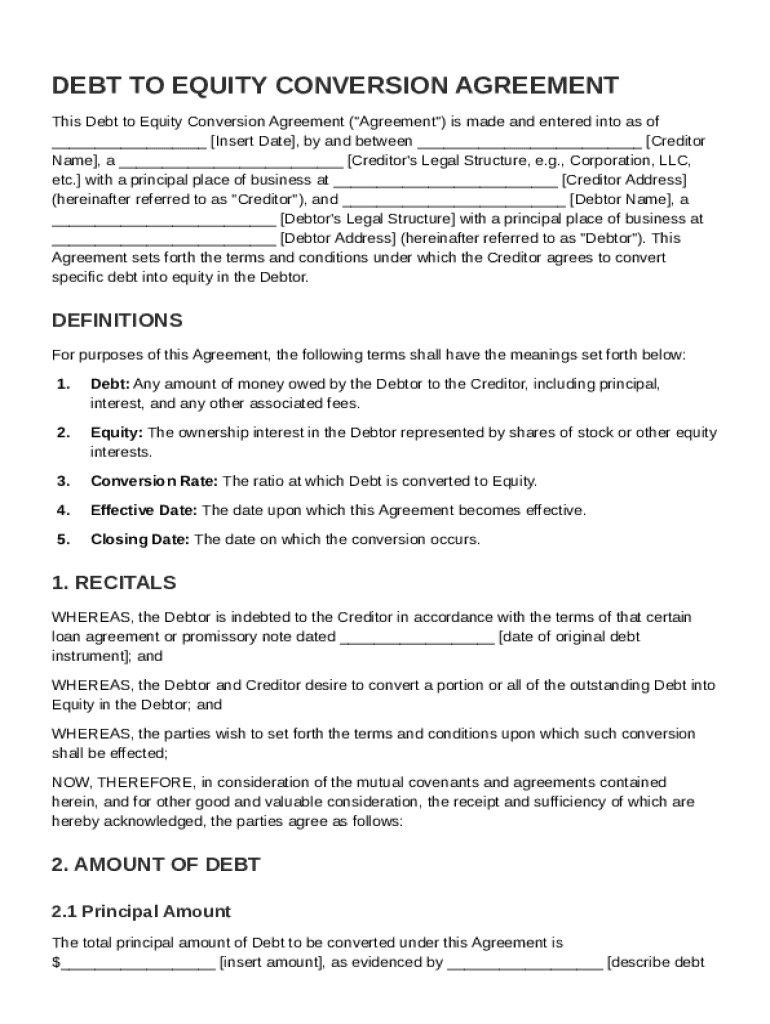
A Debt to Equity Conversion Agreement is a legal document outlining the conditions under which a creditor agrees to convert outstanding debt into equity ownership in a debtor's company. This agreement clarifies the terms such as the specific amount of debt being converted and the conversion rate. By converting debt to equity, companies may reduce their debt load while offering creditors potential upside through equity participation.
Key Features
- Debt Amount: The agreement specifies the exact amount to be converted.
- Conversion Rate: Details on how the debt translates into equity.
- Parties Involved: Identifies both the creditor and debtor.
Real-World Scenario
Consider a tech startup struggling financially. A venture capital firm that initially provided a loan may use this agreement to exchange part of that debt for ownership shares, gaining a stake in the company’s future growth.
Key Elements of the Debt to Equity Conversion Agreement Template
The template for a Debt to Equity Conversion Agreement typically includes several critical components that ensure both parties understand their rights and obligations.
Essential Components
- Definitions: Defines key terms to prevent ambiguities.
- Conversion Mechanics: Details the process of converting debt to equity.
- Representations and Warranties: Assurances made by both parties.
- Indemnification Clauses: Outlines liability protections for both parties.
Example
A company might state in its representations that it is not involved in any legal disputes that could affect the agreement. Indemnification clauses ensure creditors are protected from potential losses due to misrepresentations.
Steps to Complete the Debt to Equity Conversion Agreement Template
Completing this form involves several structured steps to ensure legal compliance and mutual understanding.
- Gather Necessary Information: Collect all relevant data including debt details and company financial records.
- Identify Conversion Details: Define the specific terms, including conversion rate and amount.
- Review Legal Clauses: Check the document for legal validity and completeness.
- Consult Legal Expertise: It may be advisable to consult with a legal professional to review the document.
- Finalize and Sign: Both parties review the document before signing to affirm their agreement.
Important Terms Related to Debt to Equity Conversion Agreement Template
A variety of specific terms are associated with this process, each critical for understanding the conversion mechanics.
Key Terms
- Debtor: The entity owing debt.
- Creditor: The party to whom the debt is owed and who accepts equity in exchange.
- Equity: Ownership interest in a company.
- Indemnification: A contractual obligation of one party to compensate the loss incurred by another party.
Practical Context
Clear definitions prevent disputes. For example, "equity" must be clearly defined to include voting rights or share class specifics.
Who Typically Uses the Debt to Equity Conversion Agreement Template
This form is frequently used by businesses and creditors looking to restructure financial obligations into ownership stakes.


Business Use Cases
- Startup Companies: Often use debt to equity agreements to improve financial stability during tough periods.
- Venture Capital Firms: Use these agreements to convert their debt investments in exchange for equity during strategic financial moves.
Real-World Examples
A company dealing with high-interest debt may prefer this strategy if the perceived future growth makes equity more valuable than steady interest payments.
Legal Use of the Debt to Equity Conversion Agreement Template
Ensuring legal compliance is crucial, as there are specific legal standards that these agreements must adhere to, especially in the United States.
Legal Considerations
- ESIGN Act Compliance: For electronic signatures, ensuring the agreement is legally binding.
- Federal Securities Laws: Watch for compliance with securities regulations in the U.S.
- State Laws: Be aware of specific state requirements that may affect enforceability.
Compliance Scenario
For example, using electronic signatures requires adherence to the ESIGN Act to ensure enforceability in court.
Business Types That Benefit Most from Debt to Equity Conversion Agreement Template
Certain business structures and industries can gain significant advantages from using these agreements.
Suitable Business Types
- LLCs: Limited Liability Companies may convert strategic debt to gain more investors.
- Corporations: Can leverage these agreements to manage debts without increasing cash outflows.
- Startups: Benefit by improving cash flow and potentially gaining strategic investors.
Sector-Specific Example
A renewable energy startup might convert debt into equity to attract ESG-friendly investors looking for long-term growth rather than short-term returns.
Digital vs. Paper Version
Using a digital format offers specific benefits over the traditional paper version, particularly in terms of efficiency and compliance.
Advantages of Digital Version
- Accessibility: Easily editable and shareable online.
- Security: Enhanced data protection and encryption.
- Integration: Seamlessly integrates with cloud services and software solutions like Google Workspace.
Case Study
For instance, a firm using cloud storage for document management can instantly share the digital agreement with all parties involved, making it easier to manage versions and signatures without delays.
By delving into key topics such as definitions, process steps, and benefits across various business types, this comprehensive guide aims to provide in-depth insights into the practical and legal aspects of the Debt to Equity Conversion Agreement Template.