






Definition and Importance of the Late Rent Payment Agreement
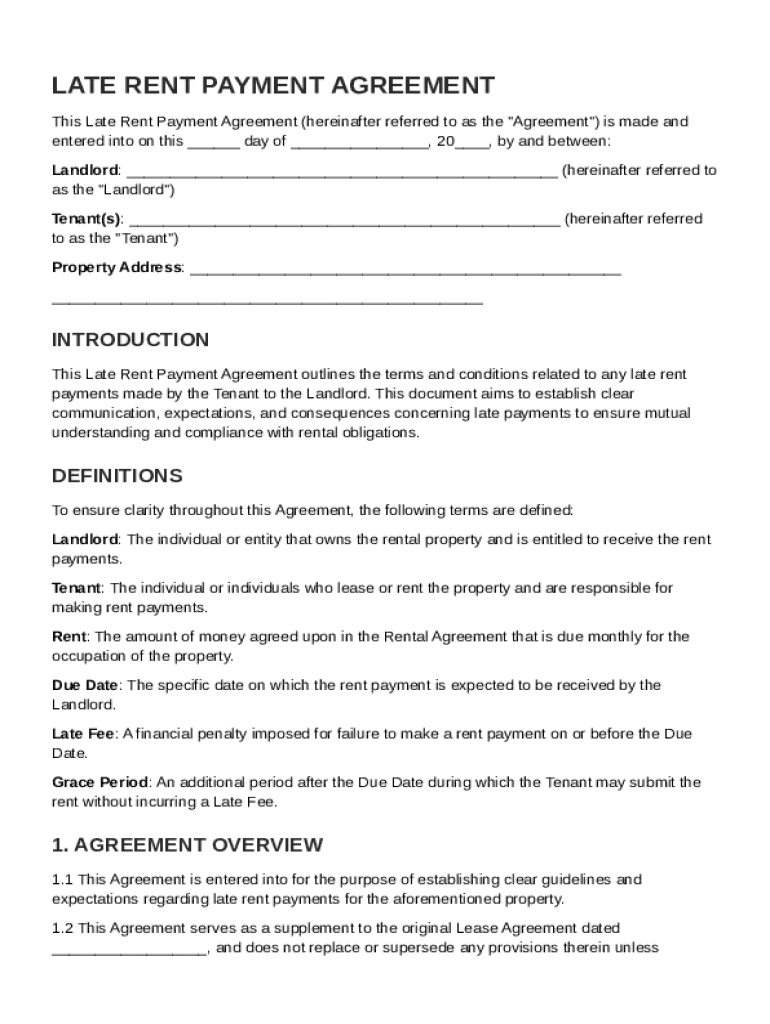
The Late Rent Payment Agreement Template is a formal document that establishes the terms and conditions for addressing late rent payments between landlords and tenants. This template is crucial in providing a structured approach to managing late payments, ensuring both parties understand the expectations and consequences. It outlines the necessary steps a tenant must take once a late rent payment occurs, detailing any applicable late fees, grace periods, and the procedural steps required to rectify the delay. By defining these parameters, both landlords and tenants can maintain a clear and productive relationship.
How to Use the Late Rent Payment Agreement Template
Preparation
Before using the Late Rent Payment Agreement Template, both parties should review their current lease agreement to ensure that any new terms introduced do not contradict existing clauses. It's important to agree on what constitutes a "late" payment, the specific late fees that may apply, and any grace period that the tenant might benefit from.
Steps for Implementation
-
Download or Obtain the Template: Acquire the template from a reputable online source or consult with a legal professional.
-
Customize the Template: Tailor the document to fit the unique circumstances of the landlord-tenant relationship. Adjust the late fee amount, the grace period duration, and any tenant notification requirements.
-
Review with Legal Guidance: Consult a legal expert to ensure that the agreement complies with local laws and ordinances, which vary by state.
-
Mutual Agreement: After making necessary adjustments, both parties should review the terms to agree on their comprehensibility and fairness.
-
Sign and Execute: Both the tenant and the landlord must sign the document, which then becomes a binding amendment to the original lease agreement.
Important Terms in the Late Rent Payment Agreement Template
Understanding the terminology within the Late Rent Payment Agreement is crucial. Here are some key terms:
-
Late Fee: A predetermined amount that the tenant must pay in addition to the rent if a payment is delayed.
-
Grace Period: The time frame after the rent due date during which a payment can be made without incurring a late fee.
-
Lease Term: The duration for which the agreement is valid and applies to any late rent payments.
-
Notification Protocols: The method and timing for how the tenant should inform the landlord of a late payment and vice versa.
Legal Use of the Late Rent Payment Agreement Template
The Late Rent Payment Agreement Template must comply with state laws regarding tenant rights and landlord obligations. For instance, some states cap the maximum late fee a landlord can impose. Using the agreement within legal boundaries prevents potential disputes and promotes transparency. It's advisable to include a provision for dispute resolution, which may stipulate mediation or arbitration, to handle disagreements regarding late payments.
Key Elements of the Late Rent Payment Agreement Template
Critical Components
-
Identities of Parties Involved: Clearly state the names and addresses of the landlord and tenant(s).
-
Detailed Payment Terms: Outline the tenant’s obligation in terms of payment due date, amount, and acceptable payment methods.
-
Late Payment Procedures: Specify what occurs when a payment is late, detailing any fees, the length of grace periods, and notification procedures.
-
Remedies for Non-Compliance: Describe potential penalties for repeated non-compliance, which may include eviction or lease termination.
Examples
A practical example might involve a lease where the rent is due on the 1st of each month, with a 5-day grace period before a $50 late fee is imposed. Should a tenant consistently miss payments, the agreement could spell out a warning process followed by termination protocols.
State-Specific Rules for the Late Rent Payment Agreement Template
The specifics of allowable late fees and grace period requirements differ by state. For example, while New York has a maximum allowable late fee that is a small percentage of monthly rent, other states like California may have no such caps but require the fee to be reasonable and documented. It's essential for landlords to adjust the template accordingly to fit state-specific legal conditions and ensure compliance.
Steps to Complete the Late Rent Payment Agreement Template
-
Gather Information: Collect essential details, including personal information for all parties involved and the terms of the current lease.
-
Fill in the Template: Input the agreed terms regarding late fees, grace periods, and any additional payment terms specific to the rental arrangement.
-
Review for Accuracy: Double-check that all information is accurately reflected and that no key elements are missing or misstated.
-
Legal Review: Have the agreement checked by a legal professional to safeguard against potential legal discrepancies.
-
Finalize and Sign: Ensure the document is signed by all parties to solidify the agreement legally.
Examples of Using the Late Rent Payment Agreement Template
Tenant Perspective
A tenant might benefit from this agreement if faced with financial instability, as it provides a clear structure for handling late payments, potentially avoiding eviction through agreed late fees and payment structures.
Landlord Perspective
Landlords benefit by having a legally-binding document that outlines recourse options in the case of late payments. This agreement offers a systematic way to address issues without immediately resorting to eviction, preserving tenant relationships and rental income flow.
Each example showcases how this template serves as a practical solution that balances the needs and rights of both parties involved in a rental agreement, enhancing clarity and cooperation.