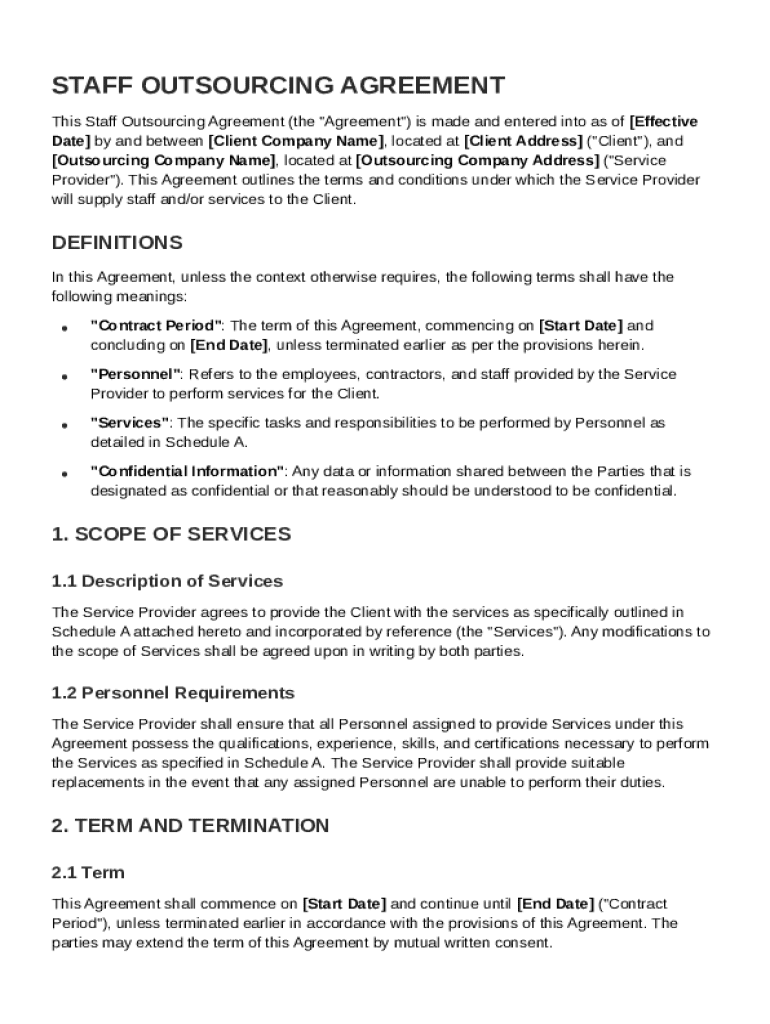







Definition and Meaning of the Staff Outsourcing Agreement Template
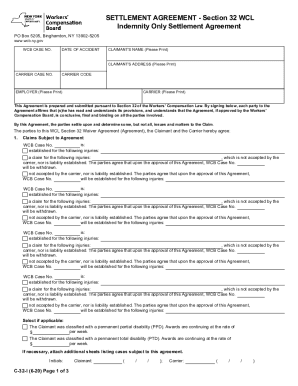
The Staff Outsourcing Agreement Template is a detailed legal document used to outline the relationship between a client and a service provider in the context of outsourcing staff services. It serves as a clear framework to define the roles, responsibilities, and expectations of both parties involved. The template typically covers essential components such as the scope of services to be rendered, compensation terms, personnel requirements, confidentiality obligations, and provisions for termination. Its primary function is to establish an independent contractor relationship, providing clarity and protecting the interests of both parties.
Examples and Real-World Scenarios
In practical applications, companies might use this template when they need to hire external personnel for specialized tasks, such as IT support, customer service, or marketing analysis. For instance, a tech company might outsource its IT helpdesk functions to a third-party service provider using this agreement, ensuring that all terms are explicitly stated, and responsibilities are clearly defined. In another scenario, a startup could use it to bring in marketing expertise without the long-term commitment of full-time hiring, safeguarding both the company's and the contractor's interests.
Key Elements of the Staff Outsourcing Agreement Template
Core Components
The template includes several critical components designed to provide comprehensive protection and clear guidance for the outsourcing process:
- Scope of Services: Clearly delineates the specific tasks and functions that the service provider is responsible for completing.
- Compensation Terms: Details the payment structure, including rates, payment schedule, and any additional expenses covered by the client.
- Personnel Requirements: Outlines qualifications, performance standards, and any other personnel-related expectations.
- Confidentiality Provisions: Ensures that sensitive information is protected and that service providers adhere to strict confidentiality measures.
- Termination Clauses: Specifies conditions under which the agreement can be terminated by either party.
Practical Considerations
Businesses must carefully review these elements to ensure that they align with their operational goals and legal requirements. For example, a company with proprietary technology would highlight confidentiality and intellectual property clauses to safeguard its innovations.
Legal Use of the Staff Outsourcing Agreement Template
Compliance with U.S. Laws
In the United States, this agreement template must adhere to federal and state labor laws, ensuring that the distinction between an independent contractor and an employee is effectively maintained. This involves including provisions that reinforce the independent nature of the relationship, such as the method of payment and the control over how tasks are accomplished.
Importance of Legal Counsel
Companies are advised to consult with legal professionals when drafting and finalizing the agreement to ensure compliance with specific state laws and industry regulations. For instance, considerations for worker classification according to the IRS are crucial to avoid penalties related to employment taxes.
Who Typically Uses the Staff Outsourcing Agreement Template


Primary Users
This template is most commonly used by businesses that need to outsource specialized tasks without committing to hiring new full-time employees. Industries like technology, consulting, and healthcare often require such agreements to onboard vendors or third-party firms.
Diverse Industry Applications
For example, a healthcare company might engage a service provider to manage its medical billing operations temporarily. By using this template, they can clarify both the scope of the work and how patient data must be managed under HIPAA regulations.
Steps to Complete the Staff Outsourcing Agreement Template
- Identify Key Requirements: Clearly define the business needs and desired outcomes of the outsourcing arrangement.
- Draft the Scope of Services: Enumerate all tasks and responsibilities expected from the service provider.
- Detail Compensation and Payment Terms: Outline the payment structure, ensuring it matches the service provider's expectations.
- Include Legal Provisions: Add clauses related to confidentiality, indemnification, and dispute resolution to protect both parties' interests.
- Review and Finalize: Have legal counsel review the agreement to ensure all components are legally sound and enforceable.
Considerations for Each Step
While drafting terms, ensure clarity and specificity to avoid ambiguities that could lead to misunderstandings.
Important Terms Related to the Staff Outsourcing Agreement Template
Common Terminology
- Independent Contractor: A party engaged to perform services based on terms described in the agreement, with controls over how such services are delivered.
- Client: The entity outsourcing the services and responsible for compensating the service provider.
- Confidential Information: Any proprietary data shared during the course of the agreement that must remain protected.
Broader Implications
Understanding these terms helps ensure that both parties have a mutual understanding of their roles and responsibilities under the agreement, reducing the likelihood of disputes.
State-Specific Rules for the Staff Outsourcing Agreement Template
Variation by State
Different U.S. states have distinct regulations regarding employment and independent contractor status, which can affect how these agreements are structured. For instance, California's AB5 legislation imposes stricter criteria for classifying workers as independent contractors.
Importance of Customization
Organizations should tailor the template to comply with local legal requirements. For example, companies operating in multiple states might need to include state-specific clauses that align with varying labor laws.
Why You Should Use the Staff Outsourcing Agreement Template
Benefits for Businesses
Using this agreement template provides a structured approach to outsourcing, ensuring that all contractual obligations are clearly stated and legally binding. This not only facilitates smoother business operations but also minimizes potential legal disputes by setting clear expectations.
Risk Mitigation
A well-crafted agreement mitigates risks associated with misclassification of workers, intellectual property violations, and breach of confidentiality. For instance, companies can protect themselves by stipulating penalties for unauthorized information disclosure.