Definition & Meaning
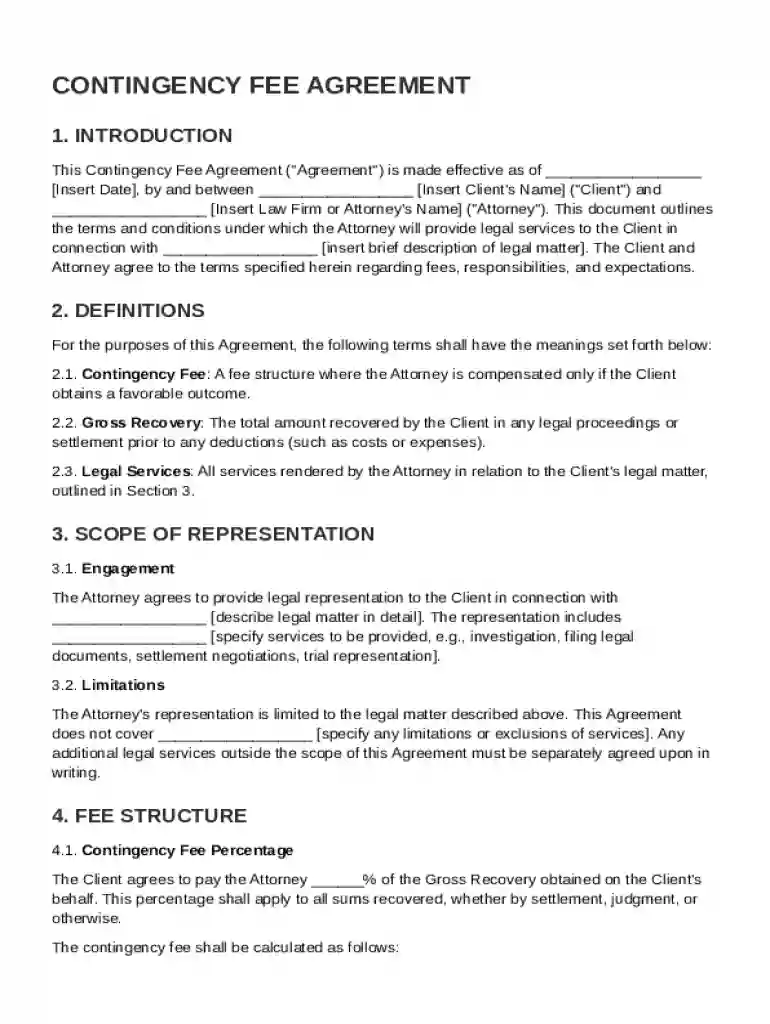
A Contingency Fee Agreement Template is a legal document setting the terms of engagement between an attorney and a client for legal representation. This agreement specifies that the attorney's fees are contingent upon the case's favorable outcome, meaning that the lawyer only receives payment if the case is won or settled favorably. Such an agreement provides a percentage breakdown detailing what the attorney will receive based on how and when the case resolves. It is crucial for both parties to understand that the agreement doesn’t guarantee success by the attorney, serving as a risk-sharing mechanism in legal proceedings.
Key Elements of the Contingency Fee Agreement Template
A well-defined Contingency Fee Agreement Template includes several essential elements:
- Fee Structure: Clearly outlines the percentage of the recovery or settlement that will be paid to the attorney, which typically ranges between 33% and 40%.
- Responsibilities: Details the duties of both parties, including how the client should support the attorney's efforts.
- Payment Terms: Specifies when payments are due and how they will be allocated.
- Termination Clause: Describes the conditions under which either party can terminate the agreement.
- Governing Law: Identifies which jurisdiction’s laws will govern the interpretation of the agreement.
- No Guarantee Clause: States explicitly that the attorney makes no guarantees regarding the case's outcome.
Important Terms Related to Contingency Fee Agreement Template
Understanding specific legal terms within the Contingency Fee Agreement is vital:
- Retainer: An upfront fee paid to secure the attorney’s services.
- Recovery: The compensation received from winning or settling a case.
- Disbursements: Expenses incurred during the case, such as court fees and expert witnesses.
- Exclusive Representation: The client agrees that only the specified attorney will handle the case.
How to Use the Contingency Fee Agreement Template
Using the Contingency Fee Agreement Template involves several steps:
- Review: Carefully read through the entire agreement, ensuring you understand each section and its implications.
- Customizing: Adapt the template to include case-specific details, such as the client’s and attorney’s information, and any unique terms.
- Consultation: Discuss any unclear terms with the attorney to avoid misunderstandings.
- Finalization: Both parties should review and consent to the adjusted terms before signing.
Who Typically Uses the Contingency Fee Agreement Template
The primary users of the Contingency Fee Agreement Template are:

- Attorneys: Typically use these agreements in areas of law where client outcomes are uncertain, such as personal injury or malpractice cases.
- Clients: Individuals seeking legal representation without upfront payment often engage through contingency agreements, deferring legal costs until the case conclusion.
Legal Use of the Contingency Fee Agreement Template
Legally, the Contingency Fee Agreement Template must adhere to:
- Regulatory Compliance: Each state has specific rules governing contingency fee arrangements. It is essential to ensure the template complies with local bar association guidelines.
- Disclosures: Attorneys must provide clear disclosures regarding potential costs and fees that might not be covered by the agreement.
- Ethical Standards: The agreement must align with ethical standards within the legal profession, ensuring no undue influence or pressure on the client.
State-Specific Rules for the Contingency Fee Agreement Template
State-specific statutes can greatly influence contingency fee agreements:
- Maximum Fee Limits: Some states, like California and New York, impose maximum percentage limits on contingency fees for specific case types.
- Written Requirements: Most jurisdictions require the agreement to be in writing, explicitly detailing the fee calculations and client obligations.
- Approval Processes: In certain situations, contingency fees must gain court approval, especially in cases involving minors or estate settlements.
Examples of Using the Contingency Fee Agreement Template
Here are examples illustrating the effective use of a Contingency Fee Agreement Template:
- Personal Injury Case: A client injured in an auto accident signs a contingency fee agreement where the attorney receives 33% of any settlement obtained.
- Class Action Lawsuit: Involving multiple plaintiffs, the agreement details the distribution of attorney fees from the collective settlement, ensuring transparency among all parties.
- Medical Malpractice Claim: Given the high costs and uncertain outcomes, a contingency agreement empowers a client to pursue justice without incurring upfront fees.