






Definition & Meaning
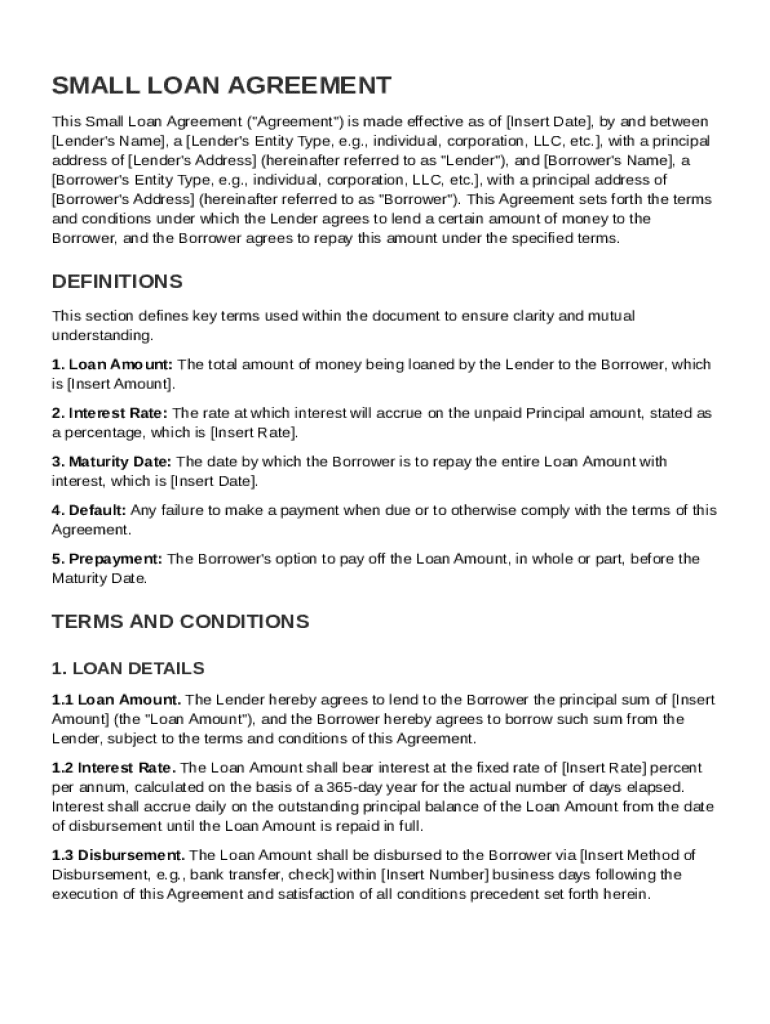
A Small Loan Agreement Template is a legal document designed to outline the specific terms under which a lender provides a small loan to a borrower. This template typically includes key elements such as the loan amount, interest rates, repayment schedules, and conditions of default. It serves as a legal framework that ensures both parties understand their obligations regarding disbursement and repayment. Additionally, this agreement defines governance, identifying the jurisdiction and laws that will oversee the loan terms.
Key Elements in the Agreement
- Loan Amount: This specifies the total sum that the borrower agrees to receive from the lender.
- Interest Rate: It outlines the percentage charged on the borrowed amount, influencing the total repayment.
- Repayment Schedule: Defines the timeline and method of repayment, establishing whether payments are monthly, quarterly, or in a lump sum.
- Default Provisions: Details the course of action if a borrower fails to meet the repayment terms, including possible penalties or legal action.
- Governing Law: Specifies which state’s laws apply to the agreement, crucial for resolving any legal disputes.
Steps to Complete the Small Loan Agreement Template
Completing a Small Loan Agreement Template requires precision to ensure that all terms are clearly defined and agreed upon by both parties.
- Fill in the Parties’ Information: Enter details such as names, addresses, and contact information for both lender and borrower.
- Specify the Loan Amount and Purpose: Clearly state the sum of money borrowed and the reason for the loan if needed.
- Define the Interest Rate and Payment Terms: Record the annual interest rate and schedule, including the specific due dates.
- Include Security Interests: If the loan is secured, describe the collateral arrangement.
- Outline Default and Late Payment Terms: Indicate the actions taken if payments are missed and any additional fees.
- Clarify Governing Law and Jurisdiction: Specify the state law overseeing the agreement’s legality and any disputes.
- Review and Sign: Both parties should review the completed form for accuracy before signing and dating the document.
Key Elements of the Small Loan Agreement Template
This type of agreement encompasses various critical components that must be customized to fit the transaction.
- Promissory Note Inclusion: Often linked with a promissory note, the template provides comprehensive agreements binding the borrower to repayment.
- Co-signatory Details: In cases where a co-signer is needed, their obligations and liabilities should be clearly defined.
- Amendment Procedures: Describes how either party can amend terms, ensuring clarity on revising the original document.
- Conditions of Prepayment: Some agreements allow for early repayment, potentially reducing interest, and such terms need specification.
- Role of Attorney Fees: In the event of legal action, some agreements allocate responsibility for legal expenses.
Legal Use of the Small Loan Agreement Template
The legality of a Small Loan Agreement relies on adherence to federal and state regulations regarding lending practices.
Ensuring Enforceability
- Compliance with Lending Laws: The terms specified in this template must adhere to laws such as the Truth in Lending Act, ensuring borrower transparency and fairness.
- Validity of Signatures: For an agreement to be legally binding, signatures from all parties involved must be witnessed or notarized.
- Regulatory Adherence: Ensuring that terms do not breach laws like usury limits, which cap interest rates, maintains legal compliance.
Examples of Using the Small Loan Agreement Template
This template is versatile and can be used in multiple lending scenarios, including personal loans, business startup funds, and emergency expenses.
- Personal Loans: Facilitates informal loans between family or friends while maintaining a formal record of the agreement.
- Business Startups: Small businesses can use this template to secure initial funding from private investors.
- Emergency Expenses: Offers a quick solution for unexpected financial needs, with agreed-upon repayment plans.
Practical Scenarios
- A borrower seeking funds from a family member for home renovations can utilize this agreement to formalize terms.
- Entrepreneurs can solidify investor agreements through this template, ensuring transparent investment terms.
Software Compatibility
Digital platforms can streamline the completion and storage of Small Loan Agreement Templates through various software tools.
- DocHub: Offers online editing, signing, and storage capabilities, allowing for convenient and secure handling.
- Google Workspace: Full integration allows users to import templates from Google Drive, edit them online, and re-upload them seamlessly.
- Accounting Software Integration: Tools like QuickBooks can complement the loan process by tracking payments and interest metrics.
Who Typically Uses the Small Loan Agreement Template
The template is instrumental for various users seeking to formalize short-term and small-scale financial agreements.
- Individuals: People borrowing or lending funds within personal networks often favor this template for its simplicity and enforceability.
- Small Business Owners: Companies seeking manageable funding for operational costs sometimes rely on personal loans documented through this template.
- Private Lenders: Individuals providing loans as part of investment portfolios use this template to protect their interests legally.


Digital vs. Paper Version
The choice between digital and paper versions of the Small Loan Agreement depends on preferences and specific transaction needs.
- Digital Version Advantages: Offers easy editing, sharing, and storage capabilities, making it well-suited for online transactions.
- Paper Version Benefits: Preferred by those who favor physical documentation and traditional signing methods for record-keeping purposes.
Considerations
- Digital formats allow for rapid changes, ubiquitous access, and secure backups.
- Paper versions offer tactile interactions and are sometimes seen as more personal in certain lending contexts.