






Definition & Meaning
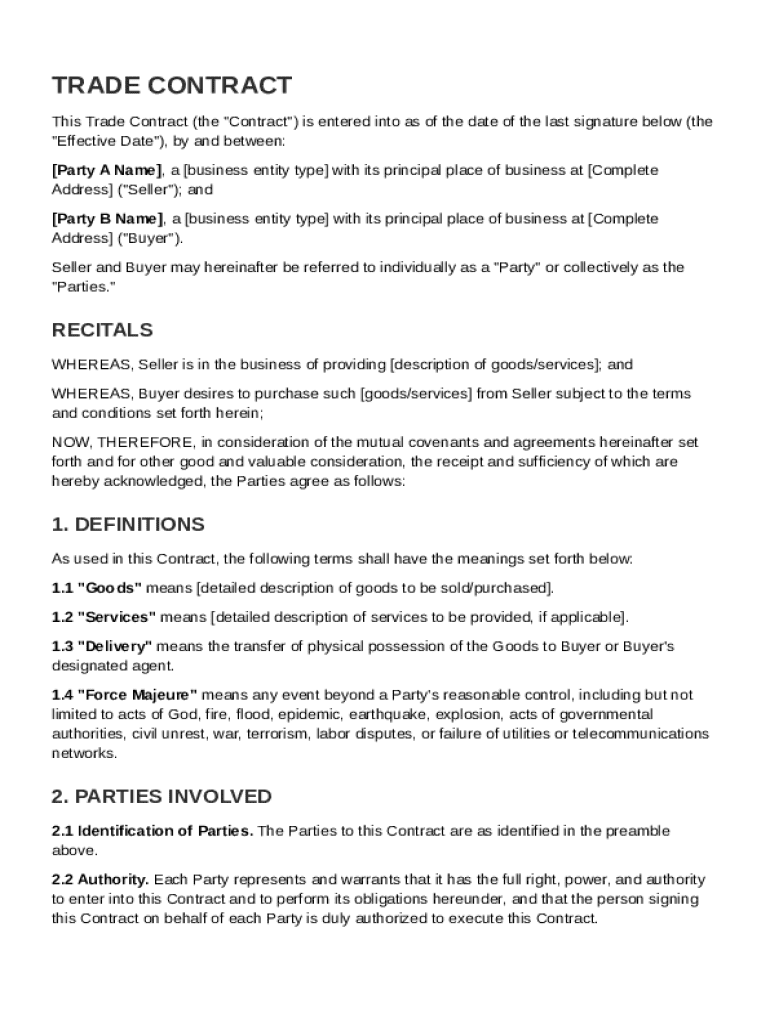
A Trade Contract Template is a structured document used to formalize an agreement between a buyer and seller for the exchange of specified goods or services. It clearly outlines each party's expectations, responsibilities, and obligations in the transaction. This template serves as a foundational framework applicable across various industries, helping to prevent misunderstandings by detailing elements such as pricing, delivery terms, and scope of work.
Key Elements of the Trade Contract Template
Understanding the components of a trade contract is crucial for both parties involved. Key elements include:
- Parties Involved: Identification of the buyer and seller, including their official names and contact information.
- Scope of Work: Detailed description of the goods or services being traded, including specifications, quality standards, and quantities.
- Pricing and Payment Terms: Clear articulation of the price for the goods or services, including payment schedules, accepted payment methods, and any applicable taxes or fees.
- Delivery Terms: Information on delivery schedules, locations, and any associated costs or responsibilities for transportation.
- Inspection and Acceptance: Procedures for inspecting and accepting the goods or services, including timelines and criteria for acceptance.
- Warranties and Guarantees: Any warranties offered by the seller about the quality and performance of the goods or services.
- Dispute Resolution: Provisions detailing how disputes will be handled, whether through arbitration or court litigation.
- Termination Clauses: Conditions under which the contract may be terminated by either party, including the notice period and any penalties.
- Confidentiality Obligations: Requirements for maintaining the confidentiality of any sensitive information shared during the transaction.
Steps to Complete the Trade Contract Template
Completing a trade contract involves several key steps to ensure accuracy and legality:
- Drafting the Basic Information: Fill in the names, addresses, and contact details of both the buyer and seller.
- Defining the Scope: Clearly outline what is being traded, detailing any specific requirements or standards.
- Setting Payment Terms: Specify the total payment due, including any installment arrangements or deadlines.
- Detailing Delivery Instructions: Describe the logistics of transportation, including who is responsible for shipping costs.
- Including Inspection Procedures: State how and when the buyer will inspect goods and what constitutes acceptance.
- Identifying Dispute Resolution Methods: Select your preferred method for handling disputes, such as arbitration.
- Providing Warranties and Returns: Detail any warranties provided and conditions for returns or exchanges.
- Final Review and Signatures: Ensure all sections are completed before both parties sign and date the contract.
Important Terms Related to Trade Contract Template
Familiarity with specific terminology is essential when using a trade contract:
- Force Majeure: A clause that absolves both parties from liability in the event of an act of God, war, or other unforeseeable events.
- Indemnity: Protection against loss or damage as stipulated within the contract itself.
- Breach of Contract: A violation of any terms agreed upon in the trade contract which may lead to penalties or legal action.
- Liability Limitations: Constraints on the amount of compensation one party may have to provide the other in case of damages or losses.
Who Typically Uses the Trade Contract Template
Trade contract templates are utilized by a wide range of entities. Typically, they are employed by:
- Small Business Owners: To create clear terms with suppliers or clients.
- Corporations: For large-scale procurement or distribution deals.
- Freelancers and Contractors: Ensuring comprehensive documentation in service agreements.
- International Traders: Establishing agreements across borders with specific trade terms.


Examples of Using the Trade Contract Template
The trade contract template can be applied in many scenarios:
- A tech company purchasing hardware components for its devices.
- An artist commissioning a piece for a private collector.
- A retailer buying inventory from a wholesaler before the holiday season.
- A startup securing delivery of custom-built office furniture.
Who Issues the Form
Typically, no official government body issues a generic trade contract template. Instead, legal advisors or corporate legal departments often develop customized templates aligned with the company’s specific needs. Since these templates are widely adopted across different sectors, any provided template should be tailored to the buyer's and seller's unique transaction requirements.
Legal Use of the Trade Contract Template
Ensuring that a trade contract template is legally binding necessitates attention to several factors:
- Signatures from Both Parties: Making the document enforceable under U.S. contract law.
- Compliance with State and Federal Laws: Ensuring provisions align with legal standards.
- Incorporation of Standard Legal Clauses: Including necessary components such as indemnity and jurisdiction.
- Review by Legal Professionals: Often advisable to have the contract reviewed by a lawyer to mitigate potential legal flaws or misunderstandings.
State-specific Rules for the Trade Contract Template
While a trade contract may largely be standardized, each U.S. state can impose additional requirements or interpretations:
- Local Jurisdiction Clauses: Specify how state laws will govern the agreement.
- Licensing and Permits: Confirming any necessary business licenses based on state regulations.
- Documentation Requirements: Certain goods or services may require additional documentation or certification specific to a state.
- Insurance Requirements: States can demand differing levels of liability insurance based on industries or types of trade.
These guides ensure that anyone creating or utilizing a Trade Contract Template can effectively manage and protect their business transactions within the United States.