






Definition & Meaning
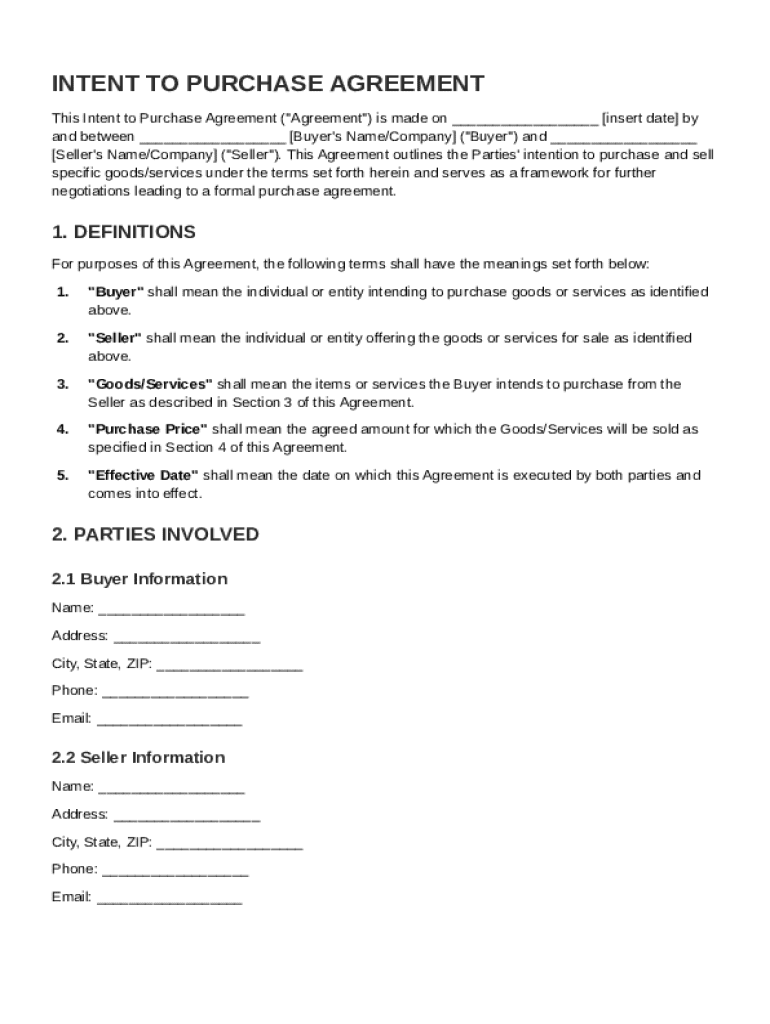
An Intent to Purchase Agreement Template is a document that outlines the preliminary terms between a buyer and seller regarding the intention to purchase specific goods or services. It serves as a formal declaration of intent, capturing essential details such as the description of the goods or services involved, the proposed purchase price, party information, and any conditions precedent to the purchase. This template is designed to express an intention to buy without creating a binding obligation, often including a non-binding clause to emphasize this understanding. The agreement typically concludes with signatures from both parties to acknowledge the mutual intent and understanding.
Key Elements of the Intent to Purchase Agreement Template
The template includes several key sections to ensure comprehensive coverage of the intended transaction:
- Party Information: Includes names and contact details of the buyer and seller, ensuring that both parties are clearly identified.
- Description of Goods or Services: Provides a detailed description of what is being purchased, ensuring both parties have a common understanding.
- Purchase Price Details: Outlines the agreed-upon price for the goods or services, including any conditions or terms related to payment schedules.
- Confidentiality Obligations: Ensures that any sensitive information exchanged during negotiations is kept confidential.
- Conditions Precedent: Lists any conditions that must be fulfilled before the transaction can proceed, such as financing or inspection contingencies.
- Governing Law: Specifies the legal jurisdiction that will govern the agreement, typically aligning with the location of one of the parties.
- Non-Binding Clause: Clarifies that the document serves as an expression of intent rather than a binding contract, allowing for further negotiation.
Steps to Complete the Intent to Purchase Agreement Template
-
Gather Party Information: Begin by collecting the names and contact details of both the buyer and the seller. This information will form the basis of the agreement and ensure accurate identification of all parties involved.
-
Describe Goods or Services: Clearly outline the specifics of the goods or services being considered for purchase. Use precise and unambiguous language to avoid misunderstandings later on.
-
Establish Purchase Price Terms: Agree on the price and method of payment. It's crucial to detail any payment terms, including due dates and potential contingencies.
-
Set Conditions Precedent: Highlight any conditions that must be met before the agreement can progress. Common examples include successful inspections or securing financing.
-
Include Legal Provisions: Incorporate clauses for confidentiality, governing law, and a non-binding intent. This creates a framework for privacy, legal coverage, and the understanding that the agreement is preliminary.
-
Review and Confirm: Both parties should review the document carefully, ensuring all terms are agreeable and accurately reflected. This step involves attention to detail to prevent future disputes.
-
Finalize with Signatures: Both the buyer and the seller must sign the agreement to acknowledge the terms and the intent to proceed, marking the document as a recognized expression of intent.
Legal Use of the Intent to Purchase Agreement Template
The legal framework surrounding the Intent to Purchase Agreement Template focuses on ensuring that the document serves as a non-binding precursor to a more formal contract. By including a non-binding clause, both parties acknowledge that no legal obligations are solidified until a formal contract is executed. This can protect both parties from unintended contractual commitments during negotiations. Nevertheless, any sections related to confidentiality or specific obligations could be legally binding, depending on the wording. It’s crucial to check the local legal standards specified under the governing law section to guarantee compliance.
Why Should You Use the Intent to Purchase Agreement Template?
An Intent to Purchase Agreement Template is valuable for clarifying the initial terms of a proposed transaction. It lays the groundwork for future negotiations by recording critical aspects such as pricing, goods or services descriptions, and buyer and seller information. This document helps prevent misunderstandings and disputes by providing a reference point for discussions. Additionally, the template offers a sense of security for both parties, showing a commitment to proceed with negotiations in good faith while maintaining necessary flexibility.
Who Typically Uses the Intent to Purchase Agreement Template
This template is widely used by individuals and organizations involved in the buying and selling of goods and services. It is particularly useful for:
- Real Estate Transactions: Buyers and sellers use the document to outline the initial terms of property purchases.
- Businesses Engaging in Large Purchases: Companies preparing to make substantial investments in equipment or services often rely on such templates.
- Personal Goods: Individuals making significant personal purchases, such as vehicles or valuable collectibles, benefit from having a formal record of their intended terms.


Examples of Using the Intent to Purchase Agreement Template
When utilizing this template, consider different scenarios to understand its application fully:
- Real Estate Transactions: A buyer and seller might use the template to detail the purchase of a commercial building. Here, elements like inspections and financing contingencies are critical.
- Corporate Transactions: A company looking to acquire a competitor might list the specifics of the assets involved, preliminary pricing, and non-disclosure requirements.
- Personal High-Value Items: An individual purchasing a rare art piece could use the agreement to lock in a price and condition assessment, pending further verification.
Important Terms Related to the Intent to Purchase Agreement Template
A firm grasp of the terms within the template aids effective usage:
- Non-Binding Clause: Indicates that the agreement is not legally enforceable as a contract.
- Confidentiality Obligations: Protects sensitive information exchanged during negotiations.
- Governing Law: Establishes which state's laws will guide the interpretation and enforcement of the document.
- Conditions Precedent: Specific actions or events that must occur before the purchase is finalized, like inspection approvals or acquiring financing.
Referring to these terms ensures a clear and mutual understanding of the template's provisions, minimizing the risk of disagreements as negotiations advance.