






Definition & Meaning
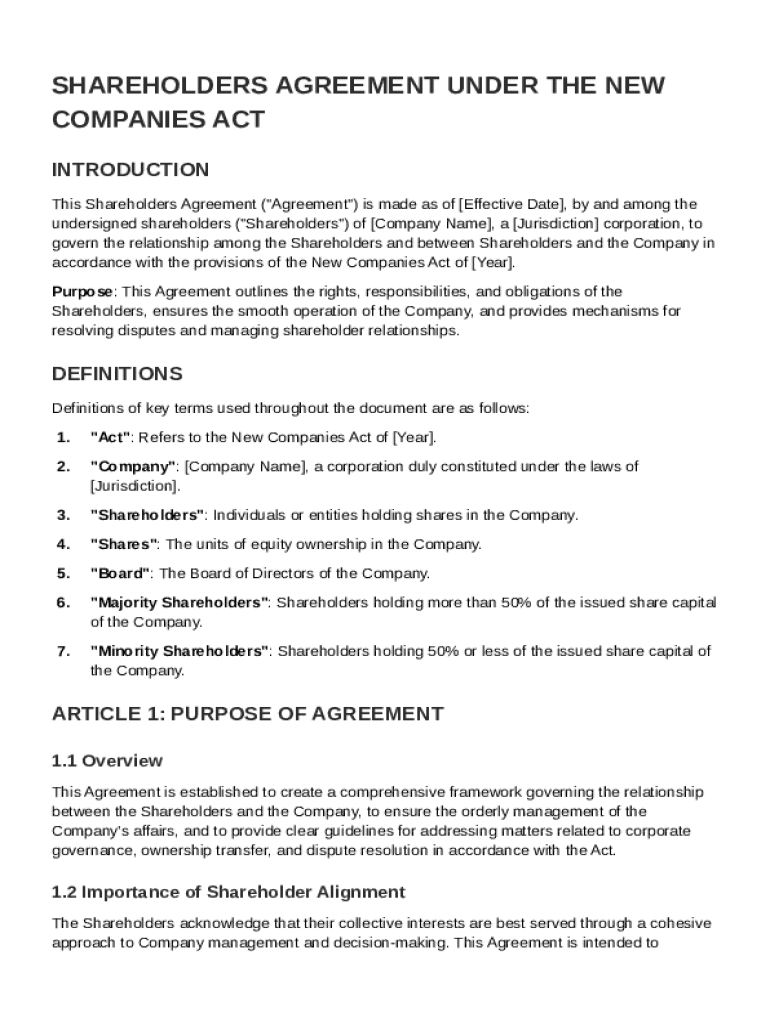
A "Shareholders New Companies Act Agreement Template" is a legal document that establishes the framework for managing the relationships among shareholders within a corporation. Developed under the New Companies Act, it defines roles, rights, and responsibilities of the shareholders. The agreement serves to guide corporate governance, address share capital management, and outline procedures for dispute resolution and confidentiality. This template serves as a foundational instrument to ensure smooth corporate operations and protect the interests of all shareholders involved.
How to Use the Shareholders New Companies Act Agreement Template
Using the Shareholders New Companies Act Agreement Template involves several steps to tailor it to the specific needs of your corporation:
-
Review the Template: Begin by understanding the standard clauses and provisions included in the template. Familiarize yourself with sections such as governance structure, rights, and obligations.
-
Customize Provisions: Modify the template to reflect the specific terms agreed upon by the shareholders. This includes tailoring sections on voting rights, decision-making processes, and dividend policies.
-
Seek Legal Advice: It's advisable to consult with a legal professional to ensure that the customized agreement complies with the relevant laws and regulations under the New Companies Act.
-
Finalize and Sign: Once the template is customized and reviewed, all shareholders should sign it to confirm their consent to the terms outlined.
-
Regular Updates: Periodically review and update the agreement to reflect any changes in the business structure or shareholder composition.
Steps to Complete the Shareholders New Companies Act Agreement Template
Completing the Shareholders New Companies Act Agreement Template requires a methodical approach:
-
Gather Necessary Information: Collect all pertinent details about the corporation, including shareholders’ names, share distribution, and any special terms negotiated among the shareholders.
-
Drafting Specific Clauses:
- Governance Structures: Define the board of directors' roles and how meetings are conducted.
- Share Capital Management: Outline processes for issuing new shares or altering existing share capital.
- Dispute Resolution: Determine mechanisms for resolving conflicts among shareholders.
-
Legal Compliance Check: Ensure that all provisions comply with the New Companies Act. Address state-specific requirements if the agreement will operate across different jurisdictions.
-
Documentation: Attach any required documents or additional information as exhibits to the agreement.
-
Execution:
- Signatures: All parties must sign the agreement.
- Witnessing: Ensure appropriate witnessing of signatures where required.
Key Elements of the Shareholders New Companies Act Agreement Template
The agreement encompasses several key elements essential for effective shareholder collaboration:
-
Shareholder Rights and Obligations: Specifies what rights each shareholder holds and their responsibilities to the corporation.
-
Board of Directors: Details the composition, responsibilities, and powers of the board in line with corporate governance standards.
-
Voting Procedures: Sets out the process for shareholder voting on critical decisions affecting the corporation.
-
Transfer of Shares: Provides guidelines and restrictions on the sale or transfer of shares to maintain control and corporate stability.
-
Dividend Policies: Defines how dividends will be calculated and distributed among shareholders.
-
Termination and Exit Strategies: Outlines processes for a shareholder’s exit and dissolution scenarios.
Legal Use of the Shareholders New Companies Act Agreement Template
The Shareholders New Companies Act Agreement Template serves a legal function by:
-
Providing Clarity: Clearly defining the roles and relationships among shareholders prevents misunderstandings and disputes.
-
Ensuring Compliance: The template is aligned with the New Companies Act, ensuring that all corporate practices conform to legal requirements.
-
Facilitating Dispute Resolution: Establishes predetermined processes for addressing conflicts, reducing the potential for costly litigation.
-
Protecting Interests: Safeguards shareholder interests by setting out clear expectations and rights.
Examples of Using the Shareholders New Companies Act Agreement Template
Corporations across various industries apply this template in diverse scenarios:
-
Startup Companies: New businesses often use the template to formalize relationships among founding partners and investors.
-
Expanding Corporations: As companies grow, existing agreements may be updated using this template to accommodate new shareholders or corporate changes.
-
Family-Owned Businesses: The template helps in structuring agreements that balance business objectives with familial relationships.
-
Joint Ventures: Companies entering into joint ventures may customize the template to define terms between the collaborating parties.
State-Specific Rules for the Shareholders New Companies Act Agreement Template
State laws can impact the application of the Shareholders New Companies Act Agreement Template:
-
Registration Requirements: Some states may require filing or special registration of shareholder agreements as part of their corporate governance oversight.
-
Divergent Corporate Laws: Each state might have unique provisions in their adaptation of the New Companies Act, affecting corporate governance and shareholder rights.
-
Operational Jurisdiction: For companies operating in multiple states, ensure the agreement is flexible enough to comply with varying state laws.
Business Types That Benefit Most from Shareholders New Companies Act Agreement Template
This template can be particularly beneficial for:
-
Private Corporations: Ensures structured management and decision-making in privately-held companies.
-
Closely Held Corporations: Formalizes intimate shareholder relationships, preserving control and protecting minority interests.
-
Joint Ventures and Strategic Alliances: Clarifies the roles and investments of different parties involved in joint business initiatives.
-
Family Enterprises: Assists in balancing family dynamics with business objectives, formalizing roles, and setting out succession plans.