






Definition and Meaning
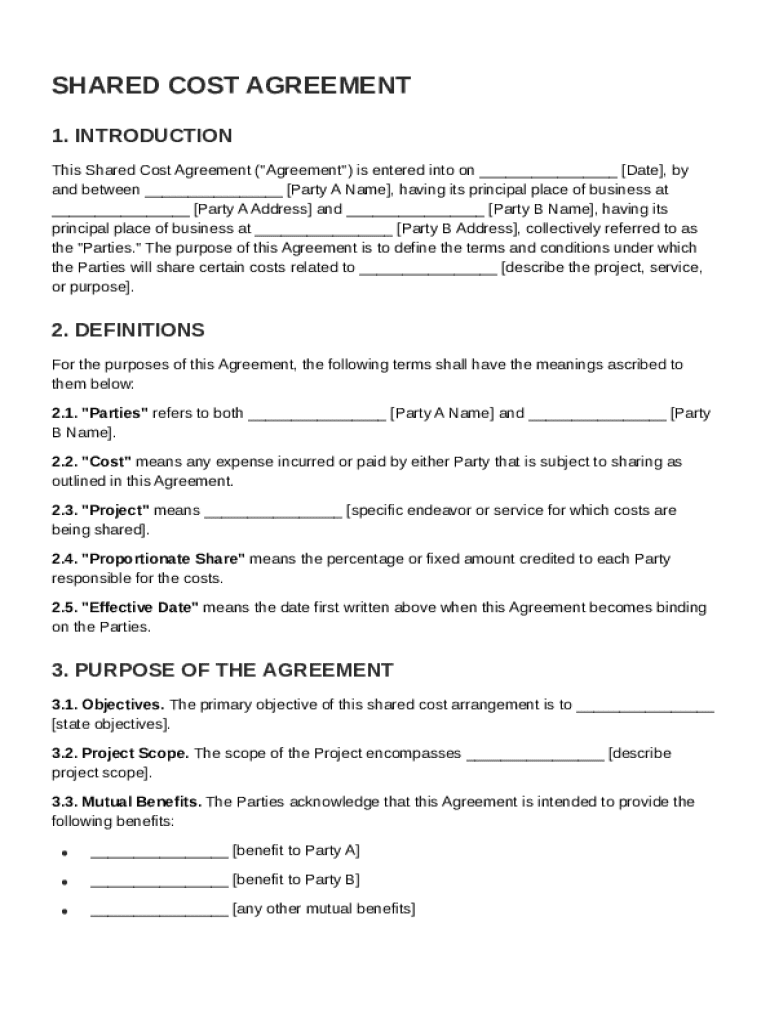
The Shared Cost Agreement Template serves as a formal document detailing how expenses will be divided between two or more parties involved in a project or service. It establishes clear definitions and objectives that each party must adhere to, ensuring transparency and mutual understanding. This template commonly includes sections that define key terms, outline project goals, identify shared costs, and describe methods for cost allocation. It is instrumental in creating accountability and establishing a structured approach to managing shared expenses.
Key Components
- Definitions of Key Terms: Clarifies terminology used within the agreement to prevent misunderstandings.
- Objectives: Describes the main goals associated with the shared project or service.
- Cost Identification: Lists and categorizes all applicable costs that fall under the shared agreement.
How to Use the Shared Cost Agreement Template
Using the Shared Cost Agreement Template effectively involves several steps. Initially, each party should review the template and understand its structure and requirements. The template should then be filled out collaboratively to ensure all participants agree on the terms and allocations.
Steps for Utilization
- Initial Review: Each party reviews the template to understand the format and required information.
- Collaborative Input: Parties come together to agree on cost distribution and input necessary details into the template.
- Final Review: Collaboratively review the filled template to ensure all parties agree on the shared responsibilities and costs.
Steps to Complete the Shared Cost Agreement Template
Completing the Shared Cost Agreement Template requires careful consideration and input from all involved parties. Each section must be filled in accurately to reflect the agreed-upon terms for cost sharing.
Step-by-Step Process
- Identify Parties Involved: Clearly list all parties and their roles within the agreement.
- Define Costs: Specify which costs will be shared and how they will be categorized.
- Determine Allocation Methods: Clearly outline how costs will be divided amongst the parties.
- Specify Payment Terms: Establish timelines and methods for payment, including due dates and acceptable payment methods.
- Establish Reporting Requirements: Define how and when parties should report on cost-related activities and expenses.
Who Typically Uses the Shared Cost Agreement Template
The Shared Cost Agreement Template is commonly utilized by businesses, contractors, and organizations engaged in joint ventures or collaborative projects. Its flexibility makes it suitable for various scenarios where cost-sharing is necessary.


Common Users
- Businesses and Corporations: Often use this template for partnerships on projects.
- Contractors and Freelancers: Utilize it when working on joint endeavors with other professionals.
- Non-profits and NGOs: Employ it for collaborative initiatives to clearly outline financial responsibilities.

Key Elements of the Shared Cost Agreement Template
The Shared Cost Agreement Template contains several key elements that ensure it adequately defines how costs and responsibilities will be managed among parties.
Essential Components
- Allocation Methods: Define how costs are shared, whether equally, proportionally, or through another agreed-upon method.
- Amendment Provisions: Detail the process for modifying the agreement should circumstances change.
- Termination Clauses: Provide instructions on how the agreement can be concluded, including conditions for termination.
Legal Use of the Shared Cost Agreement Template
This template must adhere to legal standards and provide a framework that meets both parties' legal needs, ensuring that all elements comply with applicable state and federal laws.
Legal Considerations
- Compliance with Laws: The agreement must align with local and national legal regulations.
- Legal Binding: Ensure that signatures and modifications are captured in writing to maintain the binding nature of the agreement.
Examples of Using the Shared Cost Agreement Template
Various real-world scenarios demonstrate the utility of the Shared Cost Agreement Template, showcasing its flexibility across different industries and partnerships.
Example Scenarios
- Joint Business Ventures: Two companies collaborating on product development share the research and development costs.
- Construction Projects: Multiple contractors working on a large project use the template to divide materials and labor costs.
- Public Events: Organizations co-hosting events use it to split venue, marketing, and staff expenses.
Important Terms Related to the Shared Cost Agreement Template
Understanding the terminology associated with the Shared Cost Agreement Template is crucial for effectively utilizing it. These terms often define key concepts and practices within the agreement.
Common Terms
- Cost Allocation: The process of distributing expenses among parties based on a predetermined method.
- Amendments: Changes or additions made to the original agreement, often requiring mutual consent from involved parties.
- Reporting Requirements: Obligations for parties to provide updates or reports on expenses and related activities.