
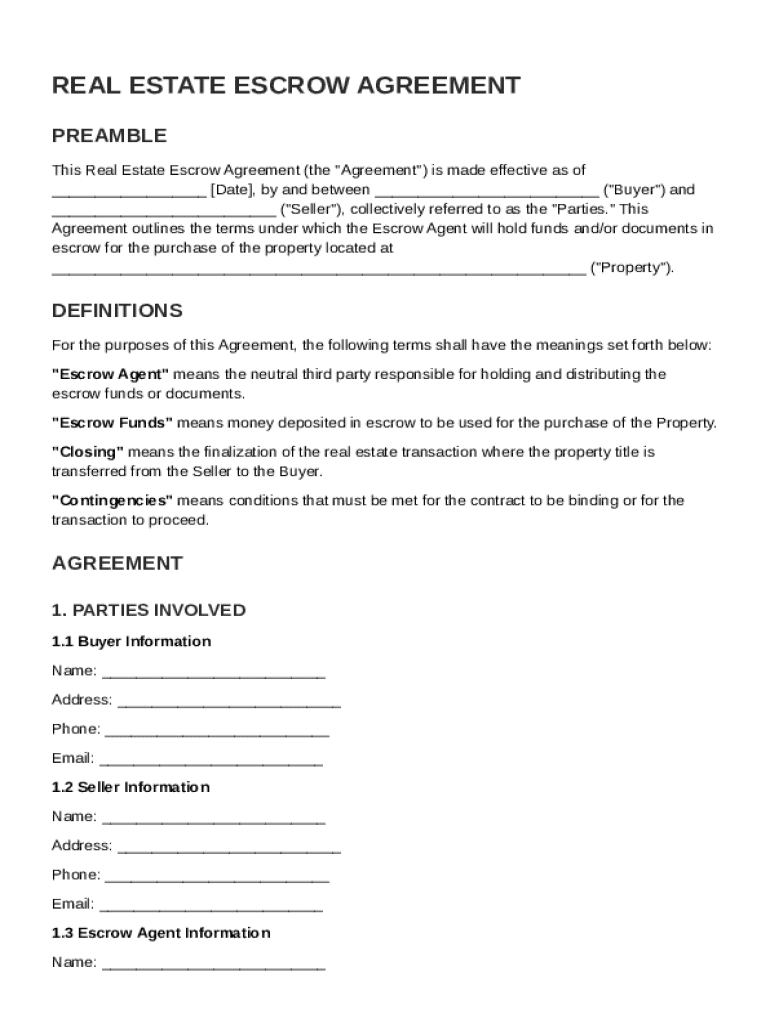







Definition & Meaning
A Real Estate Escrow Agreement Template is a legal document used in real estate transactions to outline the conditions under which an Escrow Agent manages and holds funds and documents between a Buyer and Seller. It details the rights and responsibilities of all parties, including how and under what conditions funds are disbursed. The template ensures a clear understanding among the parties involved regarding the financial and legal obligations each must fulfill before the property transfer concludes. It also provides a secure framework for managing funds until the property transaction has been completed under agreed-upon terms.
How to Use the Real Estate Escrow Agreement Template
To effectively use a Real Estate Escrow Agreement Template, you should conduct the following steps:
- Review the Template: Thoroughly read through each section to ensure you understand the obligations and terms outlined.
- Customize the Fields: Enter specific information related to your transaction, such as the names of the Buyer, Seller, and Escrow Agent, the detailed description of the property, and the funds involved.
- Specify Conditions: Clearly define any unique conditions or stipulations that must be met before the transfer of funds or property.
- Screen for Compliance: Ensure the document complies with state-specific real estate laws that govern escrow transactions.
- Verification: All parties should review and verify the document to ensure accuracy and completeness before proceeding to signing.
Steps to Complete the Real Estate Escrow Agreement Template
Completing the template involves several important steps, each ensuring the accuracy and legality of the transaction:
- Collect Essential Details: Gather all necessary information about the transaction, including involved parties and property specifications.
- Input Data: Fill out sections with required details such as Buyer and Seller information, property details, and financial terms.
- Define Roles and Responsibilities: Clearly outline who is responsible for what actions or decisions within the agreement.
- List Conditions Precedent: Specify any tasks or conditions that must be completed before the transaction can proceed.
- Review Legal Language: Ensure terminologies and clauses comply with legal requirements.
- Signatures: Once all information is accurate and complete, obtain signatures from all parties involved, including witnesses if required.
Key Elements of the Real Estate Escrow Agreement Template
The template includes several key elements essential for a valid escrow arrangement:
- Identifying Information: Names and contact information of Buyer, Seller, and Escrow Agent.
- Property Description: Detailed description of the real estate involved in the transaction.
- Financial Deposit Terms: The amount of money held in escrow and specific terms regarding disbursement.
- Conditions for Release: Detailed conditions that must be met for funds to be released from escrow, protecting both the Buyer and the Seller.
- Escrow Agent Responsibilities: Duties of the Escrow Agent and their scope of authority within the transaction.
- Closing Procedures: Step-by-step outline of the process to finalize the real estate transaction.
Legal Use of the Real Estate Escrow Agreement Template
Legal use of the template requires adherence to both federal and state regulations governing escrow transactions:
- Compliance with ESIGN Act: Ensure electronic signatures and document storage meet federal standards for electronic transactions.
- State-Specific Rules: Adapt the template to meet state-specific requirements that may affect terms such as the handling of funds.
- Governing Law and Jurisdiction: Clearly state which laws and courts will govern the agreement to handle disputes effectively.
- Disclosure Requirements: Include any necessary disclosures legally mandated to inform all parties of the risks and obligations.
Who Typically Uses the Real Estate Escrow Agreement Template
This template is typically used by various parties engaged in real estate transactions:
- Buyers and Sellers: Individuals or entities looking to buy or sell property while ensuring a secure transaction.
- Real Estate Agents: Professionals facilitating property sales and ensuring compliance with transactional requirements.
- Escrow Agents and Officers: Trusted third-party professionals appointed to manage the disbursement and holding of funds and documents.
- Attorneys: Legal advisors who draft, review, and ensure the legality of the escrow agreement.


State-Specific Rules for the Real Estate Escrow Agreement Template
Real estate law can vary significantly from state to state, which may affect the escrow process and agreement terms:
- Differences in Escrow Practices: Some states have unique rules regarding the escrow process, such as required licenses for Escrow Agents.
- Legal Document Requirements: States may mandate specific documentation or wording in real estate escrow agreements.
- Closing Costs and Fees: There can be variations in who pays for what fees, affecting the agreement's financial sections.
Examples of Using the Real Estate Escrow Agreement Template
Here are practical examples where this template is crucial:
- Residential Property Closing: A family purchasing a new home uses the template to manage earnest money deposits and ensure compliance with the agreed-upon sale terms.
- Commercial Property Sale: Businesses use this agreement to structure the transfer of a commercial building while holding funds securely until all conditions are met.
- Multi-Party Transaction: Deals involving several investors or stakeholders where the template helps to clearly delineate each party's role and responsibilities in the transaction.
Important Terms Related to the Real Estate Escrow Agreement Template
Understanding the terminology within the template is vital for all parties involved:
- Earnest Money: The deposit made by the Buyer to demonstrate interest and commitment to the property purchase.
- Escrow Agent: A neutral third party responsible for holding and managing the funds or documents per the agreement.
- Disbursement: The act of releasing funds from escrow once the conditions outlined in the agreement are fulfilled.
- Contingency: Specific conditions that must be met for the escrow to close, such as property inspections or financing approval.




