
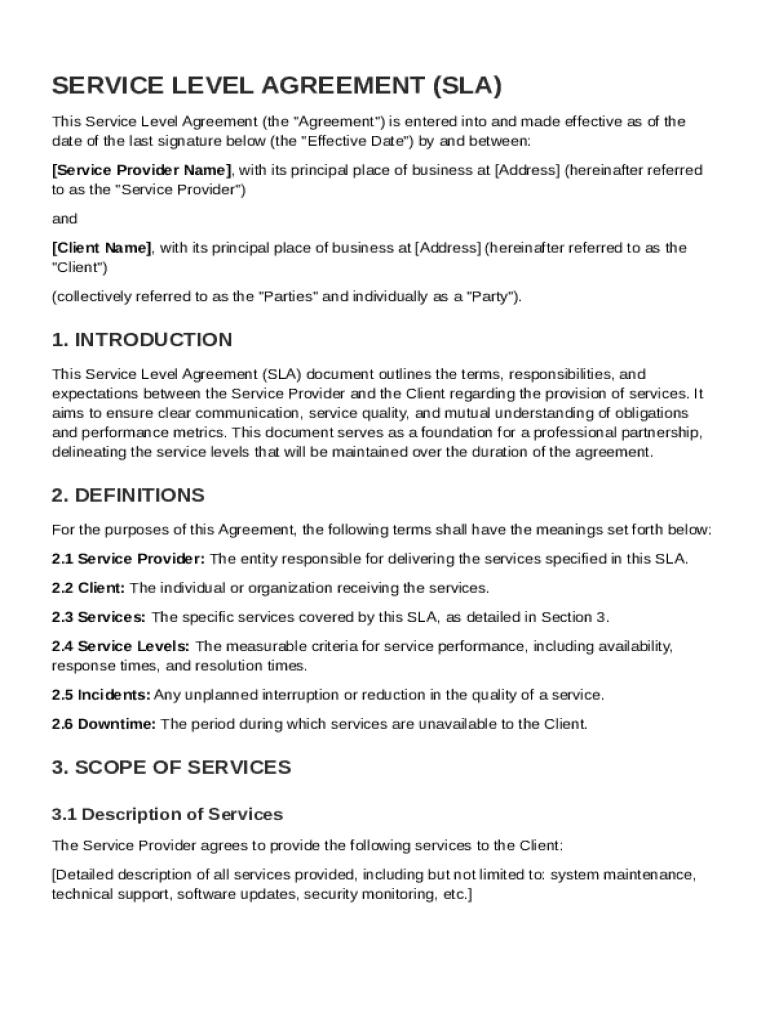







Definition and Meaning
A Service Level Agreement (SLA) is a formal document between a service provider and a client that specifies the service standards the provider guarantees. It details the scope, quality, and efficiency expected in the delivery of services. The SLA aims to define clear expectations and responsibilities, minimizing misunderstandings between involved parties.
Key Components of an SLA
- Service Scope: Defines the specific services to be provided.
- Performance Metrics: Lists criteria and benchmarks for evaluating the service provider’s performance.
- Roles and Responsibilities: Outlines duties for both the service provider and the client.
- Penalties for Breach: Specifies consequences if service levels are not met.
How to Use the Service Level SLA Agreement Template
Using a Service Level SLA Agreement Template involves filling in predefined fields according to your specific contractual terms. This template simplifies the drafting process by clearly outlining essential sections requiring customization.
Steps to Use the Template
-
Review Predefined Sections: Begin by reviewing the template’s predefined sections. Familiarize yourself with sections like service scope and performance metrics, and determine what needs customization.
-
Customize Details: Enter specific details related to service levels, like response times, service availability, and escalation procedures.
-
Specify Responsibilities: Clearly define the roles and responsibilities of each party involved.
-
Set Performance Metrics: Establish the metrics to measure the service provider’s performance.
-
Define Penalties: Set terms for any service level failures and associated penalties.
Steps to Complete the Service Level SLA Agreement Template
Completing the Service Level SLA Agreement Template involves several careful steps to ensure accuracy and comprehensiveness.
Detailed Steps
-
Gather Necessary Information: Collect all relevant details, such as service descriptions, performance metrics, and key obligations.
-
Complete Service Scope Section: Begin by describing the exact nature of the services to be provided.
-
Fill in Performance Criteria: Define and quantify the service levels required to meet business needs.
-
Include Terms and Penalties: Specify legal terms, conditions, and penalties for not meeting agreed service standards.
-
Review and Revise: Ensure all potential scenarios are covered and revise any unclear sections.
-
Get Agreement from Stakeholders: Present the filled template to all stakeholders for feedback.
Key Elements of the Service Level SLA Agreement Template
The template consists of several crucial sections necessary for a comprehensive agreement.
Core Sections
- Introduction and Purpose: States the general purpose of the agreement.
- Definitions: Provides clear definitions for technical terms used within the SLA.
- Service Specifications: Details the specific services included.
Supplementary Elements
- Reporting Obligations: Outlines how service performance will be reported.
- Amendment Process: Details how and when the SLA can be revised or updated.
Legal Use of the Service Level SLA Agreement Template
The template provides a legally binding framework when correctly executed, aligning with U.S. legal standards. It is crucial that SLAs are tailored to meet the legal and regulatory requirements specific to the industry and jurisdiction.
Compliance Requirements
- Confidentiality Clauses: Ensure compliance with data protection laws.
- Adherence to Industry Standards: Maintain alignment with relevant industry standards or regulations.
Who Typically Uses the Service Level SLA Agreement Template
SLAs are commonly utilized by businesses and their service providers to formalize expectations and define accountability.


Typical Users
- IT Managed Service Providers (MSPs): Often use SLAs to manage expectations around technical support and system uptime.
- Telecommunications Companies: Draft SLAs to outline service standards like connection uptime.
- Corporate Legal Departments: Develop SLAs for procurement of services such as legal consultations or expert reports.
Important Terms Related to Service Level SLA Agreement Template
Understanding specific terms within the SLA is crucial for effective implementation and compliance.
Notable Terms
- Service Availability: Refers to the percentage of time the service is available for use.
- Uptime Guarantee: Commitment to a minimum threshold of operational time over a given period.
- Response and Resolution Times: Specified timeframe within which service issues will be addressed and resolved.
Examples of Using the Service Level SLA Agreement Template
Real-world scenarios highlighting the template’s applicability can help in understanding its relevance and utility.
Practical Examples
- Software Services: A SaaS company uses the SLA template to set expectations around software updates and bug fixes.
- Cloud Providers: Utilize the SLA to ensure cloud resource availability and support response times.
These examples underscore the flexibility and advantages of using a Service Level SLA Agreement Template to establish a clear and effective service delivery framework.




