






Definition & Meaning
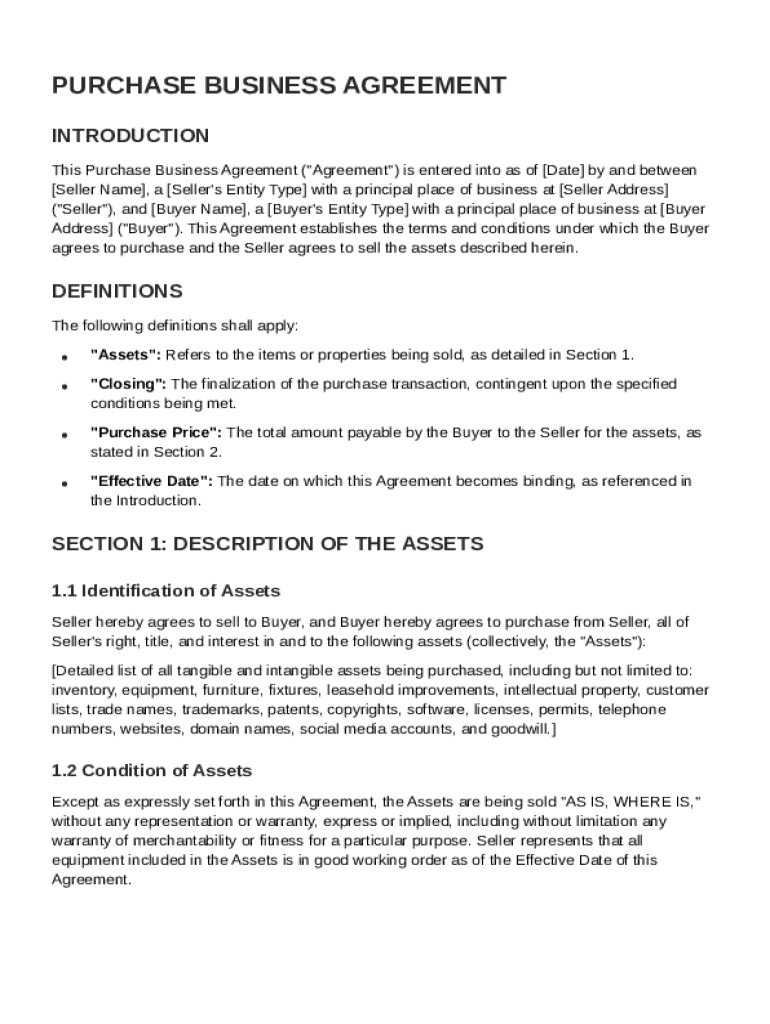
The Purchase Business Agreement Template is a legal document that outlines the terms and conditions under which a buyer agrees to purchase certain assets from a seller. This template provides a structured format to document key provisions, ensuring a transparent agreement between the involved parties. It typically includes detailed descriptions of the assets, purchase price, payment methods, and closing procedures. The purpose of this template is to facilitate a clear, binding understanding, minimizing potential disputes and ensuring compliance with legal standards.
Key Components of this Template
- Asset Description: Clearly outlines each asset involved in the sale, ensuring both parties have a mutual understanding.
- Purchase Price and Payment: Specifies the total price and payment schedule, including methods such as installment plans or lump sums.
- Closing Procedures: Details the steps and timeframe for finalizing the transaction, including transfer of ownership.
How to Use the Purchase Business Agreement Template
Using the Purchase Business Agreement Template involves a systematic approach to accurately document all required details of the transaction. This ensures that both parties understand and agree to each aspect of the sale.
Detailed Steps for Using the Template
- Identify the Parties: Begin by filling in the names and contact information of both the buyer and seller.
- List the Assets: Provide a comprehensive list of all the assets being purchased, along with any specific identifiers.
- Determine the Purchase Price: Clearly state the agreed-upon purchase price and outline the payment terms.
- Set the Closing Date: Establish a deadline for when the transaction should be completed.
- Finalize Terms: Include any additional terms, such as indemnification clauses or warranties, to protect both parties.
Considerations
- Ensure that both parties review the entire document before signing.
- Consult with a legal advisor to verify all provisions align with current laws.
Key Elements of the Purchase Business Agreement Template
The Purchase Business Agreement Template is carefully structured to cover all critical elements necessary for a lawful and complete agreement. Below are the essential parts typically included in the template:
Essential Sections
- Definitions: Clarifies key terms used throughout the agreement to avoid misunderstandings.
- Representations and Warranties: Outlines assurances each party provides regarding their capacity to execute the agreement.
- Confidentiality Clause: Ensures that sensitive information is protected and not disclosed without consent.
Examples for Context
- Indemnification: Protects the buyer from potential liabilities related to the assets.
- Governing Law: Specifies the jurisdiction whose laws will govern the agreement, often aligning with the seller’s location.
Legal Use of the Purchase Business Agreement Template
Establishing legal validity is crucial when executing a Purchase Business Agreement. Utilizing this template contributes to meeting basic legal requirements and simplifies the process of creating binding, enforceable agreements.
Legal Considerations
- Compliance with the ESIGN Act: The use of electronic signatures is legally recognized and enforceable, streamlining the signing process.
- State-Specific Regulations: Certain states may have different requirements for the wording or format of agreements—it’s important to account for these variances.
Protective Measures
- Use of the template ensures that all legal declarations and procedures are outlined clearly, reducing risks of breaches or litigation.
- Provides a structured format that aids in maintaining accurate records in case of disputes or audits.
Who Typically Uses the Purchase Business Agreement Template
A variety of individuals and entities might find the Purchase Business Agreement Template useful, ranging from small business owners to large corporations. By understanding the typical users, one can better appreciate the breadth of its applicability.


Common Users
- Business Owners: Small and medium-sized businesses engage in asset sales as part of mergers or divestitures.
- Legal Teams: Utilize the template for standardizing the process across different departments or clients.
- Entrepreneurs: Facilitate new business ventures through structured asset acquisition.

Business Types Benefiting Most
- LLCs and Partnerships: These entities frequently use such agreements during business transitions or changes in ownership.
- Corporations: Larger businesses use it to formalize asset purchases during expansions or downsizing efforts.
Steps to Complete the Purchase Business Agreement Template
Completing the Purchase Business Agreement Template involves specific steps to ensure all necessary details are captured and accurately represented. The following outlines the process for completing the template successfully:
Initial Steps
- Gather Required Information: Collect all relevant data, including contact details, asset descriptions, and financial terms.
- Fill Out the Template: Begin inputting the information, starting with the parties’ details followed by important transaction terms.
Finalization Steps
- Review for Accuracy: Ensure all information is correct and that there are no omissions or inaccuracies.
- Seek Legal Review: Although the template is comprehensive, a legal review may be prudent to address complex transactions.
- Obtain Signatures: Use electronic signature capabilities or print for manual signing.
Completing these steps effectively minimizes errors and enhances the clarity and enforceability of the agreement.
Important Terms Related to Purchase Business Agreement Template
A comprehensive understanding of the terms related to a Purchase Business Agreement is essential for both drafting and interpreting the agreement. These commonly used terms are vital for parties entering such contracts.
Notable Terms
- Escrow: A third-party account where funds are held until the transaction is completed.
- Due Diligence: The investigation conducted before entering an agreement to ensure all risks are identified.
- Contingencies: Specific conditions that must be met for the transaction to be completed.
Examples and Context
- Escrow in Practice: Used to ensure the buyer has sufficient funds before the transfer of assets.
- Due Diligence Requirements: Mandates thorough research, often involving financial audits and legal review.
These terms serve as a foundation for drafting legally sound agreements and help in negotiating the terms effectively.
State-Specific Rules for the Purchase Business Agreement Template
State-specific rules can significantly affect the execution and enforceability of a Purchase Business Agreement. Understanding these regional variations is crucial for ensuring compliance.
Variations Across States
- Juridical Requirements: Some states have specific statutes governing business transactions requiring unique clauses in the agreement.
- Transaction Taxes: Depending on location, the purchase might be subject to different tax structures.
Examples of State Differences
- California Requirements: May include additional disclosures concerning environmental regulations or zoning laws.
- New York Rules: Could mandate filing the agreement with a state agency to complete the transaction legally.
State-by-State Differences
Recognizing the differences in how states regulate business purchase agreements is important for ensuring that the transaction meets all legal requirements. These variances can affect the agreement’s terms and enforceability.
Regional Specifics
- Disclosure Requirements: States may vary on what must be disclosed, influencing due diligence processes.
- Legal Formalities: States can differ in notarization and recording requirements, affecting how agreements are finalized.
Practical Implications
- Region-Sensitive Clauses: Tailoring agreements to account for differing state laws ensures compliance and reduces transaction risk.
- Adaptation Needs: Businesses operating in multiple states might require modified templates to suit each jurisdiction’s requirements.