






Definition & Meaning
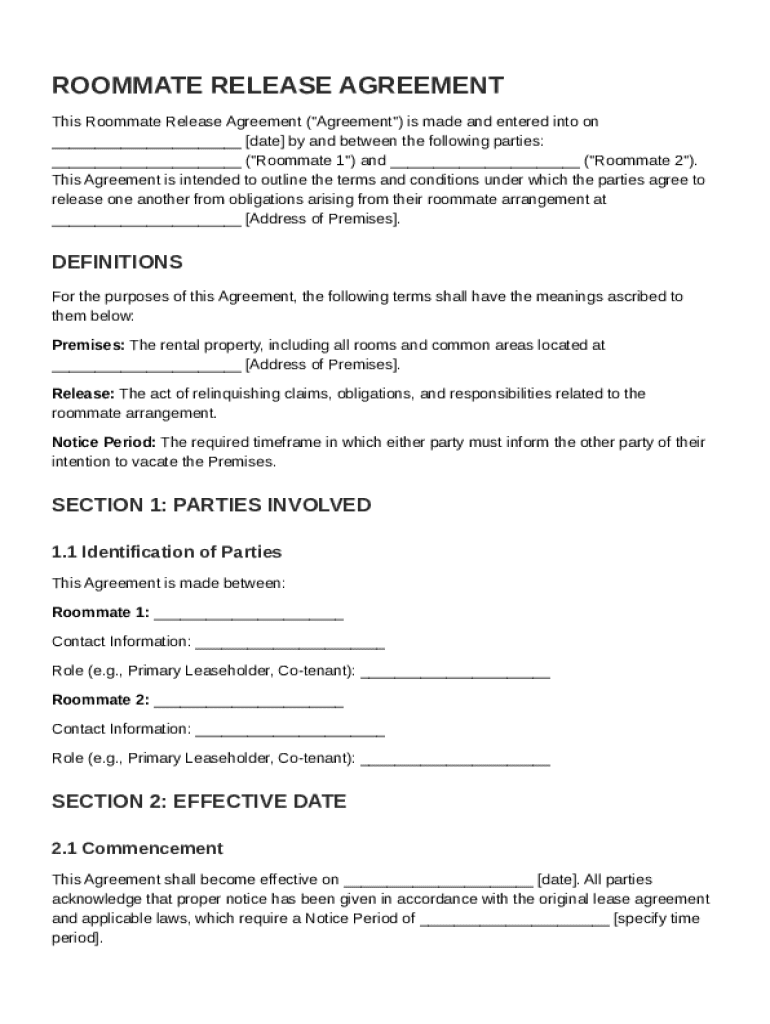
A Roommate Release Agreement is a legal document formalized to release one or more roommates from their obligations stemming from a shared housing arrangement. This form is instrumental when a roommate decides to vacate the premises before the lease term concludes and needs a legal means to absolve their responsibilities. The agreement provides a framework that includes the identification of involved parties, the effective date, and outlines both the released and remaining obligations. It ensures a clear understanding of all terms and conditions guiding the departure of a roommate, helping both parties transition smoothly.
Identification of Parties
- Involved Roommates: The agreement identifies the departing roommate(s) and the remaining tenants, specifying personal information like full names and addresses to ensure legal clarity.
- Landlord or Property Manager: While primarily between tenants, landlords or property managers often have a vested interest and might be involved in acknowledgment sections, ensuring they are informed of the changes.
Purpose and Scope
- Primary Objective: The main aim is to formally release an exiting roommate from financial and legal obligations while detailing the responsibilities of remaining residents.
- Covered Topics: These include financial considerations such as unpaid rent or security deposits and any legal implications of breaking rental agreements.
Key Elements of the Roommate Release Agreement Template
This section outlines various components crucial to drafting a complete Roommate Release Agreement.
Effective Date
- State Date of Agreement: Clearly denotes when the release terms become legally binding, usually the date of the last signing by all parties.
- Impact on Lease Terms: It should outline how the exiting roommate's departure affects the existing lease agreements with the landlord.
Financial Obligations
- Outstanding Payments: Lists any remaining financial responsibilities, such as unpaid rent or bills.
- Security Deposit Handling: Details the distribution or reimbursement process for security deposits held by the landlord.
Remaining Obligations
- Shared or Ongoing Utilities: Includes any shared utility accounts or other divisible payments and how they will be managed post-departure.
- Property Damages: Clarifies who bears responsibility for any damages or repairs needed once a roommate leaves.
Steps to Complete the Roommate Release Agreement Template
Completing this template involves specific actions to ensure clarity and legality.
- Gather Necessary Information: Collect all roommate details, lease agreements, and financial data.
- Draft Agreement Terms: Include sections like financial obligations and remaining responsibilities.
- Review State Laws: Check local tenant laws to ensure compliance with regulations specific to your region.
- Draft and Review: Draft the document and have all parties, including a legal adviser, review the terms.
- Sign and Distribute: Ensure all roommates and potentially the landlord sign the agreement and distribute copies among involved parties.
Legal Review
- Consult with a Legal Professional: Especially for complex cases, getting a legal review ensures the document is sound and enforceable.
Legal Use of the Roommate Release Agreement Template
Understanding the legal standing of the document helps in leveraging it correctly.
Enforceability
- Complies with Tenant Laws: The agreement should align with state-specific tenant laws to be enforceable in legal disputes.
- Notifying Landlords: Consider mandatory notification or involvement of landlords for transparency and legal integrity.
Dispute Resolution
- Arbitration or Mediation Clauses: Consider including methods for resolving potential disputes that arise post-agreement.
State-Specific Rules for the Roommate Release Agreement Template
Roommate release agreements must accommodate varying state laws and regulations affecting cohabitation agreements.
Notable State Differences
- New York vs. California: New York might require different notification periods or landlord consents compared to California.
- Security Deposit Laws: States have distinct rules for handling security deposits; understanding them prevents disputes.
Custom Requirements
- Tenant Rights and Obligations: State-specific rights and obligations, varying significantly by location, must be clearly outlined in the agreement.
Practical Examples of Using the Roommate Release Agreement Template
Illustrating real-world scenarios where the template applies helps clarify its utility.
Case Study 1: Early Lease Termination
- Scenario: In a shared apartment lease, one roommate decides to relocate for a job, requiring the release template to exit without penalty.
- Resolution: After negotiating terms with remaining tenants, an agreement facilitated a smooth transition.
Case Study 2: Financial Disputes
- Scenario: A roommate leaves suddenly, leaving unpaid bills.
- Resolution: Using the release agreement, remaining roommates formalized a payment plan for debt settlement before tenure completion.
Important Terms Related to Roommate Release Agreement Template
Comprehending terms related to roommate release agreements is crucial for accurate interpretation and execution.
Primary Legal Terminologies
- Indemnification: The release of one party from illegal actions connected to the tenancy.
- Co-tenancy Release: Involves mutually agreed removal of one tenant’s legal responsibility under an existing lease.
Common Confusions
- Lease vs. Sublease: Differentiates between primary lease agreements and secondary subleasing arrangements, important for deciding on appropriate legal documents.
Eligibility Criteria
Not everyone can utilize a Roommate Release Agreement effectively. Understanding eligibility criteria ensures the appropriate use of this legal tool.


Applicable Scenarios
- Leaseholders vs. Subtenants: Primarily designed for formal leaseholders; subtenants might require landlord involvement.
- Voluntary Participation: All involved parties, including remaining tenants and landlords, should consent for the contract to be effective.
Exemptions
- Rent-Controlled Units: Special rules might apply to rent-controlled or stabilized units, potentially complicating the release process.