






Definition and Purpose of a Property Exchange Agreement Template
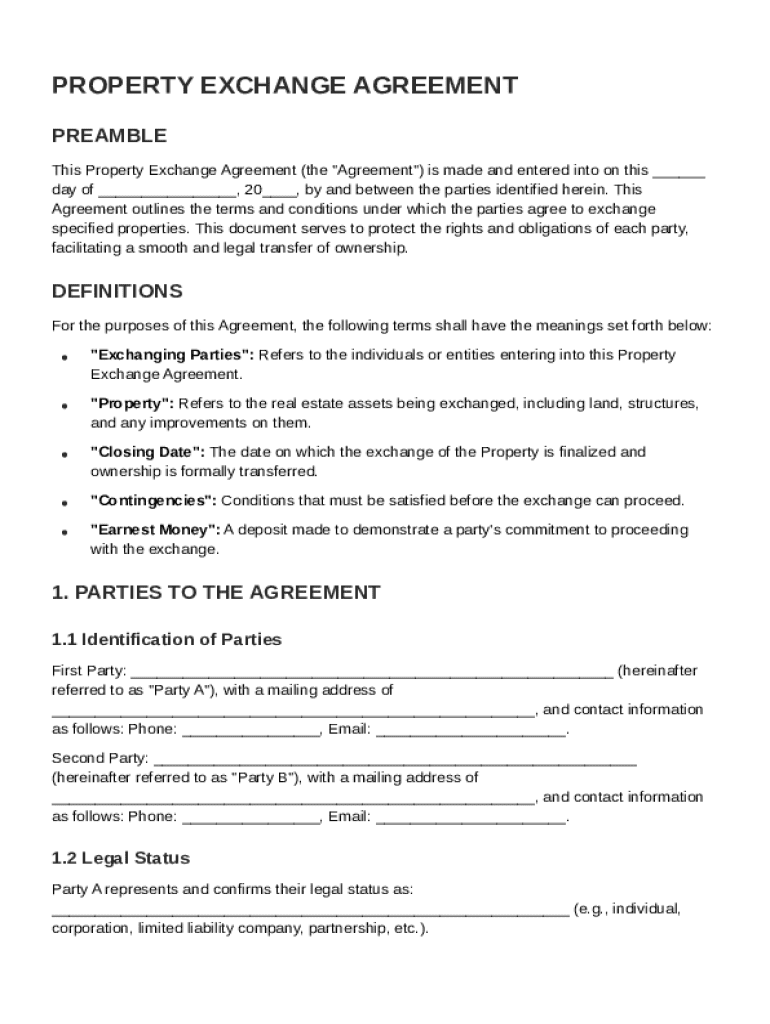
A Property Exchange Agreement Template is a legal document facilitating the exchange of real estate properties between two parties. It comprehensively details the terms and conditions governing the transaction, ensuring clarity and mutual understanding. This agreement typically includes various sections such as definitions, party identification, property descriptions, and exchange terms. The template serves as a standardized format for documenting the specifics of property exchanges, reducing the need for bespoke legal drafting.
How to Use the Property Exchange Agreement Template
To effectively use the Property Exchange Agreement Template, follow a structured approach:
- Gather Information: Obtain detailed information about the properties being exchanged, including their legal descriptions and any encumbrances, if applicable.
- Identify Parties: Clearly define the parties involved in the exchange, including full legal names and contact details.
- Customize Terms: Modify the template to accommodate any unique terms, such as contingencies or specific covenants agreed upon by the parties.
- Legal Review: Have the completed template reviewed by a legal professional to ensure compliance with local laws and address any potential legal issues.
- Final Agreement: After all revisions and reviews, both parties should sign the agreement to make it legally binding.
Key Elements of the Property Exchange Agreement Template
The Property Exchange Agreement Template includes several crucial components:
- Property Descriptions: Detailed identification of each property involved in the exchange, including legal descriptions, boundaries, and existing liens.
- Exchange Terms: Specific conditions under which the properties will be exchanged, including any monetary adjustments necessary to equalize property values.
- Closing Procedures: Outline of steps and timeline for the exchange, including any necessary inspections and the closing date.
- Contingencies: Conditions that must be met for the exchange to proceed, such as obtaining financing or completing satisfactory property inspections.
- Representations and Warranties: Declarations made by each party regarding the condition and legal standing of the property they are offering.
- Indemnification Obligations: Provisions detailing the responsibility of each party to protect the other against legal claims arising from the exchange.
- Governing Law: Legal jurisdiction that will preside over any disputes or interpretations of the agreement.
Important Terms Related to Property Exchange Agreements
Understanding key terms is critical when dealing with Property Exchange Agreements:
- Escrow: A legal arrangement where a third party holds and regulates payments of funds required for the transaction.
- Title Insurance: A form of indemnity insurance that protects lenders and homeowners against any legal defects in the property title.
- Lien: A legal right or interest that a lender has in the borrower's property, granted until the debt obligation is satisfied.
Legal Use and Compliance of the Property Exchange Agreement Template
The legal validity of a Property Exchange Agreement Template hinges on several factors:
- State Laws: Different states have varying real estate laws that must be reflected in the agreement.
- Disclosure Requirements: Certain disclosures, such as the presence of lead paint, may be required by law and must be included.
- Signature Authentication: Notarization or witness signatures might be necessary to validate the agreement officially.
Steps to Complete the Property Exchange Agreement Template
Completing the Property Exchange Agreement Template requires careful attention to detail:
- Input Basic Information: Begin by entering the basic details of the parties and properties involved.
- Detail Specific Terms: Specify any unique terms, like personal property included in the exchange, in the relevant sections.
- Review Legal Clauses: Go through standard legal clauses and adjust them to reflect the agreed-upon terms and legal requirements.
- Double-Check for Accuracy: Ensure all entered information is accurate and that no sections are left incomplete.
- Obtain Reviews: Have the document reviewed by all parties and their legal representatives for final approval.
- Finalize with Signatures: Secure signatures from all parties to formalize the agreement.
State-Specific Differences in Property Exchange Agreement Templates
While the Property Exchange Agreement Template serves as a universal format, adjustments may be necessary to comply with state-specific requirements:
- Disclosure laws: Some states mandate additional disclosures, such as disclosures about water rights or energy ratings.
- Tax Implications: State-specific taxation rules and exemptions might affect the exchange terms and should be incorporated accordingly.
- Recording Requirements: The template may need to adjust to address specific state regulations about recording property exchanges with local authorities.
Examples of Using the Property Exchange Agreement Template
Real-world scenarios of using the Property Exchange Agreement Template may include:
- Investment Exchange: Two real estate investors swap properties in different regions to diversify their portfolios.
- Residential Swapping: Homeowners exchanging homes to better fit changing family needs or job relocations.
- Inheritance Adjustments: Families using property exchanges to equalize inheritance distributions among beneficiaries.
These examples illustrate the flexibility and practicality of the template in various situations.