






Definition & Meaning
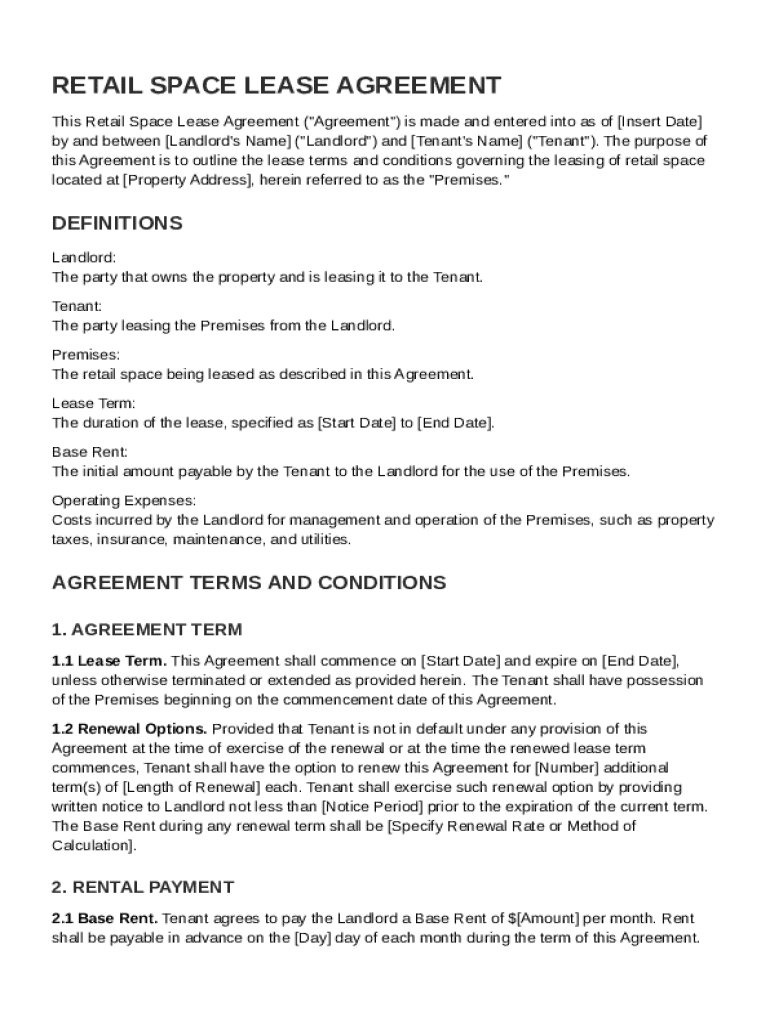
A Retail Space Lease Agreement Template is a legally binding document that outlines the terms and conditions for leasing a retail space between a landlord and a tenant. This template provides a structured framework, ensuring both parties understand their rights and obligations. The agreement typically includes essential definitions, such as the lease term, rental payments, security deposits, and permitted use of the premises. By using a template, parties can standardize the process, saving time and reducing the risk of missing critical details.
How to Use the Retail Space Lease Agreement Template
Using the Retail Space Lease Agreement Template is straightforward. You begin by downloading the template from a trusted platform like DocHub, which offers tools to edit and customize the document to suit your specific needs. Start by filling in the basic information, such as the names of the landlord and tenant, the address of the retail space, and the lease start and end dates. Next, customize the template to reflect any unique conditions or clauses agreed upon by both parties. Finally, review the document thoroughly to ensure all details are accurate and complete before both parties sign electronically using DocHub’s legally binding e-signature feature.
Key Elements of the Retail Space Lease Agreement Template
The Retail Space Lease Agreement Template contains several critical elements.
- Lease Term and Renewal Options: Specifies the duration of the lease and any terms for renewal or extensions.
- Rent and Security Deposit: Details the rent amount, payment schedule, and security deposit requirements.
- Permitted Use: Defines the allowable business activities on the premises.
- Maintenance Responsibilities: Outlines who is responsible for property maintenance.
- Insurance Requirements: States the insurance coverage needed by each party.
- Indemnity Clause: Protects parties from specific liabilities.
- Default and Termination Procedures: Describes actions in the event of a breach or lease termination.
Understanding these elements is crucial for both landlords and tenants to ensure a mutually beneficial agreement.
Legal Use of the Retail Space Lease Agreement Template
The Retail Space Lease Agreement Template must adhere to relevant federal and state laws to be legally enforceable. This includes compliance with zoning regulations, health and safety codes, and anti-discrimination laws. Landlords and tenants should ensure the template aligns with local jurisdictional laws to avoid legal disputes. Consulting with a legal professional to review the contract can provide peace of mind and verify compliance with applicable legal standards.
Steps to Complete the Retail Space Lease Agreement Template
- Gather Necessary Information: Collect details such as the names of parties involved, property address, and terms agreed upon.
- Customize the Template: Input specific data into the template, adjusting clauses as needed to fit the agreement terms.
- Review for Accuracy: Carefully read through the completed agreement to ensure all details are correct and complete.
- Secure Signatures: Use a platform like DocHub to apply electronic signatures from both parties to finalize the agreement.
- Store the Document Safely: Securely store the signed agreement, either digitally or in printed form, for future reference.
Following these steps ensures a complete and legally sound lease agreement ready for execution.
Important Terms Related to Retail Space Lease Agreement Template
This lease agreement includes several specific legal terms that are important to understand:
- Lessor and Lessee: Formal terms for landlord and tenant.
- Sublease/Subletting: Terms regarding allowing another party to lease the space from the tenant.
- Gross Lease vs. Net Lease: Types of lease agreements dictating who pays for operating expenses.
- Force Majeure: Clauses dealing with cancellation due to unforeseen natural events.
- Escalation Clause: Provisions for rent increases over time, typically tied to inflation or market rate changes. Familiarity with these terms helps both parties navigate and negotiate the lease agreement more efficiently.
Who Typically Uses the Retail Space Lease Agreement Template
The template is used by various parties in the retail and commercial real estate sectors.
- Property Owners and Landlords: Use the template to offer standardized lease agreements that protect their rights.
- Retail Business Owners: Opt for these templates to ensure they understand all lease terms and conditions.
- Real Estate Agents and Brokers: Utilize these templates to draft agreements on behalf of clients.
- Legal Advisors: Reference the templates to provide clients with robust advice and legal clarity. Each user group leverages the document to ensure clear, fair, and legally compliant lease arrangements.


State-Specific Rules for the Retail Space Lease Agreement Template
Laws governing retail lease agreements vary from state to state in the U.S., influencing aspects like security deposit limits, rent control, and mandatory disclosures. For instance, in California, landlords must comply with specific environmental and health disclosures that might not be required in Texas. Similarly, states like New York have distinct rules on rent stabilization for commercial leases. It’s essential for landlords and tenants to be aware of these state-specific rules to ensure their lease agreement complies with local regulations. Consulting with legal experts familiar with state-specific commercial real estate laws can provide additional assurance.
Examples of Using the Retail Space Lease Agreement Template
Consider a small boutique owner looking to lease space in a new shopping center. Using the Retail Space Lease Agreement Template, they can customize terms to include specific clauses covering visual merchandising rights, display requirements, and common area usage with the landlord. Another example is a national retail chain negotiating a site for a pop-up store. They might use the template to ensure the lease term aligns with their business campaign dates and seasonal strategy. Both scenarios demonstrate how the template provides flexibility to capture unique business needs while maintaining legal structure.