






Definition & Purpose of the Professional Service Consulting Agreement Template
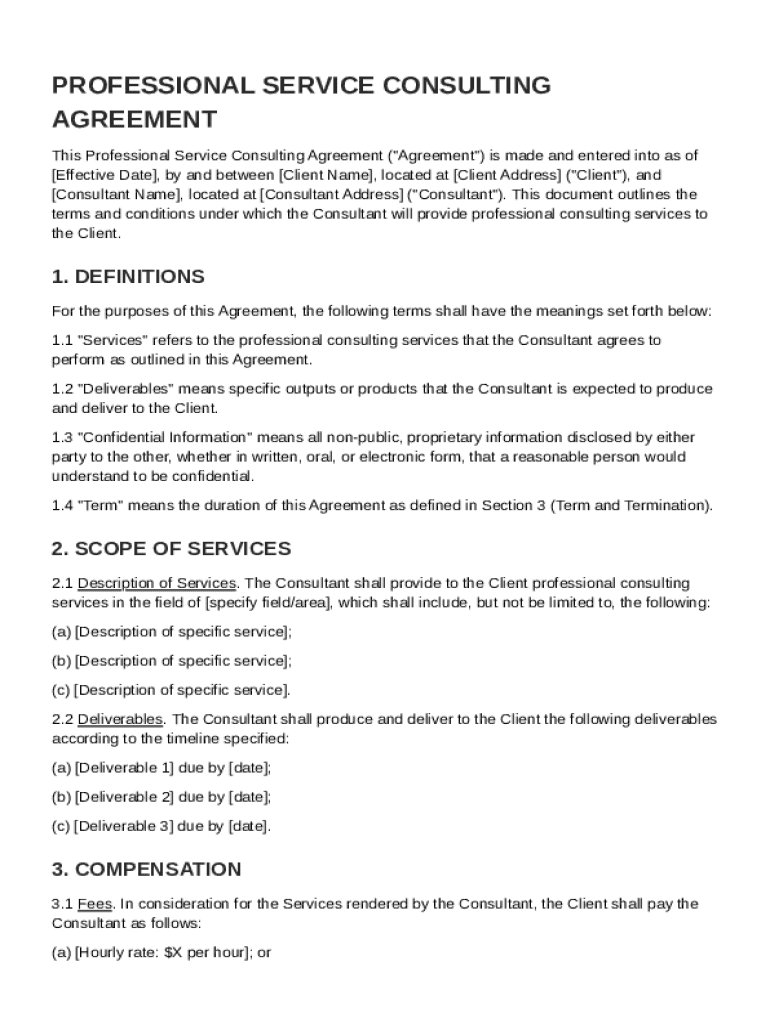
The Professional Service Consulting Agreement Template is a legal document designed to establish the terms and conditions under which a consultant will provide services to a client. This agreement outlines the responsibilities, rights, and obligations of both parties. Commonly used in business settings, it serves to protect both client and consultant by setting clear expectations. It covers various essential aspects such as the scope of services to be provided, timelines, compensation, and confidentiality terms, ensuring a mutual understanding and reducing the risk of disputes.
Key Elements of the Agreement Template
Scope of Services
- Detailed Description: Clearly defines the services that the consultant will provide, including specific tasks and deliverables. This section ensures both parties understand the extent of the consultant's responsibilities.
- Timeline and Milestones: Sets deadlines for deliverables and project completion. This helps monitor progress and ensures accountability.
Compensation and Payment Terms
- Rate and Payment Method: Specifies the consultant’s fee structure, which can be hourly, per project, or on a retainer basis. It also details the payment schedule and preferred methods of payment.
- Reimbursement of Expenses: Outlines which expenses (if any) will be reimbursed by the client and how these should be documented.
Confidentiality Obligations
- Non-Disclosure Terms: Protects sensitive information shared during the consulting engagement. This clause is crucial for maintaining confidentiality and preserving proprietary information.
- Duration: Specifies the length of time the confidentiality obligations will remain in effect, often extending beyond the termination of the agreement.
Important Terms Related to the Agreement
Intellectual Property Rights
- Ownership of Work Product: Clarifies who will own the intellectual property created during the consulting engagement. It may specify whether the client will have full ownership or if the consultant retains certain rights.
- Licensing Agreements: Discusses any licenses granted for use of certain intellectual property.
Warranties and Indemnification
- Representations and Warranties: Both parties assert specific statements of fact, such as the consultant guaranteeing the originality of work.
- Indemnification Provisions: Outlines the process for handling third-party claims and specifies who is responsible for legal fees and damages.
Steps to Complete the Template
Initial Preparation
- Gather Necessary Information: Collect details about the client, consultant, and the specific services to be rendered.
- Identify Key Dates: Determine the project start date, end date, and any important milestones.
Drafting the Agreement
- Complete the Scope of Services: Clearly articulate tasks and expectations.
- Set Compensation Terms: Agree on the rate, payment schedule, and any potential reimbursements.
- Review Confidentiality Clauses: Ensure adequate protection of sensitive information.
Finalizing and Signing
- Review and Revise: Both parties should thoroughly review the document for accuracy and completeness.
- Sign the Agreement: After approval, signatures from both the client and consultant are required to make the agreement legally binding.
State-Specific Rules and Considerations
Variations by Jurisdiction
- Different State Laws: Some states have unique legal requirements that may alter standard clauses, particularly in areas such as non-compete agreements or liability.
- Additional Licensing: Certain states may require consultants to hold specific professional licenses or certifications, which should be verified and documented within the agreement.
Digital vs. Paper Version
Advantages of Digital Agreements
- Ease of Access and Storage: Digital formats facilitate better document management and can be easily stored in cloud services.
- Electronic Signatures: Enable swift completion and execution through platforms like DocHub, enhancing efficiency and reducing turnaround time.
Considerations for Paper Versions
- Traditional Signing Practices: Some parties may prefer physical copies and handwritten signatures for added authenticity or personal satisfaction.
- Document Retention: Paper versions may require additional handling for secure storage to prevent damage or loss.
Examples of Using the Agreement Template
Real-World Applications
- IT Consulting Services: A company hiring a technical expert to implement a new software system may use this template to outline responsibilities, deliverables, and confidentiality terms.
- Marketing and PR Consulting: A small business seeking to improve its market presence could enlist a marketing consultant, establishing goals, timelines, and metrics for success within the agreement template.
Software Compatibility and Integration
- DocHub Features: Supports a wide range of file formats and integrates with cloud services, making document management efficient and secure.
- Online Collaboration Tools: Features like real-time synchronization and commenting facilitate collaborative edits and feedback in multi-user environments, ensuring the most current document version is maintained.