
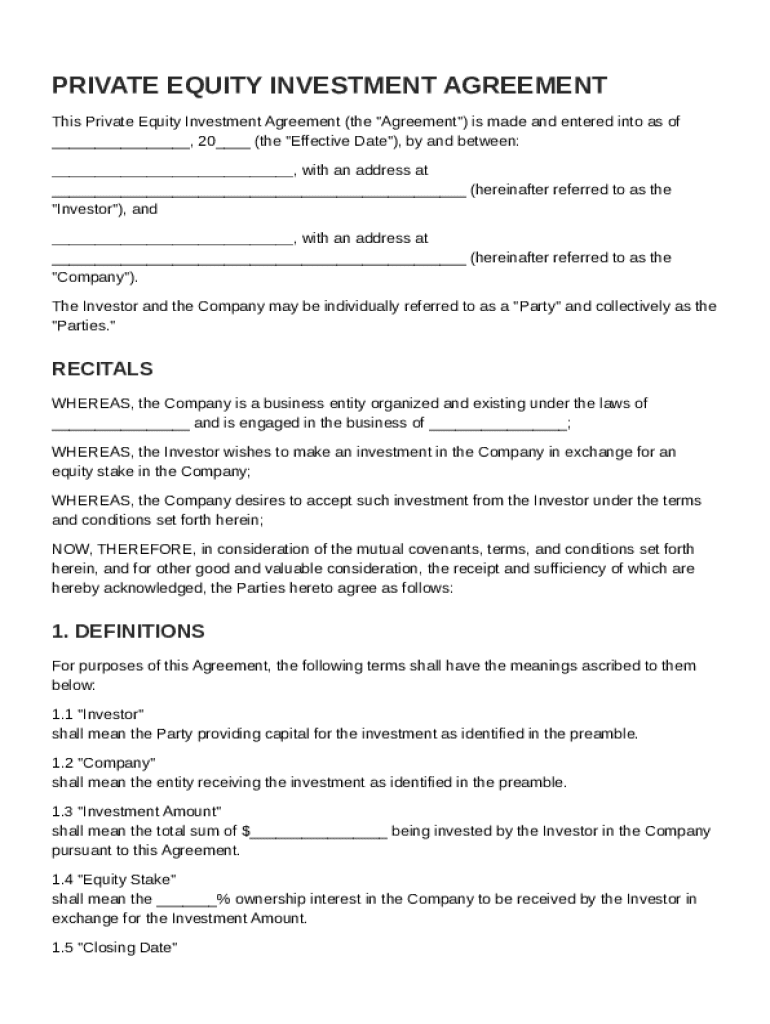







Definition & Meaning
The Private Equity Investment Agreement is a legal document that outlines the terms under which an investor provides capital to a company in exchange for an equity stake, detailing the investment structure, rights, and obligations of both parties. It sets a framework for the investment relationship, including how capital will be used and how governance will be structured. This agreement ensures both parties have a mutual understanding of expectations and responsibilities, reducing the likelihood of disputes.
Key Components
- Investment Details: Specifies the amount of capital invested and the percentage of equity acquired.
- Use of Proceeds: Defines how the invested funds will be utilized by the company.
- Representations and Warranties: Includes assurances made by each party about their authority and legal standing.
- Covenants: Details obligations each party must adhere to during the investment period.
- Indemnification Provisions: Outlines how losses or damages are to be covered by the parties involved.
How to Use the Private Equity Investment Agreement Template
The template is designed for customization, allowing users to adapt it according to their specific transaction needs. It's essential to ensure all relevant fields are completed to tailor the agreement accurately.
Steps for Customization
- Fill in Basic Information: Include names and details of participating entities.
- Adjust Investment Terms: Specify the amount of investment and any conditional terms suitable to the stakeholders.
- Detail Use of Funds: Clearly state how the investment capital will be allocated within the company.
- Include Governance Structure: Identify the investor's rights, including board representation and decision-making powers.
- Review Legal Terminologies: Ensure all parties are clear about legal obligations and rights.
- Verify with Legal Counsel: Have the draft reviewed by legal experts to ensure compliance and reduce future risks.
Key Elements of the Private Equity Investment Agreement Template
Critical sections define the structure and enforceability of the agreement, ensuring clear communication and legally binding commitments.
Important Sections
-
Governance Structure:
- Board Representation: Outlines rights to appoint board members.
- Voting Rights: Specifies voting power and any particular decision-making processes.
-
Exit Strategy:
- Sale Provisions: Conditions under which an investor can sell their equity.
- IPO Clauses: Details if public offering is a viable exit strategy.
-
Miscellaneous Clauses:
- Non-Compete Agreements: Prevents parties from engaging in competing businesses.
- Governing Law: States which jurisdiction’s laws will govern the agreement.
Important Terms Related to the Private Equity Investment Agreement Template
Understanding specific terms within the agreement ensures proper interpretation and application of each section. Below are some important terms explained:
- Equity Stake: The percentage of ownership in the company acquired by the investor.
- Pro Rata Rights: Rights allowing investors to maintain their percentage of ownership by purchasing a proportional amount of any future shares issued.
- Drag-Along Rights: Rights that allow majority shareholders to force minority shareholders to sell their shares in the event of a sale.
Legally Binding Electronic Signatures
DocHub offers a secure method for signing the Private Equity Investment Agreement, ensuring legality and efficiency through electronic signatures.
Creating an Electronic Signature
- Drawing or Typing: Users can draw their signature using a digital device or type and choose a font style for a signature.
- Image Upload: Allows uploading of a handwritten signature image.
- Mobile Capture: Use mobile devices to capture a hand-drawn signature directly.
Ensuring Legally Binding Status
- Compliance with ESIGN Act: DocHub's signatures comply with regulations, ensuring their recognition as valid in a legal context.
- Audit Trails: Provides documentation of when and by whom the document was signed, adding a layer of protection against potential disputes.
Examples of Using the Private Equity Investment Agreement Template
Real-world examples illustrate how various companies and investors utilize this template to facilitate successful transactions.
Case Scenarios
- Startup Investments: A tech startup uses the agreement to formalize investment from a venture capital firm, detailing governance and exit strategies.
- Expansion Funding: A manufacturing company seeks additional capital for expansion, using the agreement to clarify fund usage and board participation for the new investor.
- Spin-Off Ventures: A corporation creates a new entity, with initial funding structured through this agreement, setting parameters for inter-company transactions and oversight.
Who Typically Uses the Private Equity Investment Agreement Template
This template is not limited to a single type of user; it serves a range of businesses and investors looking to formalize equity investments.


Common Users
- Venture Capital Firms: To define terms of investment in early-stage companies with high growth potential.
- Private Equity Firms: In transactions concerning larger, established companies requiring growth capital or restructuring.
- Corporate Legal Teams: For internal documentation and presentations to board members or stakeholders in preparing for funding rounds.

Business Types
- Tech Startups: Seeking seed funding or Series A investments to scale operations.
- Real Estate Conglomerates: Using equity agreements for joint ventures and development projects.
- Healthcare Providers: Attracting strategic investments for technological upgrades or facility expansion.




