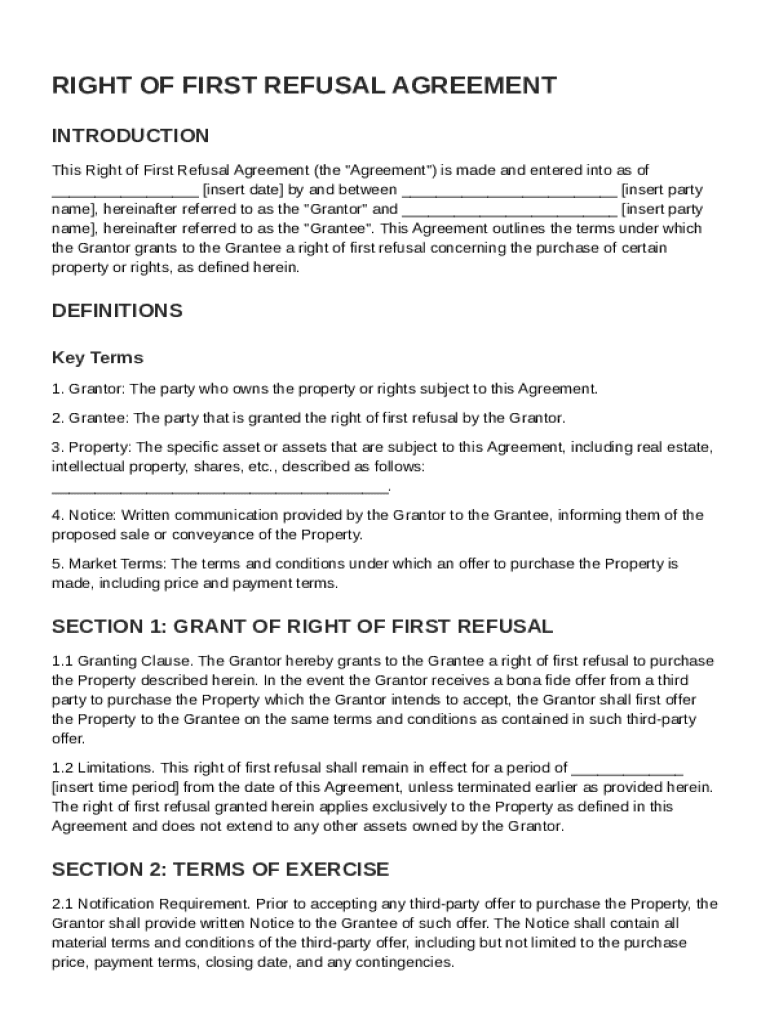







Definition & Meaning
A Right of First Refusal (ROFR) Agreement is a legal document granting a party, known as the grantee, the option to purchase a particular asset before the asset owner, referred to as the grantor, offers it to any third party. This right ensures that before the asset is sold to others, the grantee has the opportunity to match or exceed third-party offers. Such agreements are particularly common in real estate, where a tenant may have the right to purchase the property they are renting if the landlord decides to sell.
Key Components:
- Grantee and Grantor Roles: Clearly defining each party's rights and obligations.
- Asset Description: Detailed listing of the asset subject to the agreement.
- Notification Process: Timeline and method for informing the grantee about potential third-party offers.
- Response Window: Specific period for the grantee to decide on exercising their right.
How to Use the Right of First Refusal Agreement Template
Utilizing a Right of First Refusal Agreement Template involves customizing the document to suit the specifics of your transaction. Here’s a step-by-step guide:
- Identify Parties: Clearly state who the grantor and grantee are, ensuring correct identification to avoid future disputes.
- Detail the Asset: Describe the asset comprehensively, including any identifiers like serial numbers, location for real estate, or categories for intellectual property.
- Set Notification Terms: Define how and when notifications regarding third-party offers will be communicated, whether via email, certified mail, or another method.
- Determine Terms of Sale: Outline potential conditions that would take effect if the right is exercised, covering price, payment terms, and other relevant details.
- Clarify Duration: Specify the period the agreement remains in force, whether indefinitely or for a fixed term.
Key Elements of the Right of First Refusal Agreement Template
The template encompasses several core elements which ensure its effectiveness and legal soundness:
- Purpose of the Agreement: States the reason for granting the right, offering context and rationale.
- Price Determination Method: Describes how the purchase price will be decided, crucial for transparency.
- Process for Amendments: Procedures for making changes, ensuring both parties approve and record modifications.
- Termination Clause: Conditions under which the agreement may be invalidated or canceled.
- Governing Law: Specifies which jurisdiction’s laws apply, important for resolving any disputes.
Steps to Complete the Right of First Refusal Agreement Template
Completing this template involves several detailed steps to ensure it aligns with the involved parties’ expectations:
- Fill Out Basic Information: Start by entering the names and contact details of both the grantor and grantee.
- Describe the Asset: Use precise language to detail specifics of the asset, avoiding any room for misinterpretation.
- Establish Notification Guidelines: Clearly define how the grantor will notify the grantee of third-party interest.
- Outline the Exercise Process: Provide instructions for how the grantee can accept the offer, including any necessary paperwork or proof of funds.
- Review and Sign: Have both parties review the completed agreement, making sure each party has a clear understanding and then sign to acknowledge consent.
Important Terms Related to Right of First Refusal Agreement Template
Familiarizing oneself with important terms helps both parties fully understand their rights and responsibilities under the agreement:
- Grantee: The party receiving the right to purchase.
- Grantor: The party offering the right.
- Offer: A proposal from a third party to purchase the asset.
- Exercise of Right: The action taken by the grantee to accept the offer and proceed with the purchase.
- Expiration of Right: The point at which the right lapses if not exercised in the defined timeframe.
Legal Use of the Right of First Refusal Agreement Template
The template serves as a legally binding document upon execution:
- Adherence to Contract Law: Must comply with statutory requirements for valid agreements, such as offer and acceptance, consideration, and intent.
- Validity Across Jurisdictions: Should be compatible with the legal frameworks of the states involved, possibly requiring modifications per local regulations.
- Compliance with Disclosure Norms: Any disclosures mandated by law must be included, ensuring full transparency.
Who Typically Uses the Right of First Refusal Agreement Template
This template finds its utility across various individuals and entities:
- Real Estate Investors: Often used when purchasing properties with tenants who might have first buying rights.
- Business Partners: Common in agreements where one partner wishes to sell their share but must first offer it to existing partners.
- Family Members: Used within families for property or business ownership transitions.
- Artists and Writers: In licensing rights, these agreements can ensure original creators have claims to sell their work before new offers are entertained.


Examples of Using the Right of First Refusal Agreement Template
Understanding practical applications of this agreement can provide valuable context:
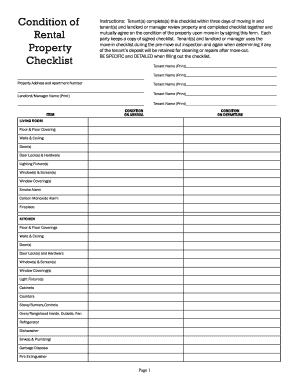
- Tenant Purchase Scenario: A tenant, living in a rental property, has the ROFR, which allows them to buy the home before the landlord sells it to someone else.
- Commercial Real Estate: A company leasing an office space might hold a ROFR to acquire the office should the owner decide to sell.
- Intellectual Property: An author might have a ROFR arranged with a publisher to buy back rights before they are resold to another company.
This comprehensive exploration of the "Right of First Refusal Agreement Template" addresses diverse requirements, ensuring clarity and operational effectiveness across various use cases.