







Definition & Meaning
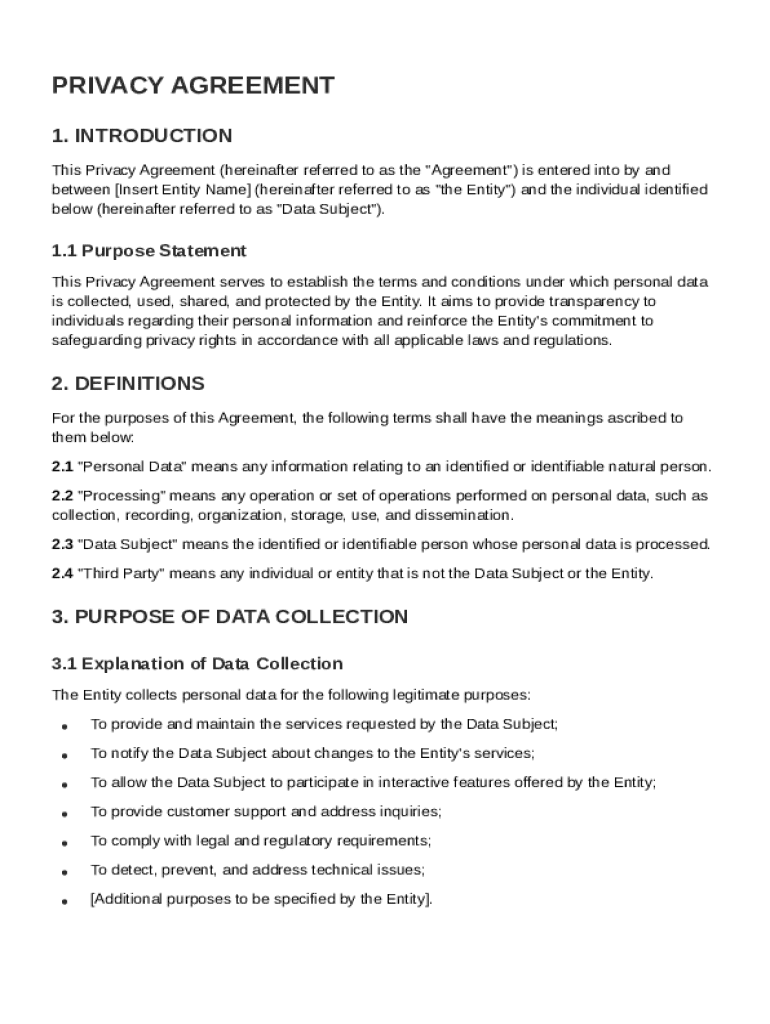
A Privacy Agreement Template is a comprehensive document framework that outlines how an organization collects, uses, shares, and safeguards personal data. The template serves as a foundation for creating a privacy policy that explicitly defines roles, responsibilities, and protocols regarding personal data management. It typically includes definitions of key terms such as 'Personal Data', which refers to any information related to an identified or identifiable person, and 'Data Subject', the individual to whom the personal data pertains. This contract is essential for ensuring transparent communication with users and legal compliance with data protection laws.
The Privacy Agreement Template provides a structured approach for specifying the purposes for which personal data is collected and detailing the procedures for handling it. Organizations can adapt the template according to their operational needs and legal requirements, ensuring tailored fit and comprehensive coverage.
Key Elements of the Privacy Agreement Template
The template typically includes several essential components to provide a thorough account of data protection measures and policies. At its core, it details the categories of personal data collected, such as names, contact details, financial information, and any other data pertinent to the specific entity’s operations. It also describes how this data will be used, for example, in improving services, personalizing user experiences, or processing transactions.
Data Collection Purposes
- Identification and Verification: To confirm the identity of users.
- Service Improvement: To enhance user experience based on feedback and usage patterns.
- Communication: For notifying users about updates, promotions, or changes to services.
Data Sharing Policies
- Internal Sharing: How data is shared within the organization for operational purposes.
- External Sharing: Conditions under which data may be shared with third parties, such as partners or service providers, ensuring similar data protection standards.
Security Measures
- Encryption Protocols: Utilizing state-of-the-art encryption standards like SSL for data protection.
- Access Controls: Implementing robust user authentication methods, including OAuth 2.0, to control who can access personal data.
Steps to Complete the Privacy Agreement Template
Completing a Privacy Agreement Template involves several steps to ensure it is comprehensive and accurate. This process requires collaboration across various departments, including legal, IT, and operations.
-
Gather Information: Collect detailed information about the types of personal data your organization collects and its intended uses.
-
Draft the Agreement: Use the template to draft sections on data collection, processing, sharing, and safeguarding practices.
-
Consult Legal Experts: Have your legal team review the draft to ensure compliance with relevant data protection regulations such as the GDPR or CCPA.
-
Review Security Policies: Coordinate with your IT department to evaluate and update security measures if necessary.
-
Stakeholder Approval: Obtain approvals from key stakeholders, ensuring the agreement aligns with business goals and legal obligations.
Legal Use of the Privacy Agreement Template
The Privacy Agreement Template is not just a contractual document but also a tool for legal compliance. It helps organizations adhere to laws like the GDPR for companies operating in or with the European Union, or the CCPA for businesses that deal with California residents. By clearly defining data management practices, the agreement minimizes legal risks and enhances trust between the organization and its users.
Key Legal Components
- Data Subject Rights: Outlining rights such as data access, correction, and deletion.
- Retention Policies: Specifying how long personal data is stored before secure disposal.
- Modification Procedures: Procedures for updating the agreement in response to regulatory changes or internal policy shifts.
Important Terms Related to Privacy Agreement Template
The terminology within a Privacy Agreement Template is critical for precise understanding and execution. Important terms include:
- Personal Data: Any information related to an identified or identifiable individual.
- Data Controller: The entity responsible for determining the purposes and means of processing personal data.
- Data Processor: A third party engaged by the data controller to process data on its behalf.
- Consent: Informed and voluntary agreement by the data subject for data processing activities.
Understanding these terms ensures all parties involved have a clear grasp of their roles and responsibilities concerning the agreement.
Who Typically Uses the Privacy Agreement Template
Privacy Agreement Templates are widely used across various sectors, each adapting the template to fit their specific requirements and regulatory contexts.


Common Users:
- Corporates and Enterprises: These entities use the template to create company-wide privacy policies that align with international regulations.
- Small Businesses: Including startups and SMEs that need cost-effective solutions for data protection without extensive legal resources.
- Non-Profit Organizations: To maintain transparency and build trust with donors and beneficiaries by outlining how their data is used and protected.
- Educational Institutions: Schools and universities can craft privacy policies for students and staff, ensuring educational data is handled responsibly.

Business Types That Benefit Most from Privacy Agreement Template
Businesses that handle large volumes of personal data stand to gain significantly from implementing a robust Privacy Agreement using a template.
Beneficiary Sectors:
- E-commerce Platforms: For managing customer data securely across transactions, personalization, and marketing activities.
- Healthcare Providers: To protect sensitive patient information in compliance with regulations such as HIPAA.
- Financial Services: Banks and insurance companies handle business-critical data that require stringent data protection measures.
Examples of Using the Privacy Agreement Template
Implementing a Privacy Agreement Template can provide clarity and assurance to customers and stakeholders. Here are several scenarios:
- Online Retailer: A retail company uses the template to define how it tracks customer purchases and preferences while ensuring data is shared only with trusted third-party partners.
- App Developer: An app company customizes the template to explain its data collection practices, including data captured through various device interactions and how user settings can control data sharing.
- Health Tech Startup: Uses the template to create a robust privacy policy for their health tracking app, outlining data usage practices and third-party data sharing agreements, fostering user confidence in their services.




