






Definition & Meaning
A revolving loan agreement is a financial contract between a lender and a borrower, outlining the terms for a revolving credit facility. This type of agreement allows the borrower to access funds repeatedly up to a specified credit limit. Key components include the credit limit, interest rate, repayment terms, and conditions for reborrowing funds. The flexibility of a revolving loan makes it suitable for businesses needing ongoing access to capital. The agreement details specific obligations of both parties, ensuring that the lender provides funding and the borrower adheres to repayment and financial covenants.
Key Terms Explained
- Revolving Loan: This refers to the ability to borrow, repay, and borrow again up to a set credit limit.
- Credit Limit: The maximum amount available for borrowing at any given time under the agreement.
- Interest Rate: The cost of borrowing, expressed as a percentage of the loan balance, applicable to the revolving credit.
- Covenants: These are conditions set by the lender to ensure the borrower's financial health and compliance with the agreement.
How to use the Revolving Loan Agreement Template
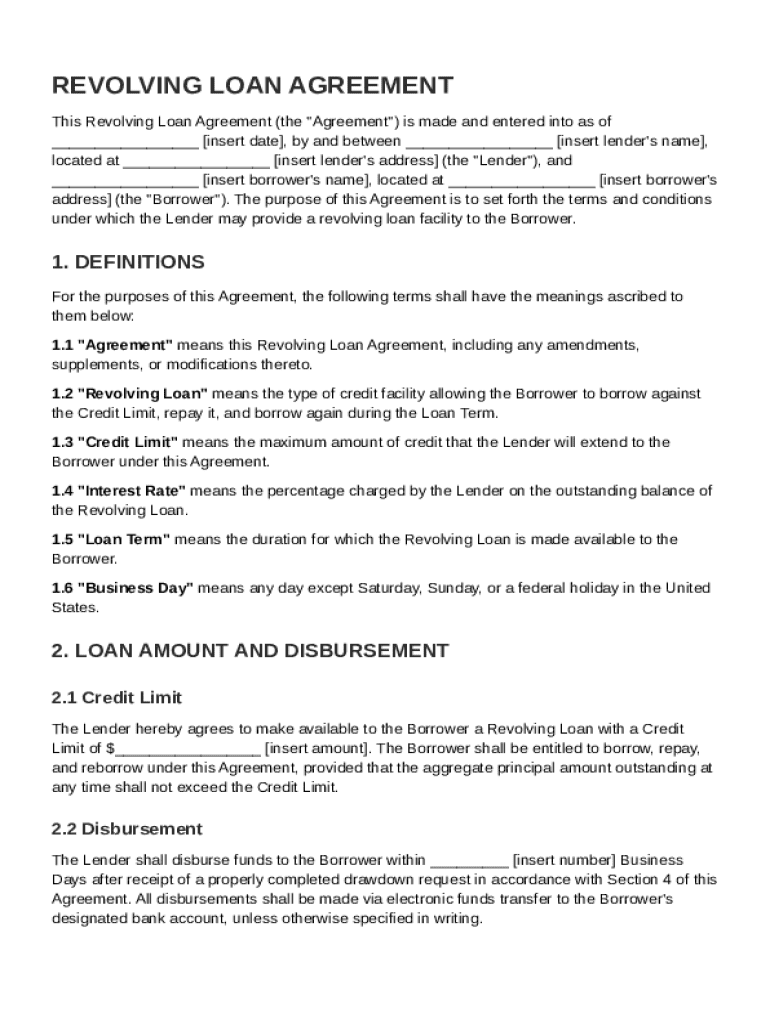
The revolving loan agreement template is designed to simplify the process of drafting a tailored contract between a lender and a borrower. Users should input specific details relevant to their arrangement, such as the loan amount, interest rates, and repayment schedules. The template can be modified to suit the unique requirements of both parties, ensuring that all essential terms are included.
Step-by-Step Usage
- Input Parties Information: Fill in the names and addresses of both the lender and the borrower.
- Define Loan Details: Specify the credit limit, interest rates, and any fees associated with the loan.
- Customize Covenants and Warranties: Adjust these sections to align with the specific risk profiles and financial commitments of the borrower.
- Review Default Terms: Ensure the terms related to default are clear and agreeable to both parties.
Key Elements of the Revolving Loan Agreement Template
The template is structured to include all critical components necessary for a comprehensive agreement. These elements ensure clarity and legal enforceability.
Major Components
- Loan Amount and Disbursement: Details the principal and conditions under which funds are disbursed.
- Repayment Schedule: Outlines when and how payments should be made, including any grace period.
- Interest Calculation: Specifies how interest is calculated and the frequency of adjustments.
- Warranties and Representations: Statements that assure the lender of the borrower's financial stability and ability to repay.
Legal Use of the Revolving Loan Agreement Template
Using a revolving loan agreement template requires adherence to legal standards and regular compliance reviews. This ensures the agreement is enforceable and meets regulatory requirements.
Compliance Checks
- Review with Legal Counsel: Have the agreement checked by a legal professional to confirm all terms comply with local laws.
- Include Governing Law: Clearly state the jurisdiction under which the agreement will be governed.
- Ensure Signature Validity: Utilize legally binding electronic signatures through platforms like DocHub to streamline the process and maintain a compliance audit trail.
Important Terms Related to Revolving Loan Agreement Template
Understanding the terminology used in a revolving loan agreement is crucial for both parties. This ensures all parties have a clear understanding of their obligations and rights.
Glossary of Terms
- Maturity Date: The final date by which the borrower must repay the borrowed amount in full.
- Drawdown Procedures: Guidelines that dictate how and when the borrower can access the funds.
- Collateral Security: Assets pledged by the borrower as security for the loan.
- Event of Default: Specifies the circumstances under which the borrower is considered in default.
Steps to Complete the Revolving Loan Agreement Template
Filling out the revolving loan agreement template involves a series of methodical steps to ensure completeness and accuracy.
Completion Guide
- Gather Necessary Information: Compile all relevant details about the loan, including borrower and lender information.
- Fill in Specifics: Enter key data such as the credit limit, interest rates, and payment schedules.
- Customize Provisions: Adjust sections that relate to covenants and default according to the specific loan arrangement.
- Review and Revise: Ensure all information is accurate before proceeding with signatures from both parties.
- Finalize with Signatures: Utilize an electronic platform like DocHub for secure and efficient signature collection.
Examples of Using the Revolving Loan Agreement Template
Real-world applications of a revolving loan agreement can vary widely, from small businesses to multinational corporations.
Use Cases
- Small Business Expansion: A startup uses a revolving loan agreement to access funds as needed for inventory purchases.
- Corporate Financing: A corporation employs the template for ongoing operational expenditures.
- Seasonal Businesses: A retail business utilizes the revolving credit facility during high-demand periods, repaying the loan when sales increase.
Understanding the practical applications of the revolving loan agreement template can help businesses make informed financial decisions that align with their strategic goals.