






Definition and Meaning of a Finder Agreement
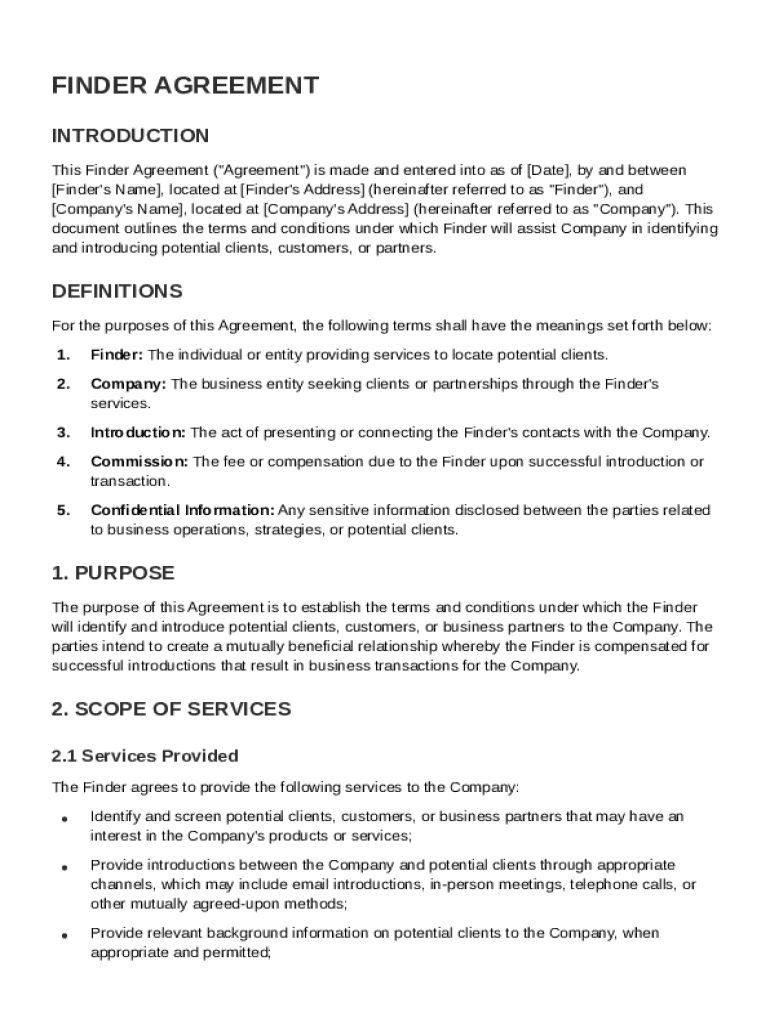
A Finder Agreement, often used in business settings, establishes a formal relationship between a company and an individual or entity referred to as a "Finder." The Finders are tasked with identifying potential clients or partners for the company. The document outlines the specific duties of the Finder, compensation arrangements, and other relevant conditions. For instance, the agreement may define success in terms of introductions that result in a business transaction, thereby ensuring the company pays the Finder a designated commission only upon achieving measurable results. This type of agreement fosters a mutually beneficial arrangement, creating a structured environment for collaboration while formalizing expectations on both sides.
Key Elements of the Finder Agreement Template
The Finder Agreement Template includes several crucial components. Primarily, it delineates the roles and responsibilities of both parties involved. This section might detail the Finder’s obligations, such as the nature of introductions and the follow-up required. Another critical element is the commission structure, which specifies how the Finder will be compensated. The agreements often include clauses on confidentiality, ensuring both the Finder and the company maintain the privacy of sensitive information. Termination conditions, another fundamental component, are clearly defined to inform both parties about the terms under which the agreement can be ended prematurely. This thorough outline ensures clarity and reduces room for disputes.
Detailed Roles and Responsibilities
- Finder’s Duties: Focuses on expected actions to identify potential business leads.
- Company’s Commitments: Describes support and information that the company will provide to the Finder.
- Introduction Process: Specifics about how introductions are conducted and documented.
Compensation and Commission Structure
- Percentage Rates: Outlines the percentage of transaction value or set fees.
- Payment Schedule: Details when and how payments will be processed.
- Conditions for Payment: States what must occur for compensation to be warranted.
How to Use the Finder Agreement Template
Utilizing the Finder Agreement Template involves straightforward steps to customize the document for specific business needs. First, gather all necessary information about the parties involved: the Finder’s details and the company’s legal identity. Customize each section according to the specific agreement: define roles, outline the introduction process, and adjust the compensation structure as agreed. Next, include any state-specific details if the agreement is affected by local regulations. It is advisable to review all terms with a legal professional to ensure compliance and mutual understanding before both parties sign the document.
Customization Steps
- Identify Parties involved: Start by specifying the legal names and contact details of each party.
- Define Terms: Tailor the sections on roles, responsibilities, and compensation.
- Legal Consultation: Engage a legal advisor to ensure all adjustments meet regulatory standards.
Important Terms Related to Finder Agreements
The Finder Agreement Template uses several key terminologies that users should comprehend. These include "Commission," referring to the payment structure based on successful client acquisition. "Confidentiality Clause" pertains to keeping all shared information secure and private. "Termination Provisions" outline situations or actions that could lead to a premature end of the contract. Understanding these terms is crucial since they form the backbone of the agreement and help delineate each party’s legal and operational boundaries.
Essential Terminology
- Commission: Payment mechanism related to the achievement of specific goals.
- Confidential Information: Non-disclosure of shared business insights and plans.
- Termination Clause: Specifies conditions under which the agreement can be nullified.
Legal Use of the Finder Agreement Template
In the United States, Finder Agreements must comply with federal and state legal standards. They are often legal frameworks facilitating business growth while safeguarding both parties' interests. Beyond ensuring compliance with commercial laws, the agreements might need adjustments to honor state-specific requirements and stipulations. Verification with legal counsel is often a prudent step to affirm that all legal aspects are addressed, thus protecting the company and the Finder from potential litigation or misunderstandings.
Compliance Considerations
- State Regulations: Adapting agreements to align with local laws.
- Commercial Legislation: Following general business and legal frameworks applicable to agreements.
- Legal Review: Ensuring compliance through expert advice, hence mitigating risks.
Examples of Using the Finder Agreement Template
Finder Agreement Templates serve in various business contexts across industries. For instance, a technology startup might engage a Finder to scout potential investors, using the agreement to formalize what each party should contribute to drawing investment. In another example, a sales firm might use a Finder Agreement to outline terms with a freelancer helping to increase retail partnerships. Such examples illustrate the versatility of the Finder Agreement Template in solidifying business development efforts through formalized collaboration.
Real-world Scenarios
- Startups Seeking Investors: Utilizing finders to navigate potential funding opportunities.
- Business Partnerships: Formal agreements with agents for expanding client networks.
- Product Expansion: Commissioning market finders to identify and establish new distribution channels.
Steps to Complete the Finder Agreement Template
Completing a Finder Agreement Template requires careful input of specific information, a process delineated through defined steps. Initially, gather all required details concerning both parties. Segment the template into its essential parts, such as delineating roles, identifying compensation mechanisms, and asserting confidentiality provisions. Fill in each section methodically, ensuring accuracy and clarity. Finally, once all terms are agreed upon and filled out, both parties must sign the document to render it legally binding.
Step-by-Step Guide
- Information Gathering: Collect precise data on the involved entities.
- Template Segmentation: Divide the agreement into distinct, manageable sections.
- Term Agreement: Consult involved parties to refine and agree upon all terms.
- Signing: Finalize the document with signatures from both entities to validate its legality.
State-Specific Rules for Finder Agreements
While Finder Agreements serve a unified purpose nationwide, state-specific regulations may necessitate modifications. States like California and New York have unique laws regarding Finders' responsibilities, such as additional disclosures or certifications. It is essential to explore state laws in areas like employee status, tax obligations, and licensing when crafting these agreements. A comprehensive understanding supports lawful operations and protects companies from inadvertently breaching local ordinances.
Regional Specificity
- California and New York Examples: Additional disclosures and careful handling of finder roles according to state employment and commercial law.
- Employee Status: Differentiating between independent contractors and employees under state labor laws.
- Tax Considerations: Ensuring accurate tax reporting and obligations as prescribed by state law.