



Definition and Meaning
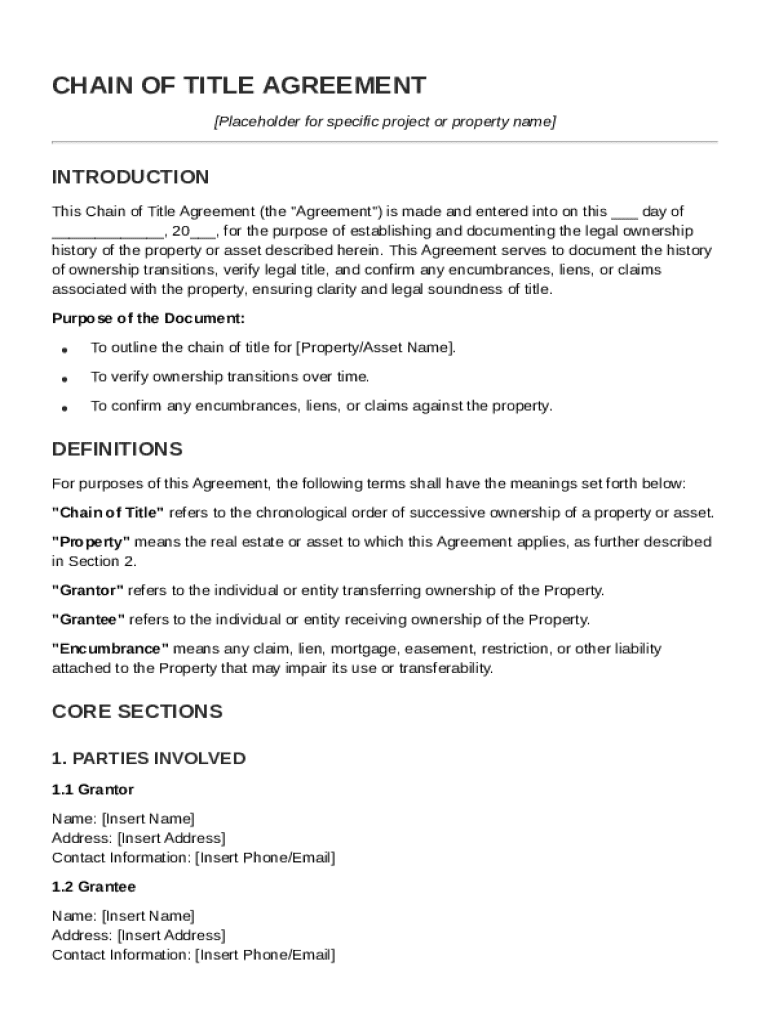
The Chain of Title Agreement Template is a legal document serving as a record of ownership transitions for specific properties or assets. It outlines the history of ownership, verifying the legal title and revealing any claims or encumbrances against the property. This document serves as a critical resource in ensuring transparency and trust between parties involved in the transaction of a property, such as real estate. The agreement features comprehensive sections detailing the previous owners, property descriptions, and confirms both parties' acknowledgments regarding the title's current status and conditions.
Key Elements of the Chain of Title Agreement Template
A properly structured Chain of Title Agreement Template includes essential elements that safeguard against legal disputes and facilitate smooth property transactions. These elements typically consist of:
- Parties Involved: Identification of the grantor and grantee, ensuring clarity about current and previous ownership.
- Property Description: Detailed information about the property or asset to avoid any ambiguity concerning what the agreement covers.
- Chronological Ownership History: Documentation of previous owners and the periods during which they held title, maintaining a clear track of changes.
- Encumbrances and Claims: Any existing claims, rights, or encumbrances affecting the property must be disclosed.
- Legal Provisions: Aspects covering governing law, dispute resolution mechanisms, amendment procedures, and more.
Steps to Complete the Chain of Title Agreement Template
Completing a Chain of Title Agreement Template requires attention to detail and thorough documentation:
- Gather Required Information: Collect details of all previous and current owners and any associated legal documents related to the property.
- Fill in Party Details: Input complete names and addresses of all involved parties including grantors and grantees.
- Describe the Property: Include a precise description of the property, including boundaries, unique identifiers, or parcel numbers.
- List Prior Owners: Document the chronological history of previous owners, along with relevant dates of ownership.
- Identify Encumbrances: Clearly state any existing liens, claims, or encumbrances against the property.
- Review and Finalize: Both parties should review the document comprehensively and provide confirmations regarding the title's state.
Legal Use of the Chain of Title Agreement Template
The Chain of Title Agreement is primarily used to certify the historical ownership and transfer of titles within the United States. It establishes legally binding confirmations concerning the property title, ensuring that the grantee is informed of any outstanding disputes or claims. U.S. property law typically dictates the need for such agreements, aiding in dispute resolution and maintaining the integrity of real estate markets.
Who Typically Uses the Chain of Title Agreement Template
Primarily embraced by legal professionals, real estate agents, and property buyers or sellers, the Chain of Title Agreement Template is crucial in validating the ownership trail of a property. Lenders often require this document to substantiate that the borrower holds a clear title to the property being mortgaged. Additionally, it is frequently utilized in title insurance processes to protect against potential ownership disputes.

State-specific Rules for the Chain of Title Agreement Template
Ownership laws and requirements can vary across states, prompting the need to adapt the Chain of Title Agreement Template accordingly. Certain states may require additional disclosures or adherence to specific statutory requirements. While the foundational elements remain consistent, specific state regulations may dictate variations in terms of what additional information or documentation must be included.
Important Terms Related to Chain of Title Agreement Template
Understanding terms pertinent to the Chain of Title Agreement enhances comprehension and ensures legal accuracy:
- Encumbrance: A claim or lien on property that may affect the transfer of a clear title.
- Grantee: The party receiving ownership of the property.
- Grantor: The current owner transferring the title to another party.
- Title Insurance: A policy safeguarding against possible disputes over property ownership.
- Severability: A provision outlining that if part of the agreement is invalid, the remainder continues to be enforceable.
Examples of Using the Chain of Title Agreement Template
Consider a buyer seeking to purchase a historic property. Before finalizing the transaction, they must review a comprehensive Chain of Title Agreement to confirm there are no hidden legal issues or ownership claims that could impede their purchase. Similarly, in transactions involving commercial properties, stakeholders often rely on these templates to ensure that all historical transactions are transparent, minimizing the chances of future litigation over ownership.