




Definition & Meaning
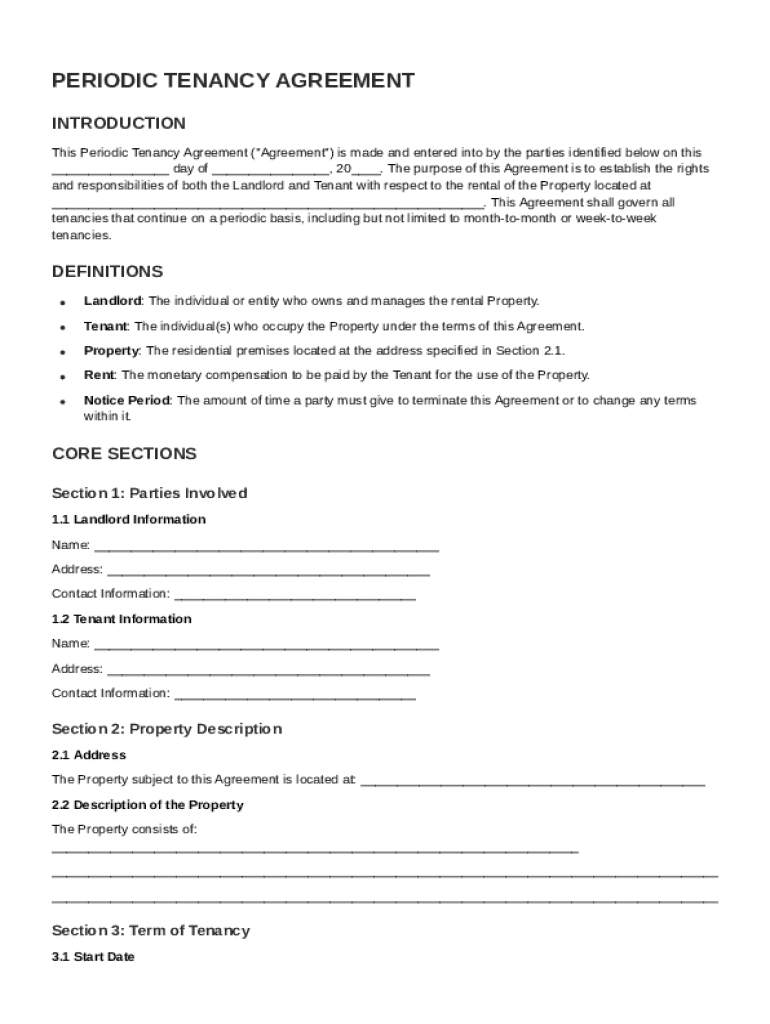
The Periodic Tenancy Agreement Template is a legal document that outlines the terms and conditions under which a tenant rents property from a landlord on a periodic basis. This could be from month to month or week to week, depending on the agreement. The document is designed to establish the rights and responsibilities of both parties, providing clarity and legal guidelines to ensure a fair renting process. It typically includes information on rent payment schedules, security deposit terms, and obligations of each party. By using this agreement, landlords and tenants can avoid misunderstandings and legal disputes.
Key Elements of the Periodic Tenancy Agreement Template
This agreement consists of several critical components:
- Parties Involved: Clearly defines who the landlord and tenant are.
- Property Description: Details the rental property, including its address and specific features.
- Rent Terms: Outlines how much rent is due, the payment frequency, and acceptable payment methods.
- Security Deposit: Specifies the amount, retention conditions, and return policies.
- Responsibilities and Obligations: Lists the duties of both parties, such as maintenance responsibilities for the landlord and care for the property by the tenant.
- Termination Conditions: Explains how the agreement can be terminated by either party, including notice periods and acceptable reasons.
- Legal and Miscellaneous Clauses: Includes governing law and any additional clauses specific to the agreement.
Steps to Complete the Periodic Tenancy Agreement Template
- Identify Parties: Enter the legal names of the landlord and tenant.
- Describe Property: Fill in details about the rental property, ensuring accuracy.
- Specify Rent Payment Details: Include the amount, payment schedule, and methods.
- Outline Security Deposit Terms: State the amount and conditions for its use and return.
- Detail Responsibilities: Clearly define the obligations of both the landlord and tenant.
- Define Termination Conditions: Include notice periods and acceptable grounds for termination.
- Additional Clauses: Add any specific terms agreed upon by both parties.
- Review and Sign: Ensure all parties review the document before signing to validate the agreement.
Who Typically Uses the Periodic Tenancy Agreement Template
This template is typically used by:
- Landlords who manage residential properties and need a standardized document for new tenants.
- Tenants seeking clarity and legal backing for their rental terms.
- Property Managers, who handle multiple properties and require a consistent template to manage agreements.
- Real Estate Agents involved in rental transactions, ensuring all agreements are legally sound and standardized.


Legal Use of the Periodic Tenancy Agreement Template
It's crucial to ensure that the Periodic Tenancy Agreement complies with local and federal laws to protect both parties legally. The agreement should:
- Adhere to State Laws: Different states have specific requirements for rental agreements. Ensure compliance to prevent disputes.
- Include Legal Disclaimers: Protect landlords by referencing applicable landlord-tenant laws.
- Be Fair and Balanced: Avoid clauses that are heavily biased towards one party, ensuring fairness and legal defensibility.
- Offer Remedies for Breach: Provide clear procedures for addressing disputes or breaches of the agreement.
Important Terms Related to Periodic Tenancy Agreement Template
Understanding key terminology can aid in the effective use of the template:
- Periodic Tenancy: A rental agreement with no fixed end date, continuing that renews each period until terminated.
- Security Deposit: An upfront deposit, usually refundable, held to cover damages beyond normal wear and tear.
- Governing Law: The state laws applicable to the agreement, which could affect tenant rights and responsibilities.
- Notice Period: The required time a tenant or landlord must inform the other party before terminating the lease.
Software Compatibility and Integration
While primarily a written document, the Periodic Tenancy Agreement Template may be used in digital formats:
- DocHub Support: Supports formats like PDF, making it easy to edit and sign documents online.
- Integration with Google Workspace: Import and export agreement templates from Google Drive for seamless editing.
- Cross-Platform Functionality: Access the agreement using both desktop and mobile devices without extra software.
Examples of Using the Periodic Tenancy Agreement Template
A practical example could involve a landlord in California who has converted a section of their home into a rental unit. By using this template, they ensure that both they and the tenant are clear on terms such as rent amount, payment due dates, and maintenance responsibilities. Similarly, a property manager overseeing several rental properties could streamline tenant onboarding by utilizing the template, ensuring a consistent process and reducing legal risks.