






Definition & Meaning
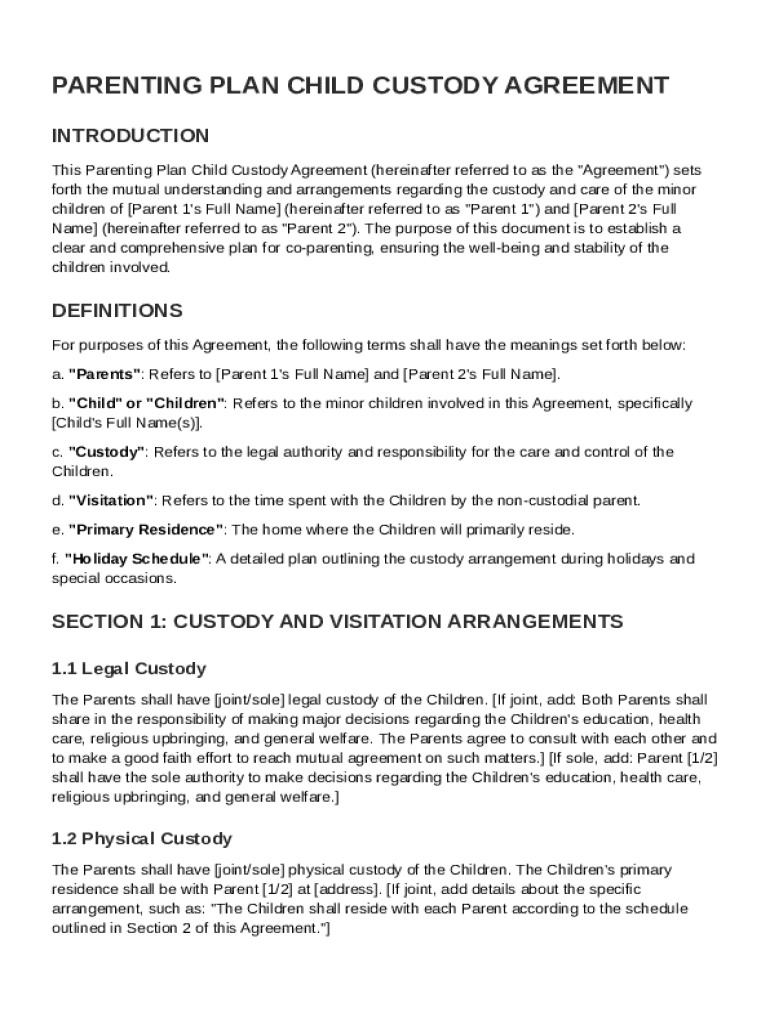
The Parenting Plan Child Custody Agreement Template serves as a structured document to detail the arrangements for the upbringing of minor children following a separation or divorce. The template establishes parental responsibilities, including who holds legal and physical custody, visitation schedules, and how decisions concerning the child's welfare are made. This agreement is crucial for clarifying the roles of each parent, ensuring a stable environment for the child, and minimizing conflicts by pre-defining terms and expectations.
Legal and Physical Custody
- Legal Custody: Refers to the right to make significant decisions impacting the child's life, such as educational choices, health care, and religious upbringing.
- Physical Custody: Refers to the everyday care of the child, including where the child lives. Physical custody can be sole or shared, and the agreement may specify the schedule for each parent's custodial time.
Communication Protocols
This section details how parents will communicate regarding their children, ensuring they can effectively collaborate on child-rearing despite personal differences. Typically, protocols may include preferred communication methods, response times, and protocols for emergencies.
Key Elements of the Parenting Plan Child Custody Agreement Template
The template outlines essential components aimed at covering all aspects of a child's welfare.
Visitation Schedules
Visitation schedules specify when the child will be with each parent, including weekday and weekend arrangements, holidays, and vacations. Specifics may include:
- Weekends: Alternating or fixed weekends for each parent.
- Holidays: Alternating major holidays such as Thanksgiving, Christmas, and New Year.
- School Vacations: A divided schedule for school breaks and summer vacations.
Financial Responsibilities
This section covers how financial responsibilities are split between parents, including child support, health care expenses, education costs, and additional expenditures related to the child's activities.
Decision-Making Processes
This element clarifies how decisions impacting the child's life will be made. It may detail whether parents will make decisions jointly or one parent will have the final say, and how disputes will be addressed through mediation or other means.
Steps to Complete the Parenting Plan Child Custody Agreement Template
Completing the agreement requires collaboration between both parents and possibly legal counsel to ensure fairness and compliance with state laws.
- Gather Relevant Information: Both parents should compile details about their work schedules, children's school and activity schedules, and any previous agreements.
- Draft the Agreement: Begin with outlining custody terms, visitation schedules, and financial responsibilities.
- Review Legal Requirements: Check state-specific laws to ensure the agreement complies with all legal requirements.
- Consult a Lawyer: Engage a family law attorney to review the agreement and provide legal advice.
- Final Review: Both parties should review the drafted agreement for accuracy and completeness.
- Sign and Store: Once both parties agree, sign the document and store it securely. Consider submitting it to a court for approval if necessary.
Important Terms Related to the Parenting Plan Child Custody Agreement Template
Understanding the terminology within the template ensures the agreement is interpreted correctly and executed as intended.
Modification and Review
- Amendments: Procedures for modifying the agreement, often requiring mutual consent or court intervention.
- Periodic Review: Scheduled evaluations of the agreement to ensure it remains relevant as circumstances change (e.g., child's growing needs or parental relocation).
Dispute Resolution Methods
This section outlines how disagreements related to the agreement will be resolved, prioritizing methods like mediation before legal action.
Legal Use of the Parenting Plan Child Custody Agreement Template
While this template provides a structured format, it must adhere to state-specific custody laws to be enforceable.
State Compliance
Each state in the U.S. has particular regulations governing custody agreements. It is critical that the agreement respects these laws to be legally binding. State-specific compliance ensures that the terms are recognized by the court and enforceable.
Court Approval
For added legal standing, parents may opt to submit the agreement to a family court. This step can also be necessary if the agreement needs modifications or if disputes arise.
Examples of Using the Parenting Plan Child Custody Agreement Template
The template is versatile and can accommodate various family dynamics.
Scenario 1: Joint Custody
Parents selecting a joint custody arrangement can use the template to outline shared responsibilities, decision-making, and a balanced schedule that reflects equal time with their child.
Scenario 2: Long-Distance Parenting
In cases where one parent lives far from the child, the agreement might include provisions for long-distance visitation, travel expenses, and virtual communication schedules.
State-Specific Rules for the Parenting Plan Child Custody Agreement Template
Custody laws and regulations vary across states, impacting how the agreements are structured.
Examples
- California: Often emphasizes the importance of the child's bond with both parents, usually supporting joint custody outcomes.
- Texas: May consider a child's preference in custody arrangements if the child is over a certain age, often twelve.
Understanding and incorporating state-specific rules ensures that the agreement is fair and legally binding in the intended jurisdiction.
Who Typically Uses the Parenting Plan Child Custody Agreement Template
This template is tailored for divorced or separated parents looking to formalize their parenting arrangements. It is applicable to various family situations, including:
- Divorced Couples: Couples seeking a collaborative approach to co-parenting post-divorce.
- Unmarried Parents: Individuals who require a formalized agreement for clarity and enforcement, ensuring consistent parenting roles and responsibilities.
- Blended Families: Families with step-parents or other guardians involved who need a clear outline of each individual's role in the child's upbringing.