






Definition and Purpose of the Nonprofit Operating Agreement Template
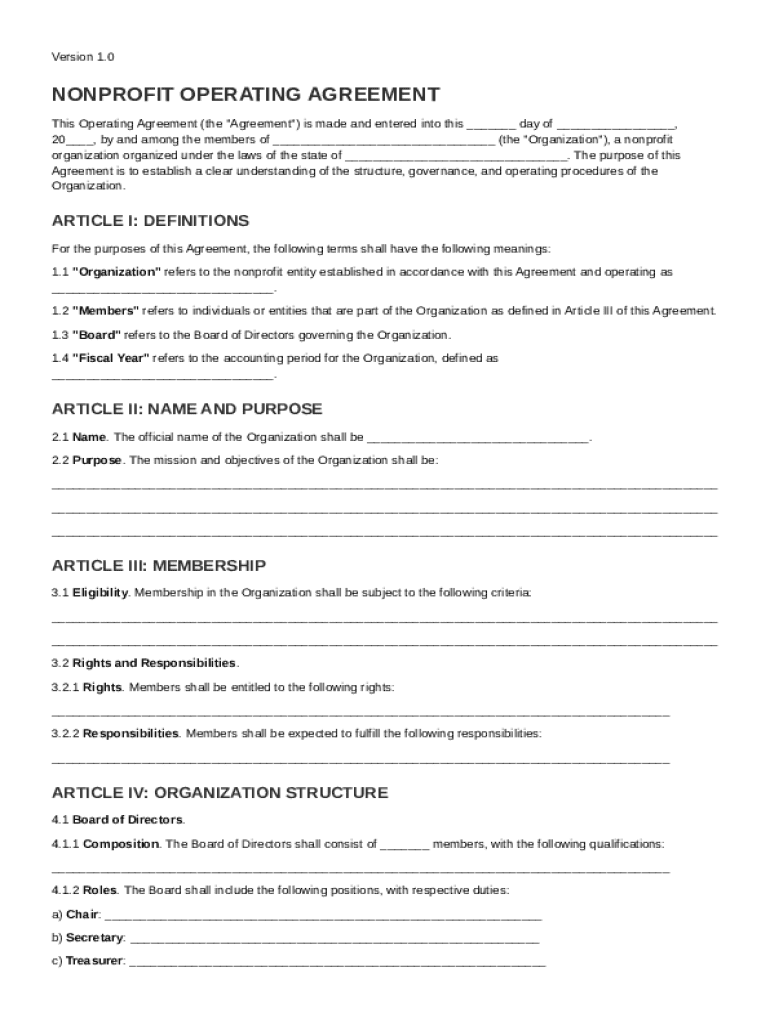
The Nonprofit Operating Agreement Template is a foundational document designed to outline the structure, governance, and operational procedures of a nonprofit organization. It serves as a comprehensive guide for establishing the roles and responsibilities of members and directors within the organization. This agreement provides clarity on membership eligibility, Board of Directors composition, meeting protocols, financial management, and committee formations. By defining these elements, the template ensures that the nonprofit operates efficiently and in alignment with its mission, while also adhering to legal requirements.
Key Components of the Agreement
-
Membership Eligibility and Responsibilities: Outlines the criteria for becoming a member and the roles they play in the organization.
-
Board of Directors: Describes the composition, roles, and responsibilities of the board to ensure effective governance.
-
Meeting Protocols: Establishes the procedures for conducting official meetings, voting processes, and record-keeping.
-
Financial Provisions: Details financial management practices, including budgeting and fiscal reporting.
-
Conflict of Interest Policies: Defines procedures to identify and manage conflicts of interest, ensuring fair and ethical operations.
How to Use the Nonprofit Operating Agreement Template
Utilizing the Nonprofit Operating Agreement Template involves several strategic steps that guide users from preparation to implementation. This template can be customized to fit the specific needs of the organization, ensuring that all governance aspects are covered.
Step-by-Step Instructions
-
Review and Customize: Begin by thoroughly reviewing the template to understand its structure. Customize sections to reflect the unique needs and objectives of your nonprofit.
-
Consult Legal Advice: It's advisable to seek legal counsel to ensure that the customized agreement complies with federal and state regulations.
-
Approval by Board: Present the finalized document to the Board of Directors for their review and approval, ensuring alignment with organizational goals.
-
Implement and Distribute: Once approved, implement the agreement and distribute copies to relevant stakeholders for transparency and accountability.
-
Periodic Review: Regularly review the agreement to accommodate any changes in the organization's structure or operational needs.
Legal Use of the Nonprofit Operating Agreement Template
The legal significance of a Nonprofit Operating Agreement cannot be overstated, as it provides a legally binding framework for the organization’s operations. Adherence to this document ensures compliance with the Internal Revenue Service (IRS) guidelines and state-specific regulations governing nonprofit entities.
Compliance and Governance
-
IRS Guidelines: Ensure that the agreement aligns with IRS requirements for maintaining tax-exempt status, including proper governance and reporting practices.
-
State Regulations: Different states may have varying requirements for nonprofit operations. Tailoring the template to meet these specific regulations is critical for legal compliance.
-
Binding Provisions: The agreement sets forth binding provisions for conflict resolution, financial management, and organizational amendments, reducing the potential for legal disputes.
Key Elements of the Nonprofit Operating Agreement Template
A well-constructed Nonprofit Operating Agreement includes a range of critical components, each serving a specific purpose within the organization’s governance.
Essential Sections to Include
-
Definitions: Clearly define key terms and concepts used throughout the document to prevent ambiguity.
-
Membership Details: Specify the criteria for membership and the rights and responsibilities associated with it.
-
Leadership Structure: Detail the roles and powers of the Board of Directors and officers, ensuring a clear hierarchy.
-
Fiscal Management: Outline procedures for budgeting, fundraising, and financial reporting to maintain transparency and accountability.
-
Amendment Procedures: Establish clear methods for modifying the agreement to adapt to organizational changes.
State-Specific Rules for the Nonprofit Operating Agreement Template
Understanding state-specific regulations is crucial when drafting a Nonprofit Operating Agreement, as these can significantly impact how a nonprofit operates.
Variations Across States
-
Filing Requirements: Some states mandate the filing of certain documents alongside the agreement, such as articles of incorporation.
-
Board Composition Laws: States may impose requirements on the minimum number of directors or specific qualifications they must meet.
-
Meeting Protocols: Rules concerning the frequency and type of board meetings can vary, demanding tailored meeting protocols in the agreement.
Steps to Complete the Nonprofit Operating Agreement Template
Completing the Nonprofit Operating Agreement Template involves a series of methodical steps designed to ensure a comprehensive and legally sound document.
Completion Process
-
Draft Initial Agreement: Start by drafting the agreement using the template as a guide, incorporating all relevant sections.
-
Seek Input from Stakeholders: Obtain feedback and input from board members and legal advisors to ensure the document covers all operational areas.
-
Revise and Finalize: Make necessary revisions based on feedback, focusing on clarity and compliance with laws and regulations.
-
Formal Adoption: Once finalized, the Board of Directors should officially adopt the agreement, signifying their commitment to abide by its terms.
-
Record and Archive: Store the signed agreement securely, ensuring easy access for future reference and compliance reviews.
Who Typically Uses the Nonprofit Operating Agreement Template
The Nonprofit Operating Agreement Template serves a diverse audience involved in the establishment and governance of nonprofit organizations.


Typical Users
-
Founders: Individuals or groups establishing a new nonprofit use the template to guide organizational structure and governance.
-
Board Members: Directors utilize the agreement to understand their responsibilities and the framework for decision-making.
-
Legal Advisors: Lawyers refer to the template to ensure the document complies with applicable laws and regulations.
-
Regulatory Bodies: State and federal agencies may review the agreement as part of compliance audits for nonprofit organizations.