






Definition and Meaning of a Limited Liability Operating Agreement Template
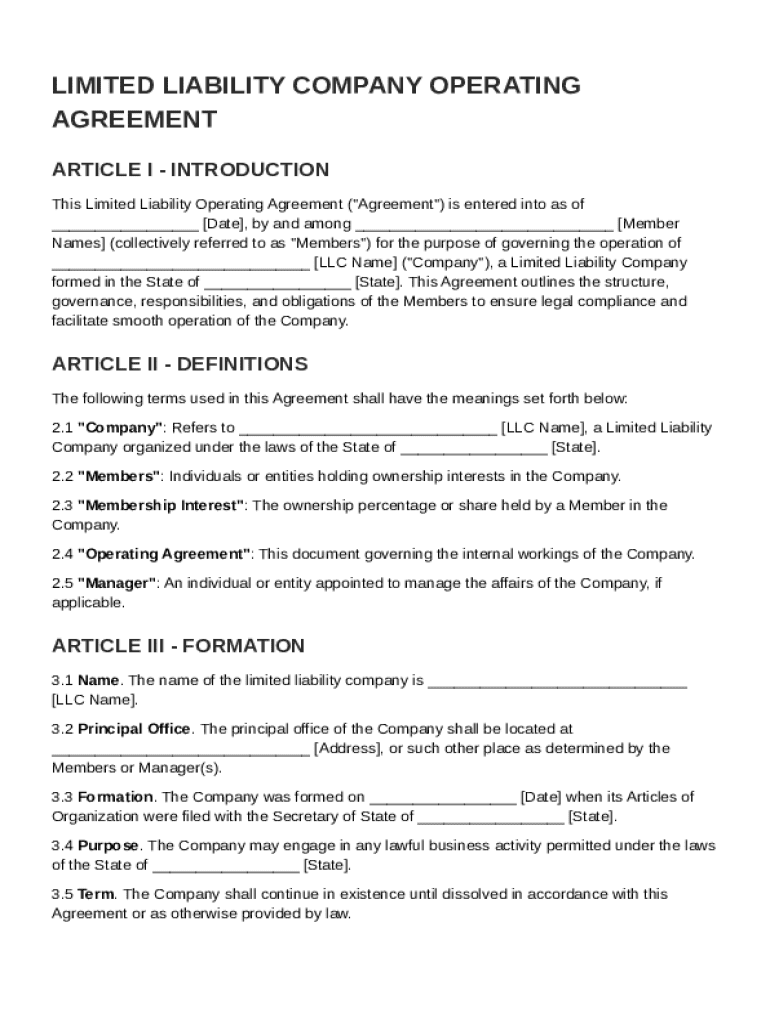
A Limited Liability Operating Agreement Template serves as a foundational document for Limited Liability Companies (LLCs) in the United States. It outlines the governance structure, management procedures, and operational guidelines of the LLC. This template is pivotal in establishing how the LLC will be run, detailing the responsibilities of members and managers, rules for profit distribution, and protocols for dealing with internal disputes. By providing an operational blueprint, it helps avoid ambiguity and ensures that all members have a clear understanding of their roles and expectations within the company.
How to Use the Limited Liability Operating Agreement Template
Utilizing the Limited Liability Operating Agreement Template involves several crucial steps to tailor it to the specific needs of an LLC:
-
Customization: Begin by filling in the relevant company information, such as the LLC’s name, principal address, and the names of its members. Customize the sections to reflect the LLC's unique structure and operational requirements.
-
Define Roles and Responsibilities: Clearly delineate the roles of each member and manager. Specify duties related to daily operations and decision-making processes.
-
Set Financial Guidelines: Establish guidelines for initial capital contributions, distribution of profits and losses, and financial reporting requirements.
-
Establish Governance Protocols: Outline procedures for meetings, voting, and amending the agreement. Specify how members can be added or removed and the process for resolving disputes.
-
Legal Review: Before finalizing the agreement, have it reviewed by a legal professional to ensure compliance with state laws and address any potential legal issues.
Steps to Complete the Limited Liability Operating Agreement Template
-
Gather Information: Collect all pertinent details regarding your LLC, including member names, roles, and capital contributions.
-
Complete the Template: Carefully fill out each section of the template, ensuring accuracy and completeness in every detail.
-
Review the Document: Go through the completed agreement to check for any inconsistencies or omissions.
-
Consult with Legal Counsel: Obtain legal advice to ensure that the agreement complies with state-specific LLC laws and addresses any potential liabilities.
-
Obtain Member Signatures: Once finalized, have all members sign the agreement to acknowledge their understanding and acceptance of its terms.
-
File and Store the Agreement: Store the signed agreement safely. Although not always required, consider filing it with state authorities for added security.
Key Elements of the Limited Liability Operating Agreement Template
- Formation Details: Information on the company’s formation date, business purposes, and duration.
- Membership Information: Detailed profiles of each member, including contributions and ownership percentages.
- Management Structure: Outline whether the LLC is member-managed or manager-managed.
- Financial Protocols: Regulations on accounting methods, fiscal year, and distribution of profits and losses.
- Dissolution Procedures: Defined processes for voluntary termination or dissolution of the LLC, including asset distribution.
- Amendment Procedures: Steps for making future amendments to the agreement, including voting requirements.
Legal Use of the Limited Liability Operating Agreement Template
The legal use of the Limited Liability Operating Agreement Template involves ensuring that the agreement aligns with both federal and state laws governing LLCs. In the United States, each state has unique regulations regarding LLCs, making it essential to adapt the template to meet specific legal requirements. The agreement acts as a legally binding contract among members, defining the judicial framework for settling disputes and managing changes in membership. It's vital for protecting the interests of all parties involved, minimizing liability exposure, and ensuring smooth operational continuity.
Why Should You Use a Limited Liability Operating Agreement Template
Creating a Limited Liability Operating Agreement is crucial for LLCs because it:
- Establishes Clear Expectations: Clearly defines each member’s contributions, responsibilities, and rights.
- Protects Members’ Interests: Provides legal protection by defining operational rules and dispute resolution procedures.
- Facilitates Conflict Resolution: Sets pre-defined procedures for handling disputes, thereby reducing the risk of legal battles.
- Ensures Compliance: Helps align the LLC’s operations with applicable state laws and regulations.
State-Specific Rules for the Limited Liability Operating Agreement Template
Laws governing LLCs vary significantly from state to state. Therefore, when creating a Limited Liability Operating Agreement, it is vital to:
- Research State Laws: Understand specific requirements, such as publication notices or operating procedures, mandated by the state.
- Adapt the Template: Modify sections of the template to comply with state-specific rules and recommendations for LLC operations.
- Consult Legal Resources: Seek guidance from lawyers or resources familiar with the specific state's LLC requirements to ensure compliance.
Business Entity Types That Benefit Most from the Limited Liability Operating Agreement Template
The primary beneficiaries of a Limited Liability Operating Agreement Template include:
- Small to Medium-Sized Businesses: Typically structured as LLCs for their flexibility and limited liability protections.
- Joint Ventures: Partnerships looking to formalize operational procedures and member roles.
- Single Member LLCs: While less common, a formal agreement can demonstrate operational legitimacy and is useful in legal scenarios.
- Family-Owned Businesses: Ensures smooth transitions and clarifies roles among family members involved in the company operations.
By addressing these aspects, the Limited Liability Operating Agreement Template ensures a comprehensive approach to creating an operational framework for LLCs, tailored to their unique needs and aligned with legal standards.