





Definition and Meaning
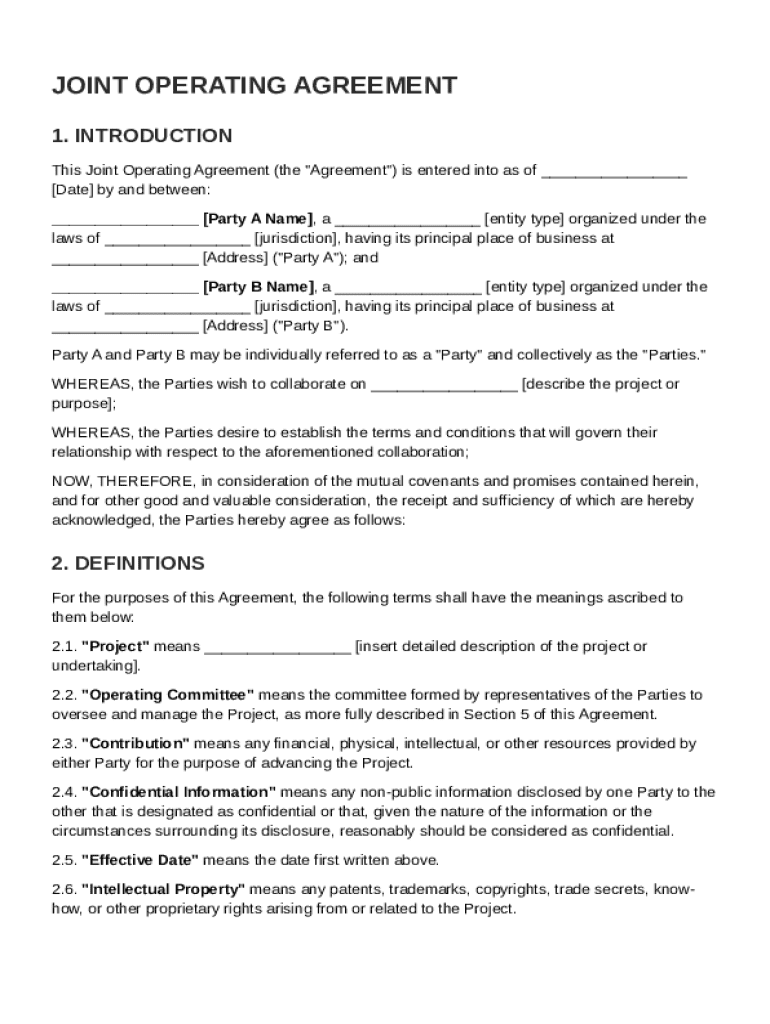
A Joint Operating Agreement (JOA) is a legal document that outlines the terms and conditions governing the cooperation between two or more parties involved in a joint project. Typically used in industries such as oil and gas or real estate, the JOA defines the specific roles, responsibilities, financial contributions, and governance structures of the parties, known as Party A and Party B. By clarifying these elements, the JOA aims to establish a coherent framework that ensures effective collaboration while safeguarding the interests and intellectual property of all parties involved.
JOAs include sections on confidentiality obligations, intellectual property rights, dispute resolution processes, and the conditions under which the agreement may be terminated. These sections provide security and predictability, allowing the parties to focus on achieving their joint objectives rather than dealing with possible conflicts arising during the course of the project.
How to Use the Joint Operating Agreement Template
Using a Joint Operating Agreement Template involves several detailed steps to ensure it accurately reflects the intentions and obligations of the parties. Begin by gathering comprehensive information about the project, including the objectives, expected outcomes, and contributions from each party. This will provide the necessary context for customizing the template.
- Input Party Details: Fill in the details for Party A and Party B, ensuring all legal names and addresses are accurate.
- Define Project Scope: Clearly outline what the project will entail, including specific tasks, responsibilities, and deadlines for each party.
- Financial Contributions: Record the financial or resource contributions each party will make, detailing amounts, type, and timing of these contributions.
- Governance and Management: Set up the governance structure, including roles and decision-making processes.
- Confidentiality and Intellectual Property: Include clauses that protect sensitive information and define how intellectual property created during the project will be owned and shared.
- Dispute Resolution and Termination: Write clear procedures for resolving disputes and conditions under which the agreement can be terminated.
This template customizes the agreement to align with specific project goals and legal requirements, ensuring full compliance with relevant laws and standards.
Key Elements of the Joint Operating Agreement Template
The Joint Operating Agreement Template consists of several critical components designed to facilitate effective cooperation between the parties involved. Some of these elements include:
- Project Definition and Scope: Precise description of the project's goals, deliverables, and timelines.
- Management and Governance Structures: Description of the decision-making process and the roles of executives or managers.
- Resource and Financial Contributions: Detailed accounts of the contributions expected from each party, including capital investment, equipment, or expertise.
- Allocation of Risks and Liabilities: Specific strategies for handling risks associated with the project and how liabilities will be shared.
- Confidentiality and Intellectual Property Rights: Provisions ensuring the protection of sensitive information and fair usage rights of intellectual assets developed during the project.
- Termination and Exit Strategies: Conditions under which the agreement can be dissolved or parties can exit the project, thus protecting their interests.
These elements are crucial in maintaining clarity, minimizing conflicts, and ensuring the smooth operation of collaborative ventures.
Steps to Complete the Joint Operating Agreement Template
Completing the Joint Operating Agreement Template involves a series of methodical steps. Here is a detailed process to guide you through:
- Understand the Project Requirements: Before filling out the template, make sure there is a clear understanding of the project's scope, objectives, and stakeholders’ expectations.
- Gather Basic Party Information: Collect all necessary contact details and legal information for each party involved.
- Draft the Detailed Responsibilities: Define roles and responsibilities during various phases of the project to ensure all tasks are covered comprehensively.
- Outline Financial Arrangements: Enumerate how financial obligations, profits, and expenses will be managed and shared.
- Establish Governance Rules: Agree on management protocols and how decisions will be made, including voting rights if applicable.
- Set Terms for Confidentiality and IP Rights: Include clauses that detail how sensitive information is handled and how intellectual property is managed.
- Clarify Dispute Resolution Methods: Provide a roadmap for resolving any disagreements that may arise between involved parties.
- Review and Revise: Collaborate with legal professionals to ensure all aspects are legally sound and reflective of mutual intentions before formalizing the agreement.
Being thorough at each step will foster a robust agreement that supports effective collaboration.
Legal Use of the Joint Operating Agreement Template
When drafting a Joint Operating Agreement, it is crucial to ensure that the document adheres to all legal standards and requirements. JOAs are recognized under U.S. law, specifically in fields like energy or construction where joint ventures are common. Key legal aspects include:
- Compliance with Industry Regulations: The JOA must align with the specific legal framework of the industry, such as environmental regulations in the oil and gas industry.
- Clarity and Precision: Legal terms should be clearly defined, leaving no room for ambiguity that could result in potential disputes.
- Contractual Obligations: It should explicitly state the obligations of each party and applicable penalties for non-performance or breach of contract.
- Conflict Resolution Mechanisms: Clearly outline legal procedures for conflict resolution to circumvent lengthy litigation processes.
- Jurisdiction Specifications: Declare the jurisdiction under which disputes will be resolved, providing legal certainty and security to the involved parties.
Incorporating these legal facets into the agreement ensures its enforceability and protects the interests of all parties.
Who Typically Uses the Joint Operating Agreement Template
The Joint Operating Agreement Template is predominantly utilized by businesses and entities involved in complex projects that require collaboration. These parties often include:
- Oil and Gas Companies: For exploring and developing petroleum resources jointly.
- Real Estate Developers: Involved in large-scale property development projects.
- Construction Firms: Collaborating on extensive infrastructure projects.
- Research Institutions: Engaged in joint research ventures and sharing intellectual property.
- Tech Startups: Partnering in the development of new technologies or software products.
- Government Agencies: Engaging in public-private partnerships to deliver community projects.
This template supports multiple industries aiming for strategic alliances, providing a structured approach to jointly address challenges, share resources, and maximize effectiveness.

Examples of Using the Joint Operating Agreement Template
Real-world applications of the Joint Operating Agreement Template show its versatility across different sectors. Here are a few examples:
- Oil and Gas Ventures: In 2020, two energy giants entered into a JOA to explore untapped offshore resources. The agreement outlined detailed roles in exploration, drilling, and revenue sharing.
- Tech Collaboration: Two leading tech firms used a JOA to co-develop a new AI platform. The agreement facilitated balanced intellectual property rights and profit-sharing mechanisms.
- Research Partnerships: An Ivy League university formed a JOA with a pharmaceutical company to conduct groundbreaking medical research. The agreement specified roles, shared data rights, and regulatory compliance measures.
Each scenario demonstrates how JOAs are instrumental in structuring partnerships that ensure efficient project execution and equitable benefit distribution.
State-Specific Rules for the Joint Operating Agreement Template
While JOAs provide a general framework, specific state regulations may affect their application. Some considerations include:
- Variations in Contract Law: State laws can influence the enforceability of certain provisions within a JOA, such as non-compete clauses or indemnity agreements.
- State-Specific Licensing Requirements: Particularly relevant in industries like oil and gas, where state regulatory bodies may impose licensing conditions for operations.
- Environmental Regulations: States may enforce distinct environmental compliance requirements affecting project timelines and operational methods within JOAs.
- Tax Implications: Varying state tax laws can affect financial aspects such as revenue distribution or expense deduction in the JOA.
Employing local legal expertise ensures compliance with state-specific statutes, tailoring the JOA to accommodate regional legal landscapes while minimizing potential legal exposures.