






Definition and Meaning
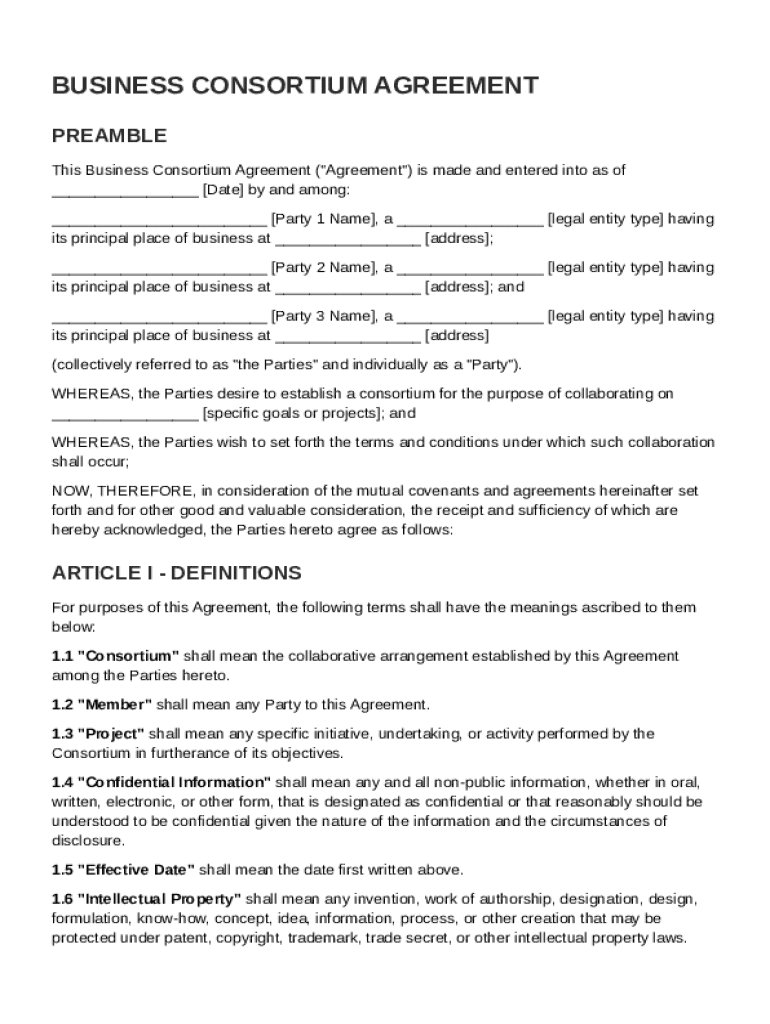
A Business Consortium Agreement Template is a structured document that outlines the terms and conditions under which multiple parties collaborate to achieve specific business objectives. This type of agreement is crucial in setting a clear legal framework for cooperation among different entities, allowing them to pool resources, share risks, and leverage combined expertise. The agreement typically defines the purpose of the consortium, the roles and responsibilities of each member, governance structures, and the legal and financial obligations involved. By establishing these parameters, the template ensures that all consortium members are aligned in their goals and expectations.
Key Elements of the Business Consortium Agreement Template
The Business Consortium Agreement Template generally includes several critical components that outline the nature and scope of the partnership:
- Purpose and Objectives: Specifies the overall goals of the consortium and the specific projects or initiatives it aims to accomplish.
- Member Responsibilities: Details the duties and contributions of each party, including financial inputs, equipment provision, or technical expertise.
- Governance Structure: Describes how decisions will be made within the consortium, including voting rights and leadership roles.
- Financial Arrangements: Includes specifics about profit-sharing, cost distribution, and funding sources.
- Confidentiality Clauses: Ensures that sensitive information shared among members is protected and not disclosed to outside entities.
- Dispute Resolution: Outlines procedures for resolving conflicts, which may involve arbitration or mediation services.
How to Use the Business Consortium Agreement Template
Utilizing the Business Consortium Agreement Template involves several steps to ensure that it effectively serves the needs of all parties involved:
- Customization: Begin by tailoring the template to reflect the specific goals and needs of your consortium. This involves adjusting sections related to financial contributions, voting rights, and project timelines.
- Legal Review: Engage legal professionals to ensure that the agreement complies with relevant laws and regulations, particularly if the consortium operates across different jurisdictions.
- Drafting and Consent: Collaborate with all members to draft the final version and gain consent from all parties, ensuring everyone understands and agrees to the terms.
- Signatures and Execution: Once the agreement is finalized, have all parties sign the document to make it legally binding.
Steps to Complete the Business Consortium Agreement Template
Filling out a Business Consortium Agreement Template requires a methodical approach to ensure all necessary details are addressed:
- Identify Members and Roles: List all consortium members and clearly define their roles and contributions.
- Define Objectives: Specify the scope of work and expected outcomes for the consortium.
- Set Governance Policies: Establish decision-making processes and leadership structures.
- Outline Financial Details: Include contributions from each member and how profits and losses will be shared.
- Incorporate Legal Provisions: Add clauses for confidentiality, intellectual property rights, and dispute resolution.
- Review and Revise: Allow all parties to review the document and suggest revisions. Legal counsel should also review the draft.
- Finalize and Sign: Ensure all members sign the agreement, making it enforceable.
Who Typically Uses the Business Consortium Agreement Template
The Business Consortium Agreement Template is frequently utilized by various business entities and organizations, including:
- Corporations: Large businesses often form consortia to undertake projects that require significant resources or expertise from multiple fields.
- Small and Medium Enterprises (SMEs): SMEs may join forces to compete for larger contracts or to enter new markets they could not access individually.
- Non-Profit Organizations: Non-profits may collaborate on initiatives that align with their missions, leveraging shared resources for greater impact.
- Government Agencies: On occasion, public sector bodies may form consortia to streamline resources and expertise for public projects.


Legal Use of the Business Consortium Agreement Template
The legal validity of a Business Consortium Agreement hinges on its compliance with applicable laws and regulations. It should:
- Align with Contract Laws: The terms should meet the requirements of offer, acceptance, and consideration as per contract laws.
- Incorporate Relevant Statutes: Include any legal provisions specific to the jurisdiction where the consortium operates.
- Provide for Dispute Resolution: Outline the legal processes for resolving potential disagreements between consortium members.
- Ensure Compliance with Antitrust Laws: Avoid terms that could be interpreted as attempts to engage in monopolistic or anti-competitive practices.
Examples of Using the Business Consortium Agreement Template
Organizations may employ the Business Consortium Agreement Template in a variety of scenarios:
- Construction Projects: Several construction firms might form a consortium to jointly bid on a large infrastructure project, sharing resources and coordinating efforts.
- Research and Development: Tech companies may collaborate on R&D projects to innovate new technologies, benefiting from diverse expertise.
- Environmental Initiatives: Various entities might come together to tackle environmental issues, utilizing shared strategies and technology.
- International Ventures: Companies across borders establish consortia to expand their operations into foreign markets, guiding compliance with local laws and practices.
State-by-State Differences
Business Consortium Agreements can vary significantly based on state laws and regulations:
- Jurisdictional Variances: Different states have unique regulations on business collaboration, especially regarding licensing, labor laws, and taxation.
- State-specific Contract Requirements: Some states may have additional legal stipulations, such as notarization or specific terminology.
- Regulatory Compliance: Consortia operating in multiple states may require approval from each state's regulatory body, necessitating tailored compliance strategies.
Versions or Alternatives to the Business Consortium Agreement Template
While the Business Consortium Agreement Template is a comprehensive tool, other agreements might serve a similar purpose depending on the structure of collaboration:
- Joint Venture Agreements: Suitable for temporary, project-specific partnerships with an emphasis on shared ownership and risks.
- Partnership Agreements: Typically used where entities seek a more permanent collaboration with combined business operations.
- Memorandums of Understanding (MOUs): Often serve as preliminary agreements to outline the intention to collaborate before detailed terms are finalized.
Understanding these variations can help entities choose the most appropriate framework for their collaboration goals and legal requirements.