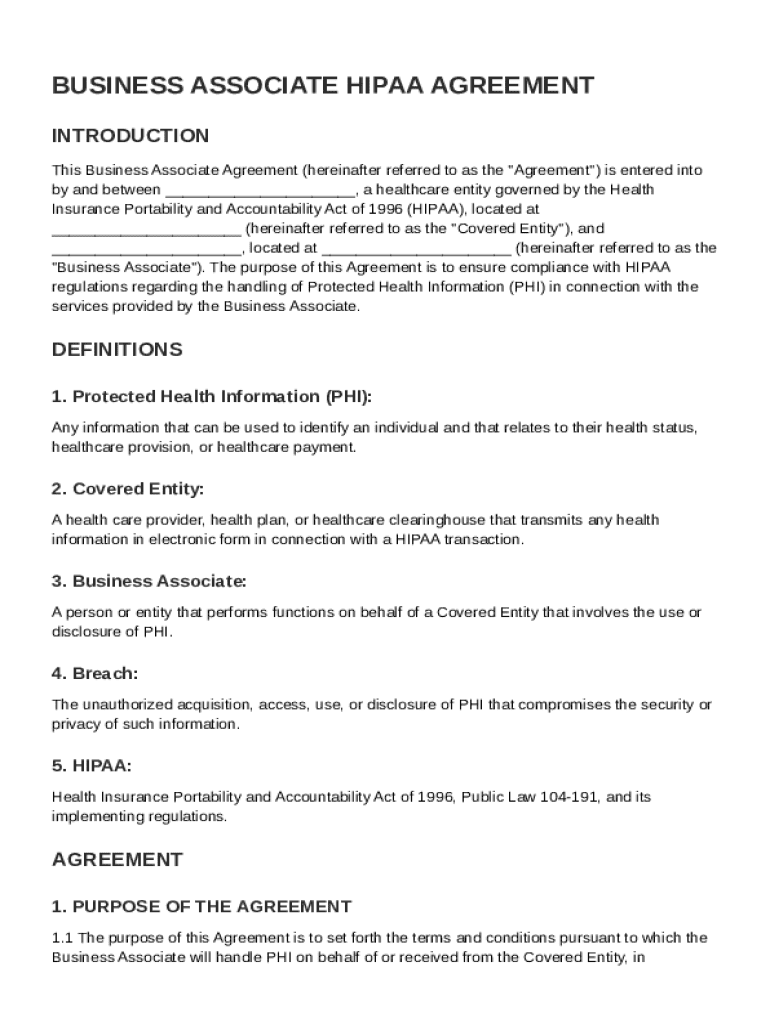







Definition & Meaning
The Business Associate HIPAA Agreement Template is a legally binding document that specifies how a Business Associate manages Protected Health Information (PHI) on behalf of a Covered Entity, in compliance with the Health Insurance Portability and Accountability Act (HIPAA). This agreement is crucial in safeguarding patient data within healthcare transactions. It establishes the roles, responsibilities, and expectations for both parties involved, ensuring adherence to privacy and security standards mandated by HIPAA.
Key Components of the Agreement
- Obligations for PHI Safeguarding: The agreement mandates stringent measures for protecting PHI from unauthorized access, use, or disclosure.
- Breach Reporting: It includes specific protocols for reporting security breaches, highlighting the importance of transparency and accountability.
- Use and Disclosure of Information: It outlines permissible scenarios for using and disclosing PHI, ensuring compliance with legal requirements.
- Audit and Compliance Procedures: The document may include provisions for periodic audits to verify compliance with HIPAA regulations.
Importance of the Agreement
This template serves as a foundational document that helps organizations avoid legal complications and maintain trust with their clients by diligently protecting sensitive health information.
Key Elements of the Business Associate HIPAA Agreement Template
Obligations for Safeguarding PHI
A significant component of the template is the detailed obligations set for Business Associates to protect PHI. This includes:
- Technical Safeguards: Utilize encryption and other security measures to ensure data confidentiality.
- Administrative Safeguards: Implement staff training programs and security policies to maintain compliance.
Reporting Obligations
The agreement specifies how and when a Business Associate must report breaches or security incidents to the Covered Entity, detailing the urgency and format of such reports to ensure prompt mitigation efforts.
Use and Disclosure Conditions
Clearly defines when PHI can be used or disclosed, such as for health care operations or as required by law. This section is essential for minimizing risk and ensuring compliance.
Steps to Complete the Business Associate HIPAA Agreement Template
Gather Required Information
- Identify Parties: Clearly state the names and contact information for both the Business Associate and Covered Entity.
- Specify PHI Categories: List the types of PHI that will be accessed or managed.
Detailed Review of Obligations
Ensure both parties review their respective responsibilities regarding PHI protection. This includes understanding audit procedures, required security measures, and breach reporting protocols.
Finalizing the Agreement
- Negotiate Terms: Discuss and modify any standard clauses to better fit specific business needs, if necessary.
- Legal Review: Have legal counsel review the document to ensure completeness and compliance.
Execute the Agreement
Both parties must sign and date the agreement to formalize it. Retain a copy in company records for future reference.
Legal Use of the Business Associate HIPAA Agreement Template
Complying with Federal Regulations
This agreement is integral to demonstrating compliance with HIPAA guidelines. Non-compliance can lead to substantial penalties, making adherence vital for maintaining legal and financial stability.
Addressing Data Breaches
The document provides a framework for addressing and mitigating data breaches, thereby minimizing potential reputational damage and financial penalties.
Supporting Audits and Investigations
In case of audits or government investigations, having a signed agreement reinforces an organization’s commitment to maintaining HIPAA compliance and protecting PHI.
Who Typically Uses the Business Associate HIPAA Agreement Template


Covered Entities
These include healthcare providers, health plans, and healthcare clearinghouses that engage third-party services, requiring them to handle PHI in a secure manner.
Business Associates
Third-party service providers like billing companies, IT providers, and consultants who perform functions on behalf of Covered Entities are the primary users.
Legal and Compliance Teams
Organizations’ compliance officers and legal teams utilize this template to customize agreements, ensuring they reflect the organization’s specific operational and legal requirements.
Differences Between States Regarding the Agreement
State-specific Variations
HIPAA provides a federal standard; however, certain states may have additional privacy laws that impact how Business Associate Agreements should be structured or enforced.
Examples of State-specific Requirements
- California: The California Consumer Privacy Act (CCPA) might add additional layers of data protection that businesses must consider.
- New York: The New York SHIELD Act requires specific data security measures, influencing the contents of the agreement.
Understanding these state-specific nuances ensures comprehensive compliance and avoids potential legal pitfalls.
Examples of Using the Business Associate HIPAA Agreement Template
Real-world Scenarios
- Healthcare IT Services: An IT company providing cloud storage services to a hospital must sign a Business Associate Agreement to legally manage and store PHI.
- Medical Billing Services: A billing company handling patient billing for a healthcare provider must adhere to the specific PHI protection obligations outlined in the agreement.
Case Studies
- Effective Incident Management: An agreement proved crucial in enabling a rapid response to a data breach, minimizing potential damage and legal scrutiny.
By understanding these diverse applications, organizations can better tailor the agreement to meet their specific needs and improve compliance outcomes.